Tailoring
How a Women's Suit Should Fit: Shoulders, Waist, Sleeves and Length
Most suit problems start at the shoulder seam. Fix that first, then everything else follows.
In shortCheck a suit against its intended cut and your comfortable movement. Assess the shoulders, front closure, sleeves and lower half with the actual top and shoes. A seam position or wrinkle alone cannot decide the size or alteration. Ask what a proposed change can do for this garment.
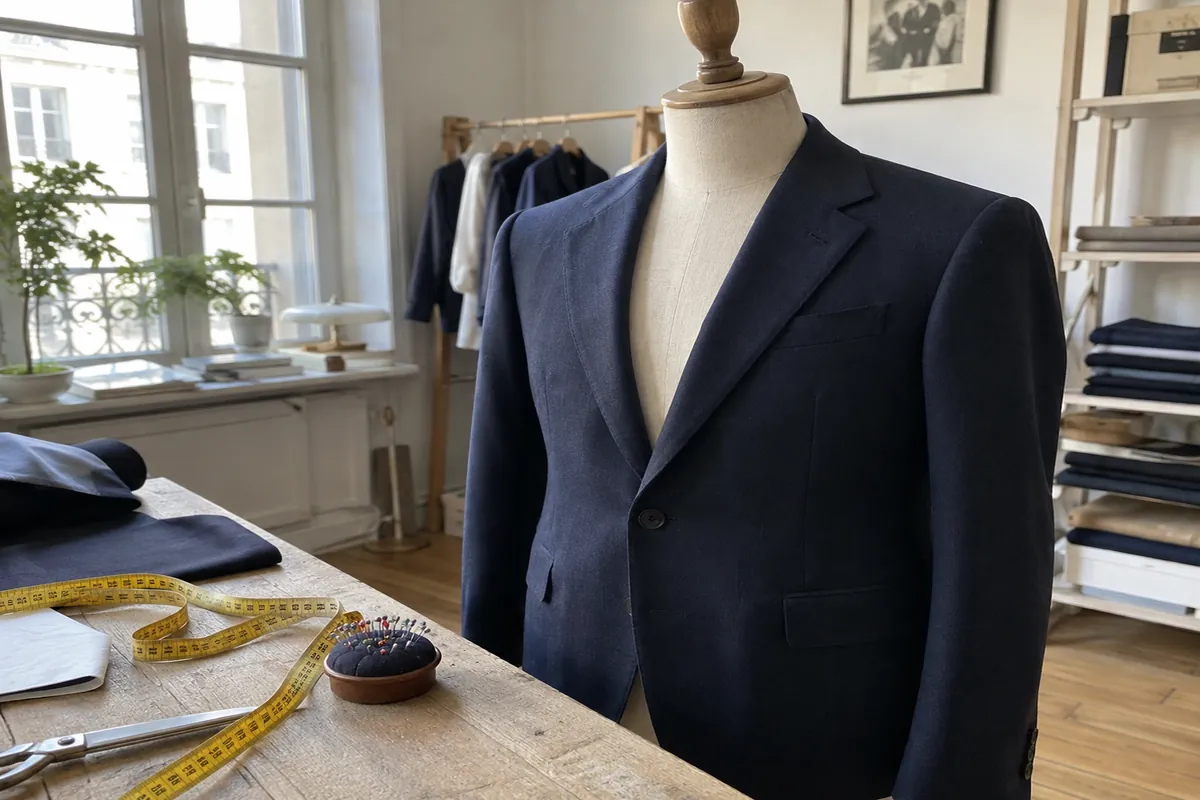
A suit that fits well looks expensive even when it is not, and a suit that fits badly looks wrong even when it is excellent. Most fit problems start at the shoulders and spread from there. Learn to check the jacket first, then the sleeves, the waist and the trousers, and you will know quickly whether a suit can be tailored or should be left on the rail.
How should the shoulder line suit the cut?
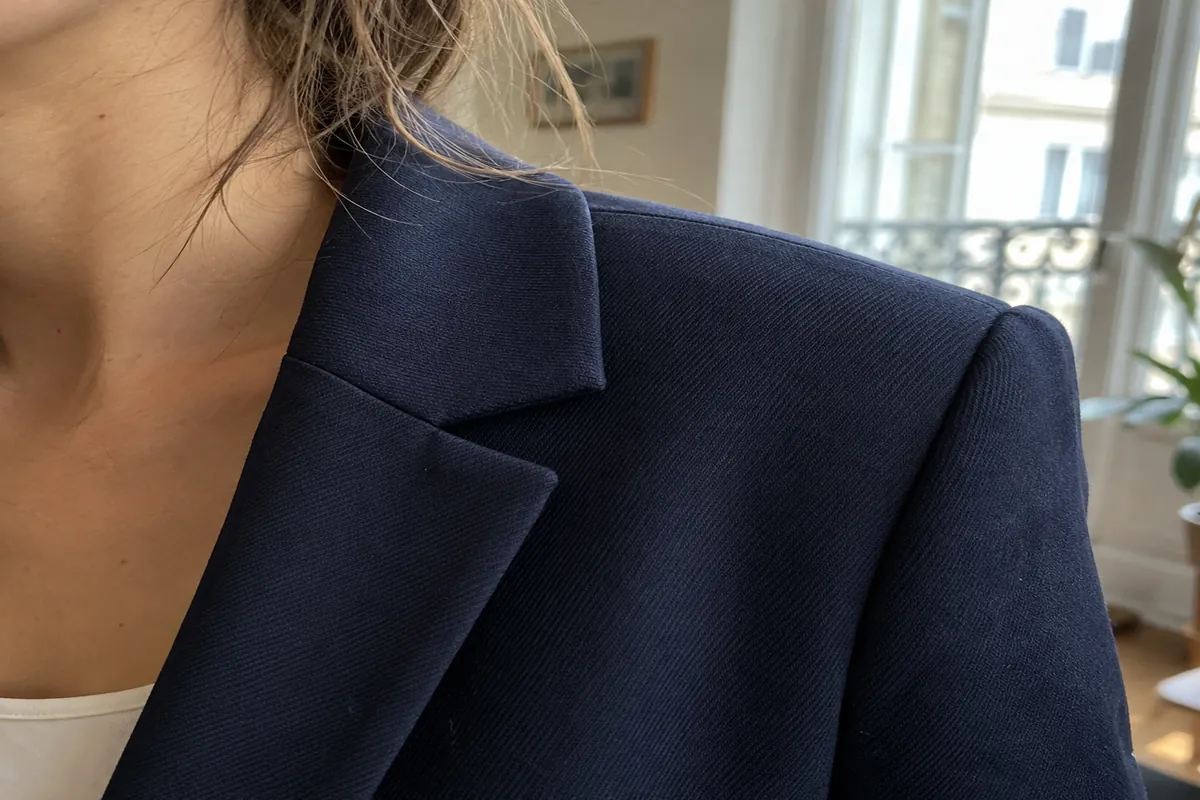
For a conventional set-in shoulder, compare the seam with your shoulder and look for a balanced hang. An extended or dropped shoulder may be an intentional part of another cut. Check comfort and the rest of the jacket instead of buying from that line alone; an alteration cannot be assumed feasible without inspecting the construction.
Stand with your arms relaxed, then sit and reach comfortably. A seam nearer the neck does not mean that the jacket is too large. Note restriction, excess or a displaced shoulder line as observations for assessment; do not infer one size or repair from one wrinkle.
Sleeves and the cuff
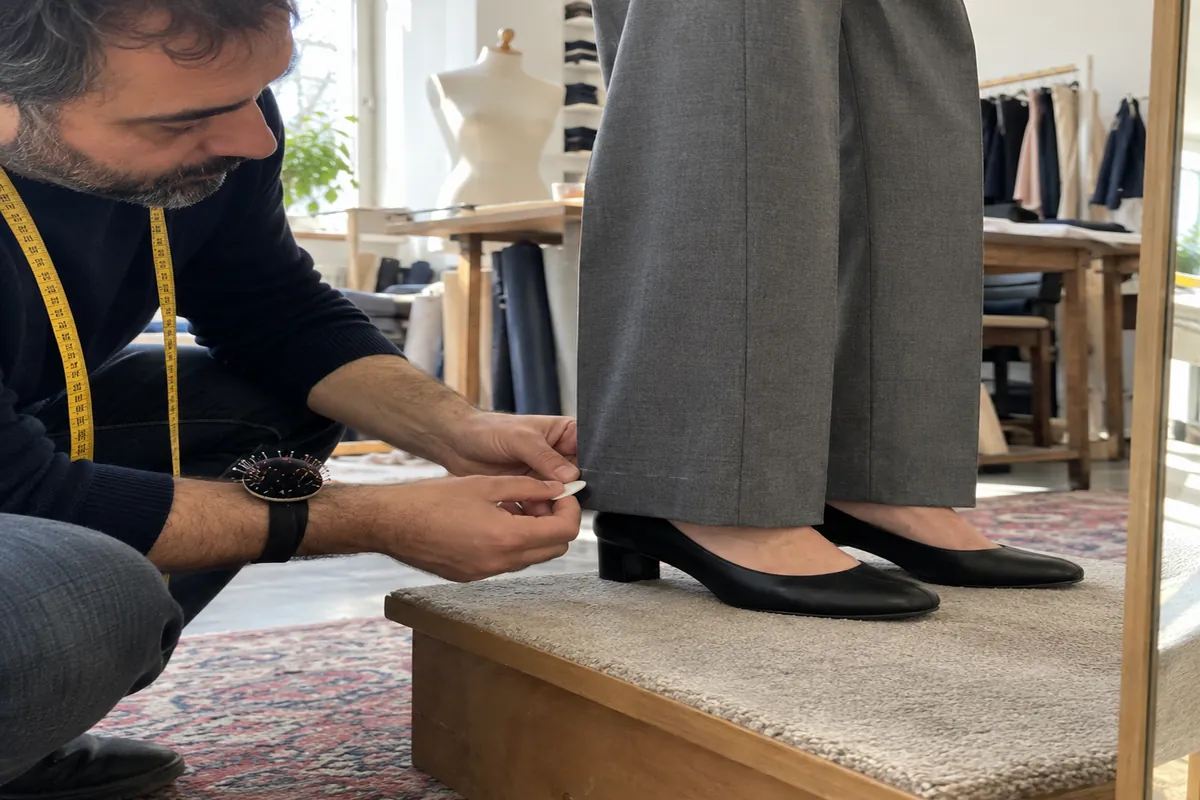
Check sleeve length against the intended design and the top worn underneath. A conventional full sleeve is often assessed around the wrist, while cropped sleeves have another intended line. Some movement at the cuff is normal as you bend your elbow. There is no compulsory cuff-show measurement for every women’s jacket.
The waist and the buttons
Use the closure intended for the actual jacket and check whether it meets without forcing the front across your body. Pulling at the button does not establish that the waist needs taking in. The cut, available front room and layers all matter. Ask what an alteration changes and whether the garment has the material needed for it.
Interactive tool
True or false: does the suit fit?
Open each statement to check it against the guide.
1. Every women’s jacket must put its shoulder seam in the same place.
False. A conventional set-in shoulder and an intentionally extended shoulder have different design lines. Evaluate the intended cut and comfortable movement; a seam nearer the neck does not prove a jacket is too large.
2. Sleeve length should be checked with the intended top and jacket cut.
True. A full sleeve and a deliberately cropped sleeve have different targets. Check the actual design and comfortable movement instead of imposing one cuff-show rule.
3. A jacket that gapes at the buttons is a sign that the waist needs tailoring.
False. The opening does not identify the required alteration. Check front room and layers before asking whether any change is possible on that construction.
4. Trousers should have a long break so they fall over the shoe.
False. A light break, where the front of the trouser just touches the top of the shoe, looks cleaner for most cuts. Test the length in the shoes you will wear.
5. A suit should be tested only while standing still.
False. Sit down, cross your legs, raise your arms and reach forward. The jacket should move with you and the back should lie flat.
Trousers and skirts
Trousers should sit at the natural waist, with a smooth line over the hips and seat. The leg should skim the calf without clinging. The hem should be level at the back and touch the top of the shoe at the front. Tailors often adjust the hem and the waist, and can taper a leg if it is too wide.
A pencil skirt should sit at the natural waist and finish just at or below the knee. It should allow a full step without pulling at the seams or the slit. If the skirt pulls across the hips when you sit, it is too tight for regular wear.
Fabric and structure
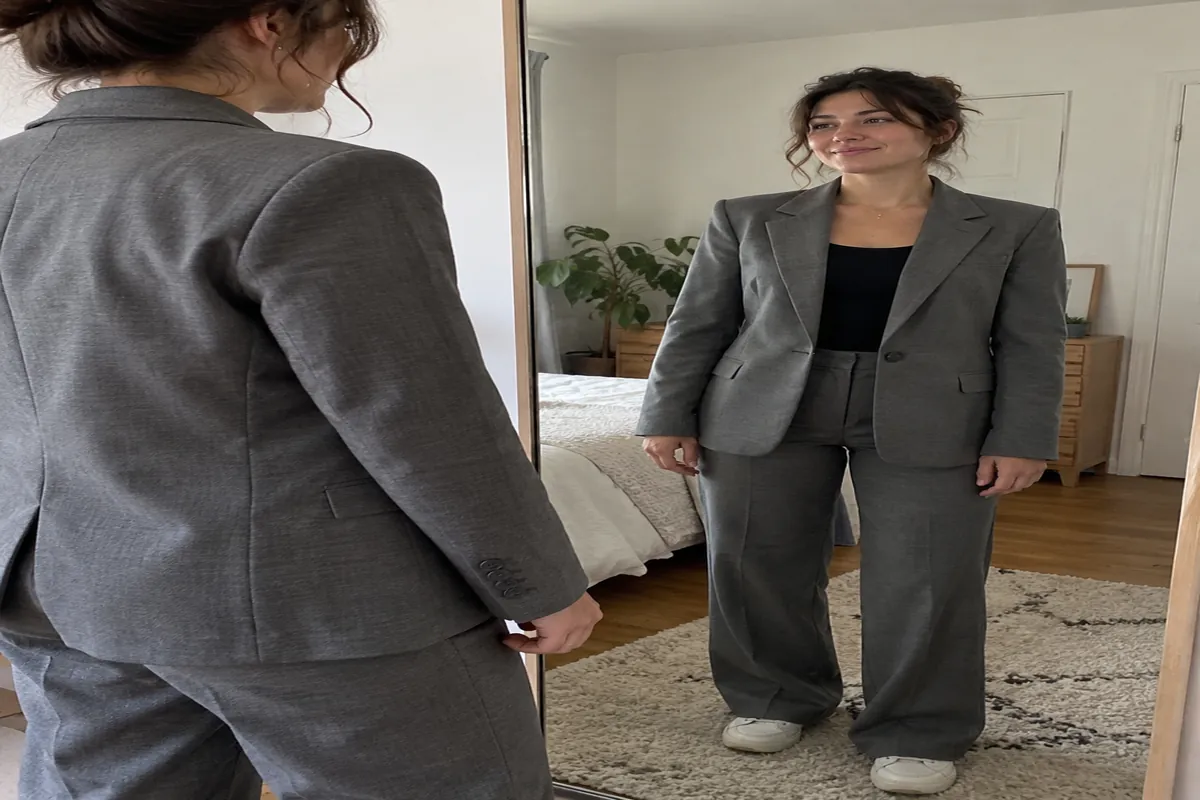
Fiber content alone does not establish shape recovery or durability. Assess the actual fabric, construction and care instructions rather than ranking every blend below wool. Check the lining too: it should move with the fabric and should not bunch at the armpit. A structured jacket with shoulder padding that is not too heavy gives the most polished line for most offices.
Tailoring that is worth paying for
Ask for a garment-specific alteration assessment and quote. Construction, available cloth, working details and your intended result affect feasibility and cost. Compare that proposal with another size or cut; the number of changes alone cannot establish whether the work is worthwhile.
Before you buy
Try the suit with the shoes you will wear, the top you will wear under the jacket, and a bag that is similar in weight to your usual one. Try ordinary comfortable movement before choosing. One brief fitting is useful evidence for that outfit, not a guarantee of comfort through every future day.
To build the rest of the outfit around the suit, see our guide to a work capsule wardrobe, or read what to wear to a job interview.
How to talk to a tailor
Bring the shoes you plan to wear with the suit, and the bag you usually carry, because both change the hem and the drape. Tell the tailor where the suit feels wrong in your own words, such as pulling at the buttons or sitting too low at the waist. A good tailor will ask you to move, sit and lift your arms before marking anything. Ask what the alteration will change, and whether it can be reversed if you decide to keep the suit in a different state later.
Keep the receipt and the alteration note together. If you return to the same tailor, the note helps them match the fit quickly, and it gives you a record of what worked.
Suits for different body shapes and jobs
Good tailoring is about proportion rather than a single ideal. A structured shoulder can balance wider hips, and a softer shoulder can suit a narrower frame. A cropped jacket can look modern with a high-waisted trouser, while a longer jacket suits a formal role and covers more of the hip. Choose the proportion that sits well with your body and with the work you do, and let the tailor refine the details.
For a day-to-day suit, look for a fabric that breathes and recovers from sitting. For a formal event, a smoother wool with more structure will photograph well and keep its line. Avoid a suit that looks costume-like because it is too precise for the workplace: a little ease is usually more flattering than a perfectly tight fit.
Which layer is pulling at the front?
Check the blouse with the jacket open before judging the jacket closure. A shirt placket that separates and a jacket front that strains involve different pieces. Keep the actual underlayer in the fitting, because replacing it with a bulkier top changes the combination being assessed.
| Check | Record |
|---|---|
| Blouse with jacket open | Look at its overlap and comfort seated and reaching |
| Intended jacket closure | Check front room without pulling the layers together by force |
| Complete outfit in movement | Confirm that neither layer needs continual adjustment |
A seam location alone is not a size diagnosis, especially with a deliberately extended shoulder. Describe where tension starts and what changes with movement. A tailor can then explain whether a particular alteration is feasible rather than promising that every issue can be taken in. The blouse-gap decision guide separates missing room from a local fastening question. A hidden closure can change the overlap while leaving the amount of front fabric unchanged.
Frequently asked questions
Can a suit be tailored after I buy it?
Some changes may be possible, depending on construction and available material. Ask for a garment-specific assessment before assuming the shoulders, front or sleeves can be altered.
Should a jacket button at the waist?
Use the closure intended for that design. It should meet without forced tension; a pulling front does not by itself identify a waist take-in or another repair.
What length should trousers be?
Most trousers should just touch the top of the shoe, with a light break at the front. Heels change the length, so have the hem checked in the shoes you will wear with the suit.
Do I need a skirt suit or trousers?
Both work. A trouser suit gives more movement and suits most jobs. A skirt suit looks more traditional. Choose the one you will wear most often, because the fit matters more than the silhouette.
How do I know a suit fits well?
Sit down, raise your arms, and reach forward. The jacket should move with you, the back should lie flat, and nothing should pull at the buttons or the underarm.