Tailoring
Blazer collar gap: check the jacket before changing size
Identify the moving edge before choosing an alteration.
In shortCheck the back collar at rest with your intended layer and arms relaxed. Record a lasting gap separately from changes during movement. Compare the whole jacket before changing size, then bring the garment and your observations to a fitter if needed.

A blazer collar gap is space between the back of the jacket collar and your neck or shirt collar. Check it with your usual layer, arms relaxed and the jacket settled. A persistent gap deserves a whole-jacket assessment; it does not, by itself, prove that you need a smaller size.
First, find which edge is moving
Look at the back neckline rather than the front lapels. A shirt collar can fold down inside the jacket, a knit neckline can sit low, and the blazer itself can stand away. These are different observations. Ask someone to look from behind while you stand naturally. Holding a phone above your shoulder or twisting to reach a mirror changes the position you are trying to check.
Take off a shoulder bag, smooth the blouse normally and let your arms rest. Keep any intended shoulder pads or garment components in place. Compare the jacket open and in its intended fastening configuration. Do not pin the neck into position for the comparison; record how the actual garment sits.
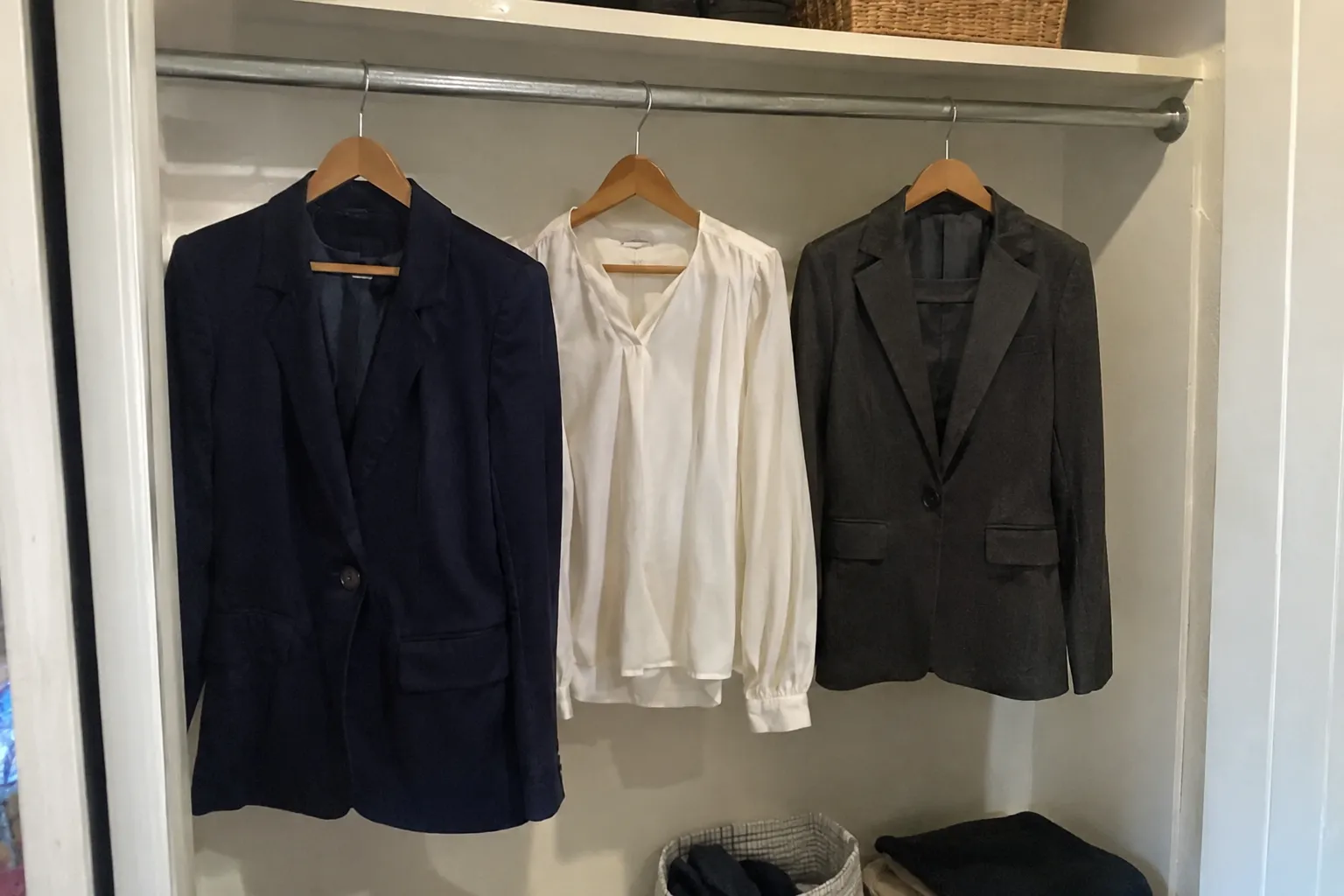
Does the gap remain with your intended blouse?
Try the layer you expect to wear to work. Then, if useful, compare a second layer that is already part of your wardrobe. Keep the pose and fastening the same. Record whether the collar gap changes and whether the jacket feels restricted across your upper back, chest or arms. This makes a fitting conversation more specific than simply saying the collar is wrong.
| Observation | What to record |
|---|---|
| Gap while standing at rest | Layer, fastening and full jacket view |
| Collar shifts while reaching | Which movement and whether it settles again |
| Shirt collar folds inside jacket | The shirt position as well as the blazer |
The women's suit-fit guide provides the broader check. A collar photograph alone cannot show whether the front, shoulders and sleeves work together. Avoid changing the entire size solely to close one visible space.
Why is there no single diagnosis from a photograph?
Proper Cloth's jacket-posture reference discusses the relationship between collar position, posture and shoulder slope. Its adjustment settings describe its own garments; they are not measurements to copy into a ready-made women's blazer. The useful principle is to inspect the whole upper jacket on the wearer.
Do not hold an unfamiliar posture just to make the jacket appear correct. Stand as you normally do, and describe the clothing issue without treating your body as a fault. A different cut may suit your preferences better even if an alteration is technically possible.
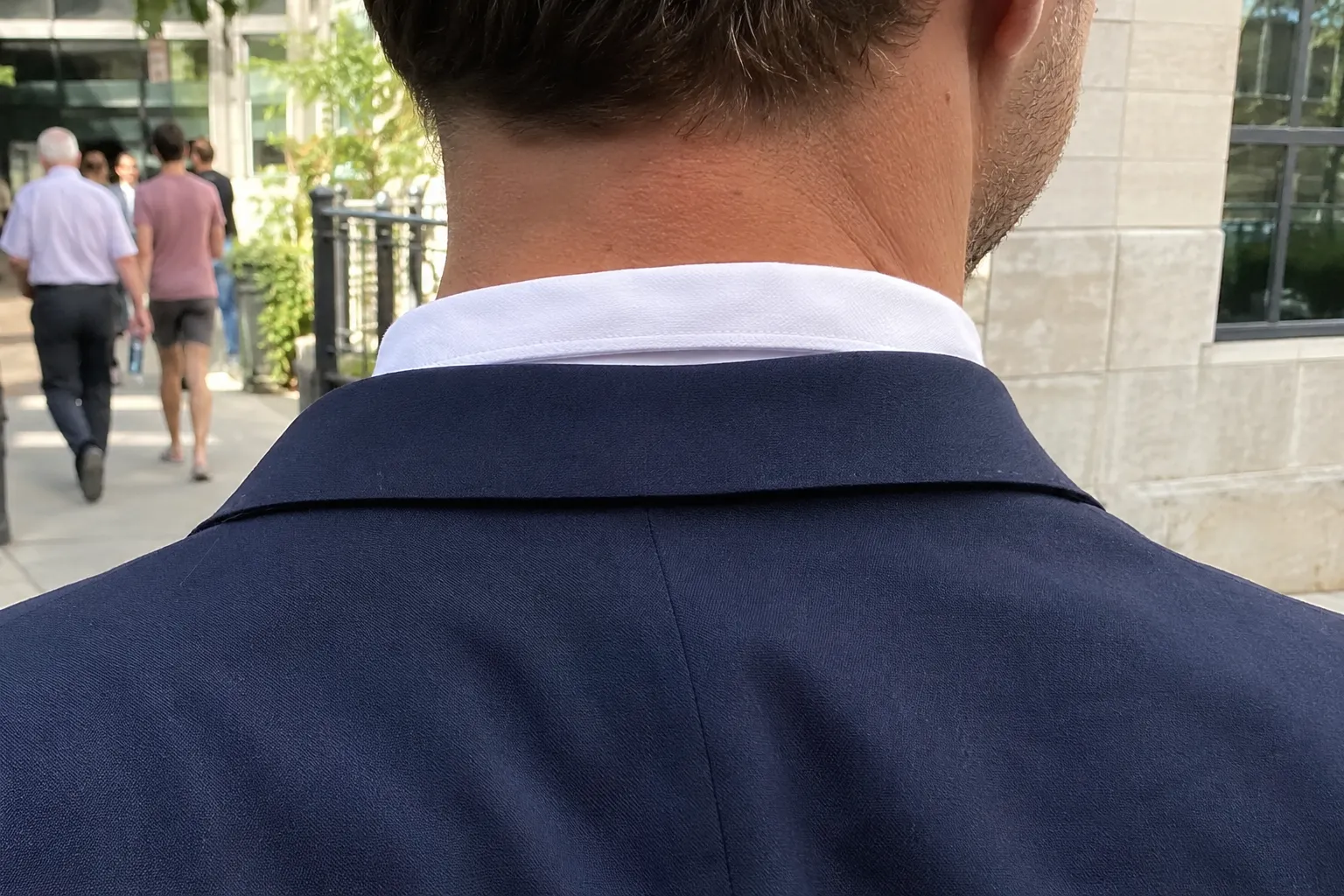
Which collar issue are you seeing?
A gap remains at rest
Record the layer and full jacket fit for a professional assessment.
The shirt collar folds inside
Settle the shirt normally and compare again before diagnosing the blazer.
The collar moves during a reach
Record the movement and whether it returns to rest afterwards.
What should you ask before altering it?
Bring the actual jacket, its intended base layer and photographs taken at rest. Ask which part of the construction would need changing, what else that change affects, and whether a different size or cut is worth comparing first. Get the proposed work and timing clearly described before relying on the jacket for an event.
Proper Cloth's alteration overview explains that tailoring has construction and proportion limits. Its numerical allowances apply to its own products. There is no universal allowance that guarantees your blazer can be reconstructed. Avoid removing a collar, cutting seams or applying heavy pressing as a diagnostic shortcut.
How do you decide whether to keep this blazer?
For a new purchase, check the return terms before an alteration or any permanent change. SuitShop notes that its women's jackets are sized separately from matching trousers: a matching set need not mean using the same size in both pieces. Compare the actual options available from your own retailer rather than assuming that a trouser fit settles the jacket question.

In a work capsule, count a blazer as usable with the combinations it actually fits. For an interview outfit, allow time for a seated and standing check before the day. Finish hair and accessories afterwards; the short office beauty routine can stay separate from the garment fitting.
Frequently asked questions
What is a blazer collar gap?
Space between the back jacket collar and your neck or shirt collar.
Does a gap mean the blazer is too large?
It does not establish one size diagnosis by itself.
Can a tailor fix every collar gap?
Ask about the actual construction and limits before committing.
Should I compare a different blouse?
Compare the intended layer first, then another familiar layer with the same pose.
Should I size down to close it?
Repeat the whole fit and movement check before choosing a different size.