Tailoring
Blazer button stance: compare the whole front
Button position belongs to the whole jacket design.
In shortButton stance describes the position of the front fastening within a blazer design. Compare it with the lapels, hem and complete outfit. Record visual preference separately from restriction, and have the actual jacket assessed before assuming a moved button can reproduce another cut.

Blazer button stance describes where the front fastening sits within the jacket's design. It is related to the lapels, front opening and length, rather than simply the number of buttons. Compare the actual blazer with your intended top and trousers before deciding whether you like the position or need a fitting assessment.
Position, number and use are different questions
A one-button jacket and a two-button jacket can close at similar heights, while two jackets with the same number of buttons can look quite different. Identify the working fastening and the maker's intended wearing arrangement first. A decorative button is not necessarily another place to close the garment.
The Jasper Littman tailoring glossary relates stance to button arrangement and placement on the wearer. Use the term to describe what you want to compare, rather than treating a position from one menswear example as a universal measurement for women's blazers.
Look at the whole front
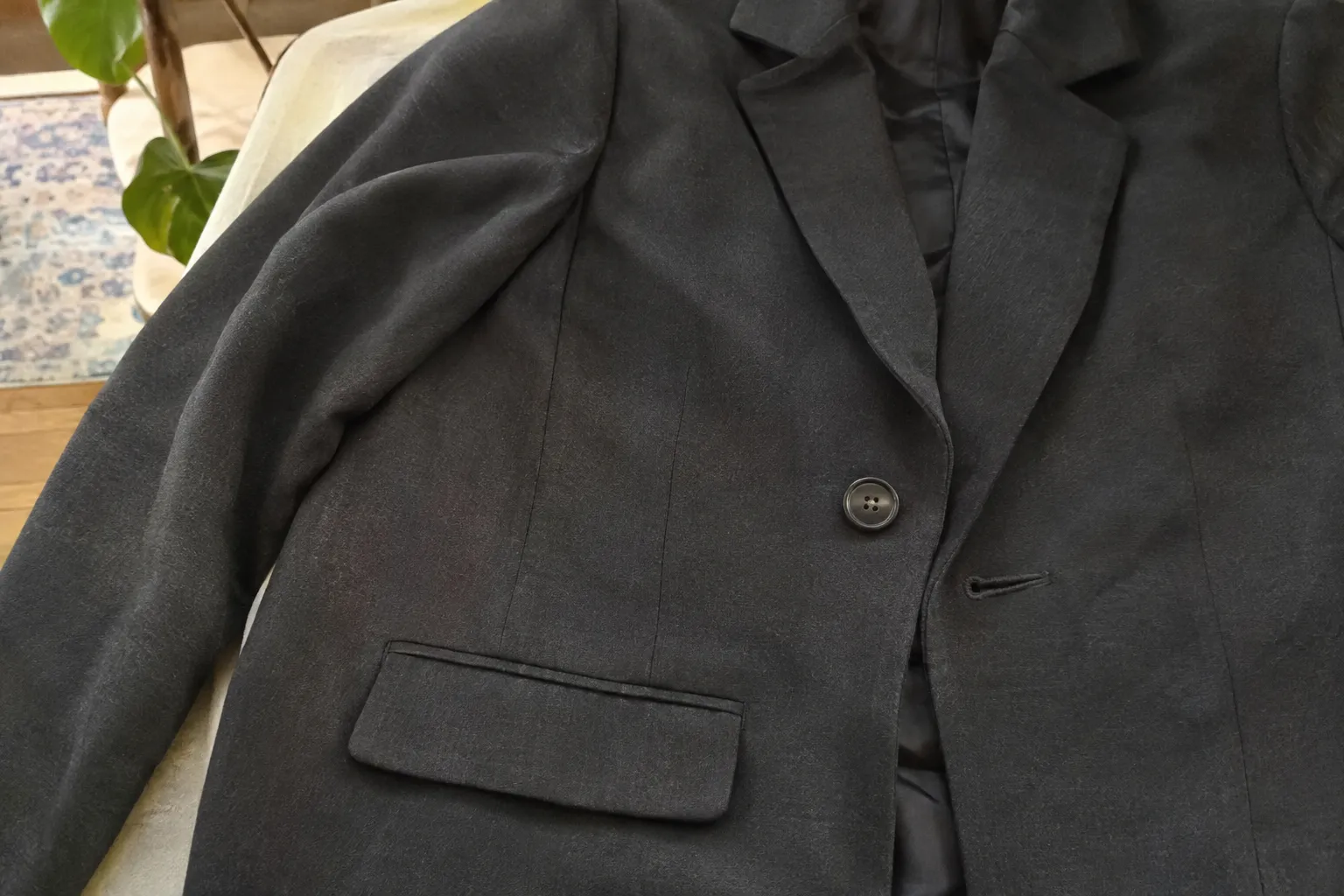
Put on the intended blouse or top, empty the pockets and let the blazer settle. Observe the lapel opening above the fastening and the front edges below it. Then compare the jacket hem with the waistband of your trousers or skirt. Keep your posture relaxed so you are assessing the outfit you will actually wear.
Proper Cloth's front-length reference treats length as a garment measurement. That is a useful separate record when comparing jackets: a different hem and a different fastening position can each change the overall composition. Do not attribute every difference between two blazers to the button alone.
What is the question you want answered?
I prefer a higher or lower closure visually
Compare another cut with the same base outfit before assuming that moving a button will recreate it.
The fronts pull when fastened
Show the restriction and the full garment to a fitter. A crease does not prescribe a particular alteration.
I am unsure which button is functional
Ask the maker about the intended fastening arrangement for this exact design.
Compare standing and seated use
Fasten the blazer as intended without forcing the fronts together. Sit, reach toward a desk and stand again. Notice where you feel pressure and whether the garment settles without repeated pulling. If you normally wear it open while seated, compare that configuration too rather than holding a closed-jacket pose for the mirror.
Keep the blouse placket, belt buckle and pocket contents in the check. Each can meet the front of the jacket. The pocket-identification guide separates a decorative detail from a usable compartment; opening an uncertain pocket is not part of testing button stance.

Do not assume moving the button moves the whole design
Ron and Rich's tailoring discussion explains that the front is built around the closure, including the lapel and front edge. Its practical implication is to ask about the actual construction before authorizing work. A buttonhole already present in the cloth is not relocated simply by sewing the button elsewhere.
Ask which change is proposed, what it affects and what visible traces may remain. A small adjustment to how the fronts overlap is a different job from redesigning the closing point. Compare another jacket if the desired result requires more reconstruction than you want to undertake. No universal alteration price or feasible distance follows from a photograph.
Check the combination rather than a body rule
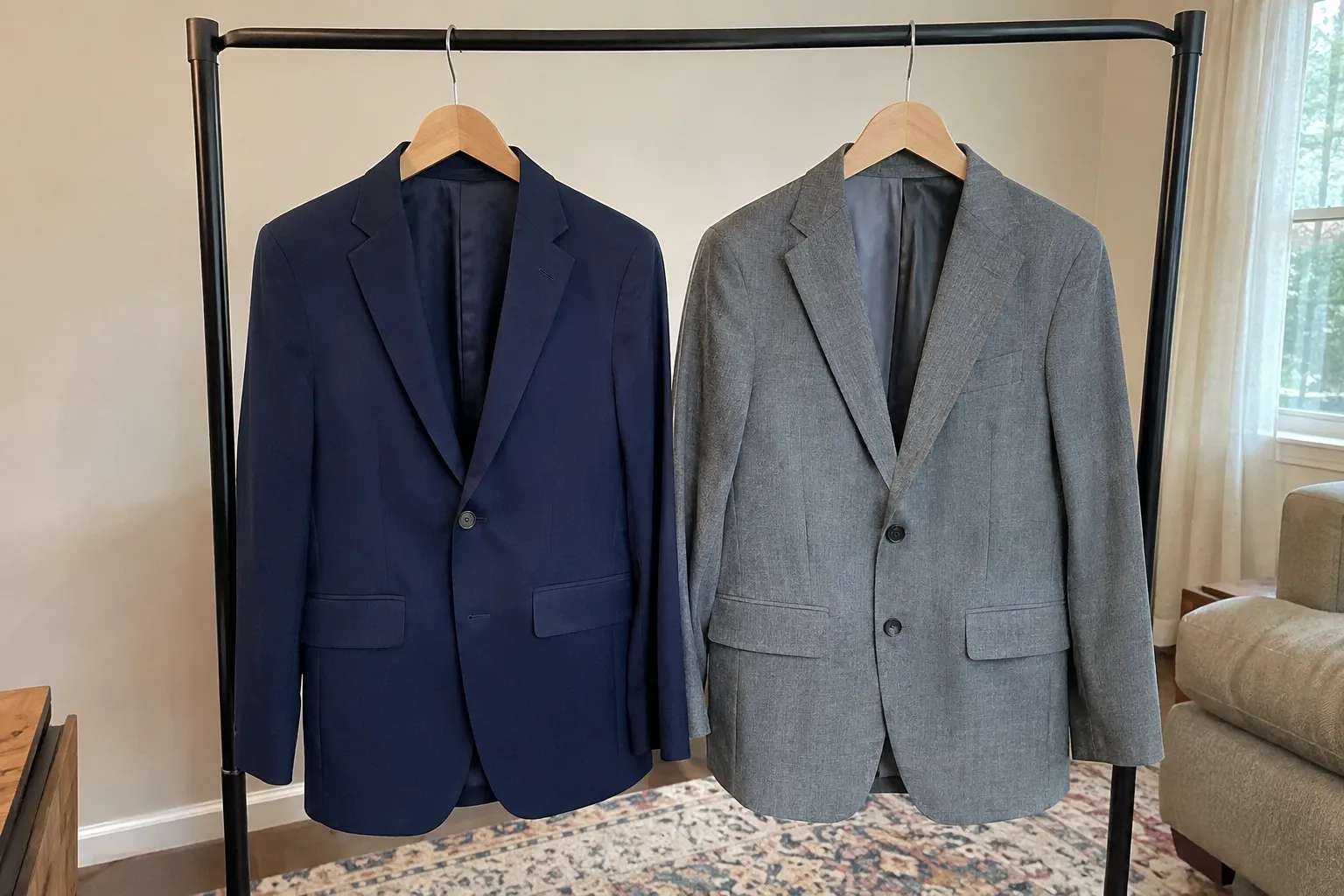
Try the blazer with the trousers, skirt and footwear planned for the event. Compare proportions you like without assuming a particular closure height must suit everyone with a given body shape. A picture of a model can suggest a styling option, but it cannot establish your comfort or the fit of another jacket.
If your shoes are awaiting work, keep that availability question separate. The heel-tip guide addresses the repair, while the workday footwear guide helps you plan a usable alternative. An outfit comparison should use shoes you can actually wear.
Bring a clear fitting note
Record the blazer, base layer, intended fastening and the movement that causes concern. If the issue is visual preference, say what you want to change; if it is restriction, show where you feel it. Keep those observations distinct so the specialist can explain whether the existing cut can deliver the intended result.
Frequently asked questions
Is stance just the number of buttons?
No. Arrangement and placement are distinct details.
Is there one correct height for every blazer?
Assess the actual design, outfit and comfort rather than a universal body rule.
Can moving a button recreate another cut?
The existing buttonhole, lapels and front construction still matter.
Should I check it seated?
Compare the actual wearing configurations and ordinary movement.
What should I show a fitter?
The intended layers, fastening and exact concern, with the full jacket on.