Work style
When should you replace stiletto heel tips?
Inspect the pair, agree the repair, keep the day workable.
In shortReplace a worn, missing or uneven heel tip before relying on that pair for work. Have a cobbler check the bottom piece and the heel above it. A loose or cracked heel needs a wider assessment. Plan another suitable pair while repair details and timing remain unconfirmed.
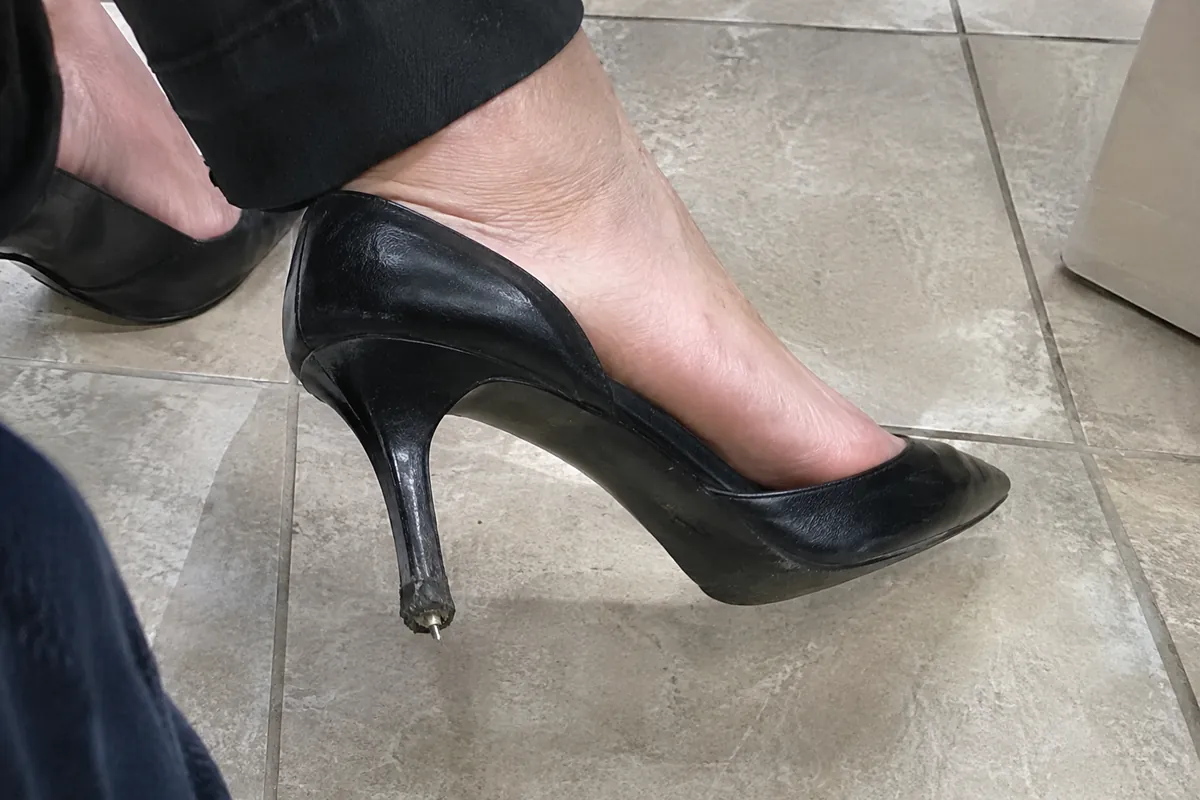
The small piece touching the ground deserves a check before the rest of the outfit gets your attention. Look at both shoes off your feet, in good light. A polished upper does not tell you whether the bottom tip, heel base and surrounding covering are ready for another workday.
| Observation | Useful response |
|---|---|
| Worn or missing bottom tip | Ask about a matching heel-tip replacement |
| Loose, cracked or damaged heel above it | Request assessment of the whole heel |
| Rubbing, slipping or uncomfortable fit | Choose footwear that works; a new external tip is not a fit adjustment |
Which part is a heel tip?
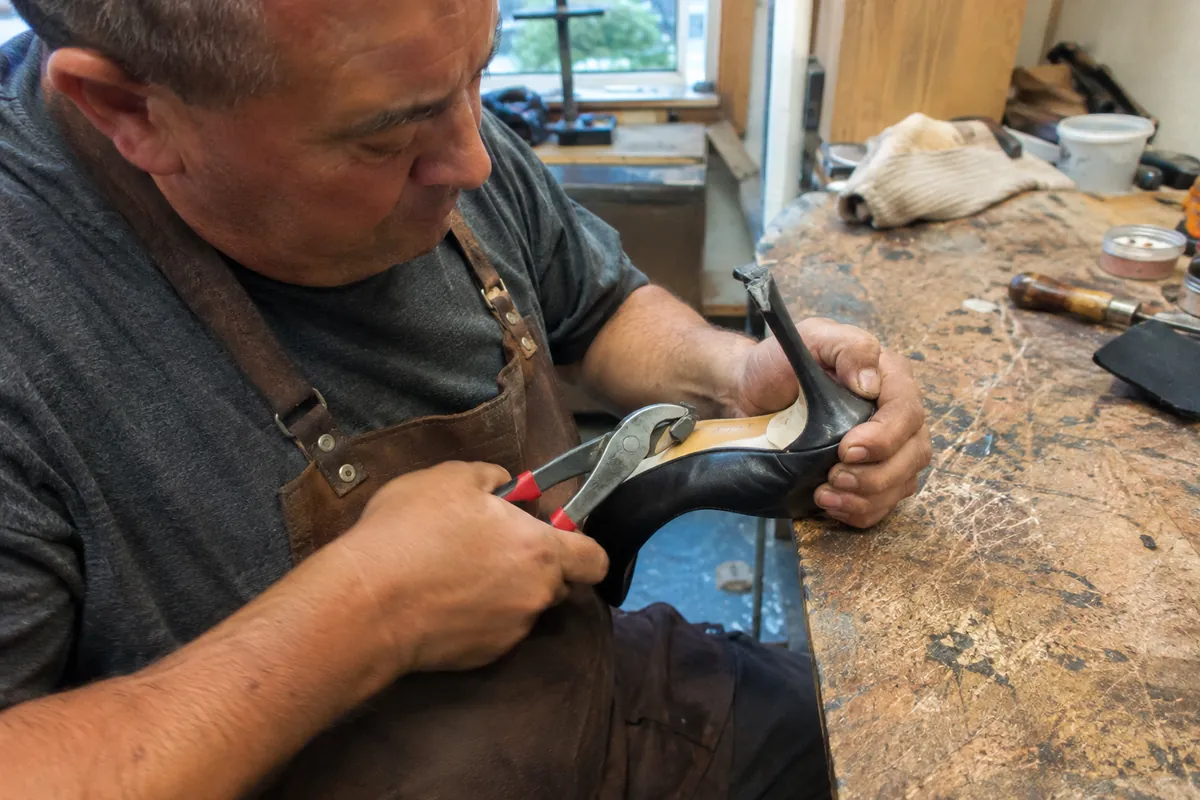
The heel tip is the small ground-contact piece at the bottom of many narrow heels. You may also hear the bottom layer called a lift. It is different from the larger heel body and its attachment to the shoe.
Rago Brothers' repair descriptions distinguish that bottom layer from a heel base or block. This matters when asking for a quote: replacing a small consumable part and repairing a cracked base are different jobs. Do not assume a replacement cap will resolve movement where the whole heel joins the shoe.
What wear should prompt a repair assessment?
A missing tip, visibly uneven wear or the harder inner part protruding deserves attention before you rely on the pair again. Compare both shoes rather than waiting for a particular sound. Noise alone cannot diagnose the condition of a heel.
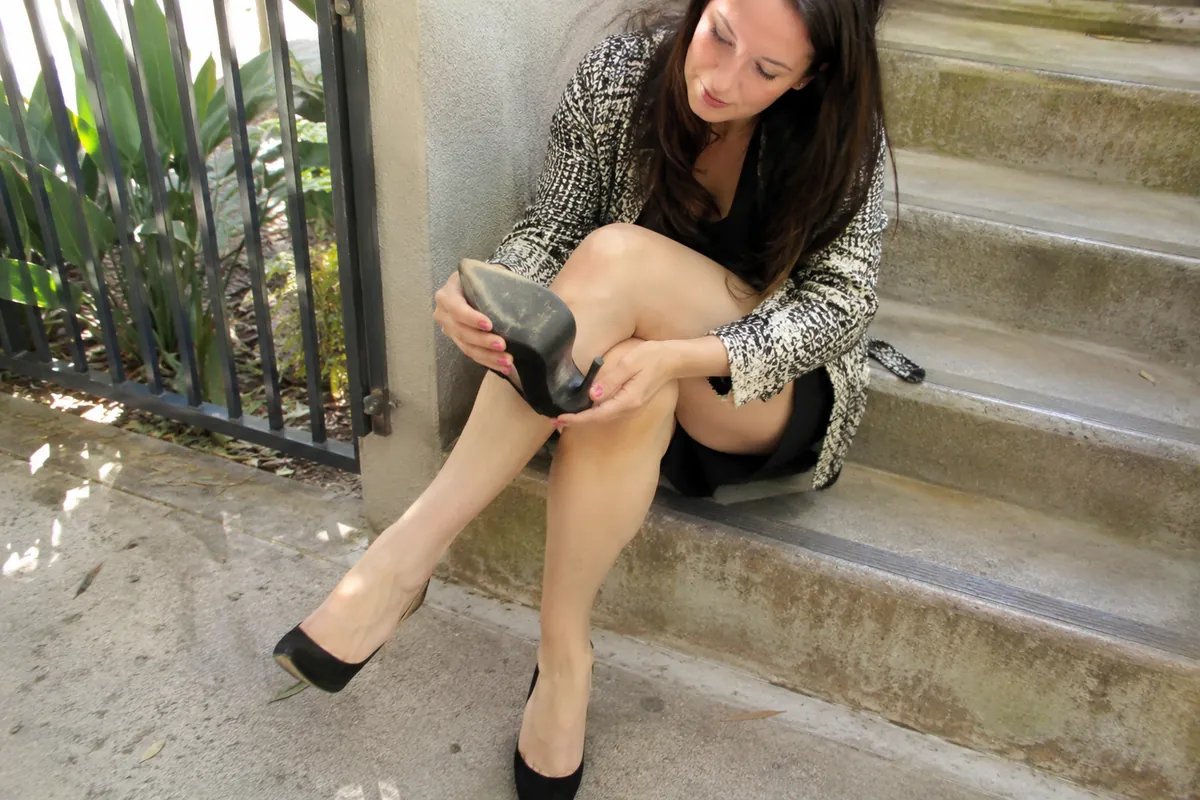
Take a clear bottom view and a side view without pulling at the tip. Describe what you can see, including damaged covering or a loose part above it. Avoid testing a doubtful heel by repeatedly walking on it. Keep a different suitable pair available while the condition is assessed.
Choose the observation you can actually make
The bottom piece is worn, uneven or missing
Ask for an assessment of the tip and the heel it fits into. Supply both shoes and the visible condition, not an assumed part size.
The heel body moves, is cracked or has other damage
Describe that separately. The whole heel needs assessment; do not treat an over-cap or new bottom piece as confirmation that it is repaired.
The issue is fit, rubbing or slipping inside the shoe
Use another suitable pair and revisit fit. An external heel-tip replacement cannot determine whether the shoe works for your feet or your day.
What should the repair proposal include?
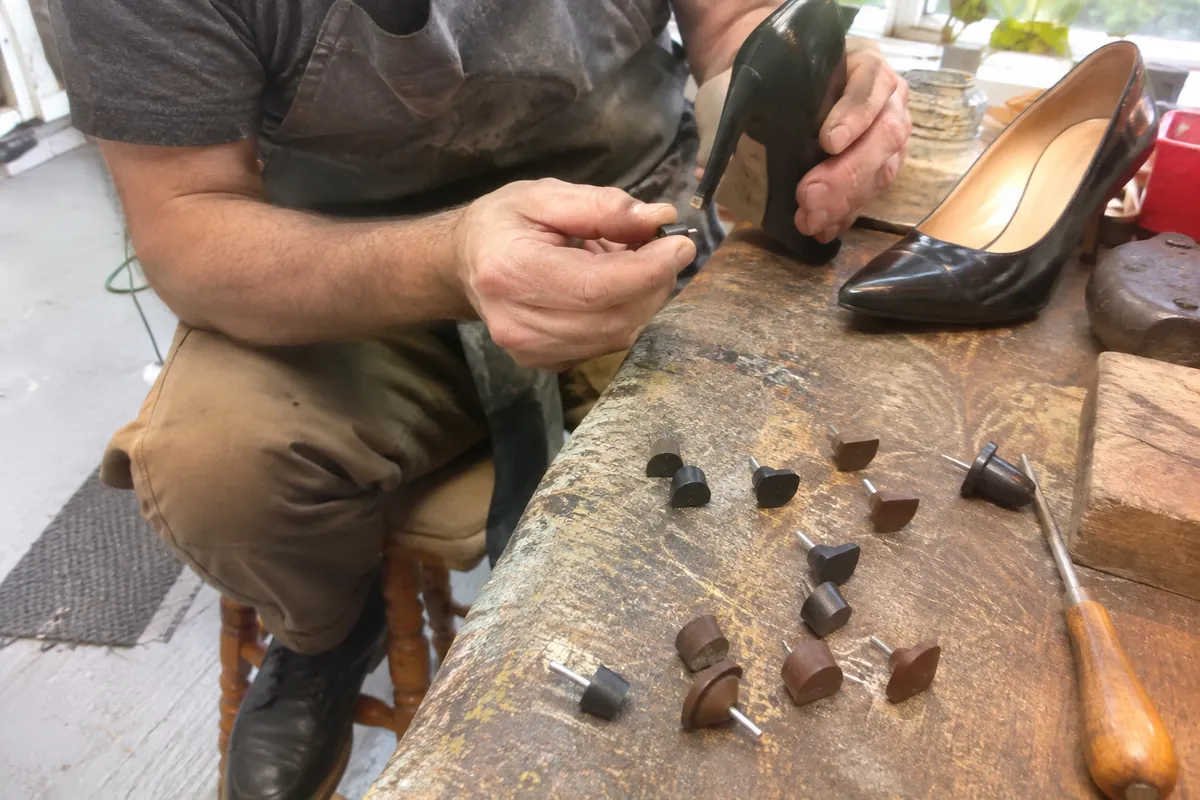
Ask which part will be replaced, whether the surrounding heel needs work, what matching is possible and when the pair can actually be collected. The answer depends on the shoes in front of the repairer. A photograph can help start the conversation without replacing an inspection.
Evans' heel-tip explanation describes selecting a replacement profile for the heel. Timpson's inspection-and-quote process similarly starts with the actual damage. Their services are examples of assessment, not a US price list or a promised local turnaround.
Keep your maker's repair instructions if available. A generic online tip, pin diameter or adhesive recommendation is not evidence that a part matches your pair. This guide does not ask you to pull a pin, hammer in hardware or cover unexplained damage.
How do you keep the workday plan usable?
Start with shoes already available and suitable for the actual walking and standing ahead. A repair booking is not a completed pair. Record a collection date only when the repairer confirms it, and retain an alternative if the work is still being assessed.
The conference outfit plan helps connect clothing to the day. The heel-fit and comfort guide addresses another question: intact new tips do not make every shoe comfortable. A flat or another familiar pair can be the practical choice.
Make a four-point repair-day plan
Tick only what you have checked. These are planning notes, not a shoe-safety certificate. They work without JavaScript and are not sent or saved by this page.
An unticked item is a question to resolve. Four ticks do not diagnose the shoes or guarantee comfort.
Keep unavailable shoes out of the combinations you count in your work capsule. Personal style can remain yours without making a particular heel compulsory; the signature-style prompts are a starting point for choices you actually enjoy wearing.
What does a quoted heel cap actually replace?
Ask whether a proposed cap is a new installed heel tip, an overlay covering the existing end, or a surface accessory. Those descriptions can appear together in online listings while referring to different work. Keep the actual shoe and the repairer’s explanation ahead of a generic product label.
| Question | Record separately |
|---|---|
| Installed replacement | Which old piece is removed and which profile is fitted |
| Overlay product | What remains underneath and what the specific maker intends |
| Surface stopper | Its compatibility and stated use rather than an assumed repair |
The distinction matters when the heel body or attachment has unexplained damage. A cover cannot confirm that either is sound, and replacing the bottom component may not be the whole proposed job. Ask the repairer to separate any additional work, its scope and the confirmed collection details. Do not take a quoted part name as evidence that all wear has been assessed or that a cap from another product line matches. The stopper, overlay and replacement-tip guide explains these distinct categories.
Recheck the planned outfit after the repair is ready
Once footwear is returned and its condition has been checked as advised by the repairer, compare it with the outfit you intend to use. This is a separate step from confirming which component was replaced. Keep the same trousers or skirt in the comparison, and check that your available alternative also works with the clothes if the original pair remains unsuitable.
A completed component repair does not establish that the shoe will suit every activity or that the rest of the outfit fits comfortably. Try ordinary seated and standing movements with the intended jacket and base layer. If a closed blazer restricts your movement while adjusting footwear, note that clothing question separately rather than attributing it to heel height alone. Do not use the outfit check as a substitute for inspecting the actual shoe. Keep repair readiness, footwear comfort and garment fastening as three distinct decisions before the event. The button-stance guide separates placement from fastening and fit.
Frequently asked questions
Can every heel tip be replaced?
Many designs have replaceable bottom pieces, but a repairer needs to identify the actual construction and condition. Not every damaged heel needs only a tip.
How often should heel tips be changed?
There is no universal calendar interval. Inspect the actual wear and have a damaged, missing or uneven piece assessed rather than waiting for a fixed number of weeks.
Does a clicking sound prove the pin is exposed?
Noise alone cannot identify its cause. Look at the shoe off your foot and show the actual condition to a repairer.
Will a heel protector repair a broken heel?
A cover does not establish that a cracked or loose heel is repaired. Ask about the underlying damage and suitable work before relying on it.
How much will replacement cost?
Request a quote for the actual pair and scope of work. Material, parts and additional damage vary; an overseas example is not a local price.
Can new tips make heels comfortable all day?
A replacement addresses the external part being repaired. It cannot guarantee fit or comfort, and heels are not compulsory for a professional outfit.