Work style
What to Wear to a Conference: An Agenda-Led Guide for Women
Start with the rooms, the route and the work you came to do.
In shortChoose clothes that meet the event’s stated dress code and let you sit, walk and speak comfortably. Start with an outfit you know, check your role and the evening agenda, and test the complete combination before adding items to your bag.

Start with the agenda, not a new suit
For a conference, choose clothes that meet the event's stated dress code and let you sit, walk, carry your essentials and speak comfortably. Trousers with a top and an adaptable layer are a useful starting point; a dress, skirt or suit may suit you better. Check the conference, your role and any separate evening event before deciding how formal to go.
There is no single conference uniform for women. A research meeting, an industry exhibition and a formal professional convention can have very different expectations. Even one event may include a casual workshop, a presentation and a dinner with its own instructions. Your calendar gives you a better plan than a shopping list headed “professional clothes.”
Read the event in three places
Look first at the organizer's attendee information. Search for a dress code, venue guidance, evening invitations and any activities outside the main room. If your employer has requirements for people representing it, add those too. When information conflicts, ask the organizer a concrete question about your session or role.
Next, look at photographs from an earlier edition of the same conference. They are useful context, not a rule: the venue, season and program may have changed. Notice the range of clothing rather than copying the most conspicuous outfit in a promotional image.
Finally, speak to someone who has attended in your field. Ask what they wished they had packed, whether they walked between buildings and whether the dinner was a separate dress-code event. Those details turn vague advice into a usable plan.
For example, ACM NYCWiC's own conference guidance mentions business casual and comfortable shoes. That is evidence for its event, not a universal rule for every technical conference. UNBOUND's organizer-hosted style guide discusses adapting daytime clothes for evening plans. Always read the current instructions for the event you are attending.
Choose for your role that day
| Your main job | Clothing question | Practical test |
|---|---|---|
| Attending talks | Can I sit and move between rooms comfortably? | Sit in the complete outfit with your bag nearby |
| Meeting clients | Does it meet the company and event expectations? | Try the layer on and off without changing the whole look |
| Staffing a stand | Can I stand, reach and carry supplies? | Walk and reach while wearing the actual shoes |
| Presenting | Does it work with the stage and microphone? | Rehearse a few minutes with the jacket and a possible clip point |
| Attending a dinner | Is there a separate code? | Read that invitation before deciding that accessories are enough |
If you are presenting, ask the production contact how the microphone will be worn and whether you need somewhere for a transmitter. A belt, pocket or suitable garment construction may help; do not assume every speaker will receive the same equipment. Make sure a badge, necklace or scarf does not repeatedly catch or tap against it.
For an exhibitor, a neat outfit that survives a long shift may matter more than adding a formal layer that gets in the way. For an attendee taking notes, a stable place for a phone, glasses and badge can remove repeated small frustrations. Neither role requires heels or a dress to count as professional.
Build one complete outfit before adding options
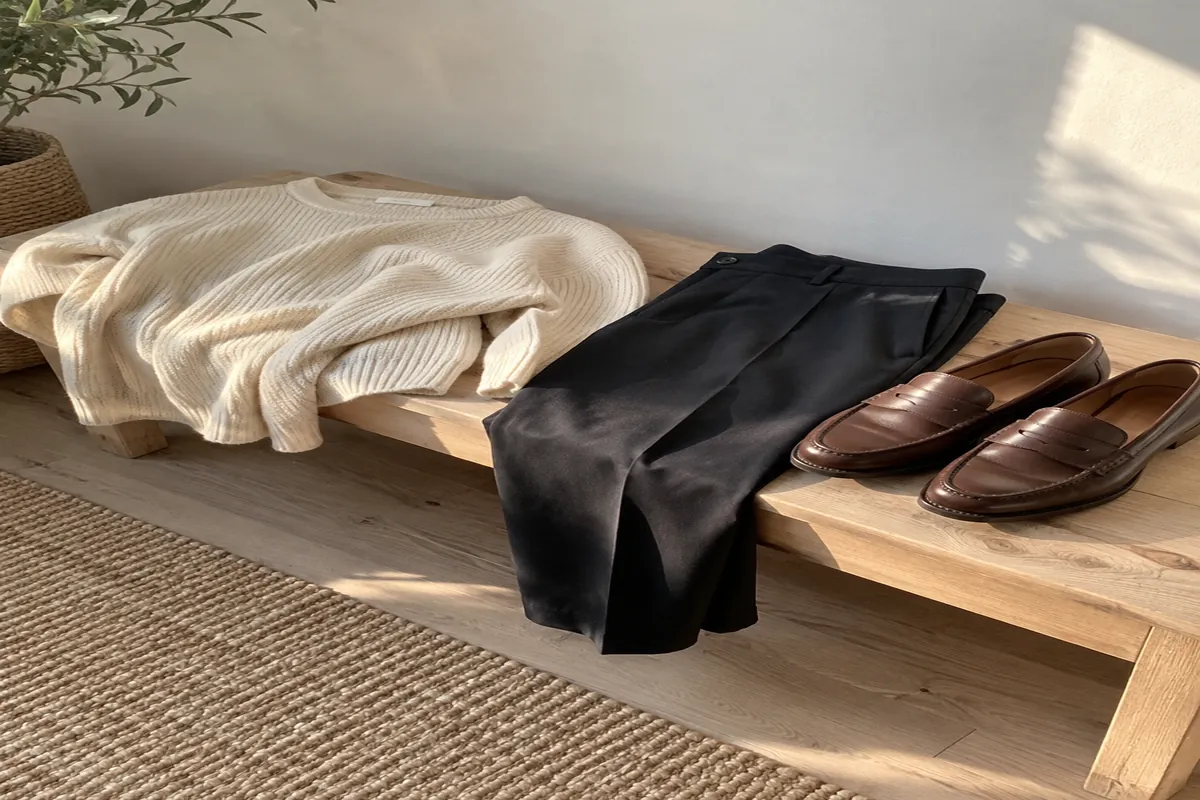
Start with a combination you already know. For a business-casual program, that might be straight trousers, a washable blouse and a cardigan or blazer. For a more formal meeting, use a suit you can sit in easily. For a casual creative event, the organizer may permit a wider range of separates. Use our dress-code decoder to interpret the wording, then return to the actual event requirements.
Try the outfit with the intended underwear, hosiery, shoes and outer layer. Check the waistband while seated, sleeve room when reaching and whether a bag strap pulls the neckline out of place. An outfit that works only while standing in front of a mirror is unfinished.
Choose color and shape according to your taste and the setting. Neutrals can make packing easier, but they are not a condition of being taken seriously. A familiar color or accessory can be part of a practical repeatable outfit.
A three-day packing example
Here is an illustrative plan for a business-casual conference with two session days, a workshop morning and a casual networking evening. It assumes no formal gala and that each piece is comfortable and clean when worn. Change it to fit the actual program and laundry arrangements.
Pack two bottoms, three tops, one main layer and shoes you have already worn for a comparable day. Add underwear, sleepwear and weather protection separately. Include a second suitable pair of shoes if space allows and you know you will use them.
| Day | Example outfit | Reason for the choice |
|---|---|---|
| Sessions and introductions | Navy trousers, cream top, checked blazer | A familiar complete outfit for the first day |
| Meetings and networking evening | Second pair of trousers, colored top, same blazer | A fresh top with a repeated layer |
| Workshop and journey home | First trousers if still clean, third top, lighter layer if needed | Comfort for the workshop and travel |
Repeating a jacket or trousers is a packing decision, not a professional failure. Check their condition before repeating them. A spill, heat or an unexpectedly active day may change the plan, which is why a spare top can be more useful than a second elaborate dinner outfit.
Use the work-capsule guide to identify combinations you already own. Do not buy every item in this example as a set. The plan succeeds when it reduces the number of outfit problems you have to solve away from home.
Give shoes a real wear test
Try the shoes on a normal day before packing them. Walk, stand and use stairs as you expect to at the venue. Check them with the same socks or hosiery. A quick lap of the bedroom says little about a full day across an exhibition center.
Choose the pair that works for your feet and the event. Loafers, flats, low heels, boots or clean sneakers can each have a place when the dress code permits. Do not buy a smaller shoe in the hope that it will stretch, and do not rely on an insert to rescue a fundamentally poor fit.
If shoes cause pain, change the plan rather than treating discomfort as part of the job. Our heel-comfort guide explains checks and alternatives. A backup pair needs to be wearable with the packed clothes, not merely small enough to fit in a bag.
Pack for the room and the route
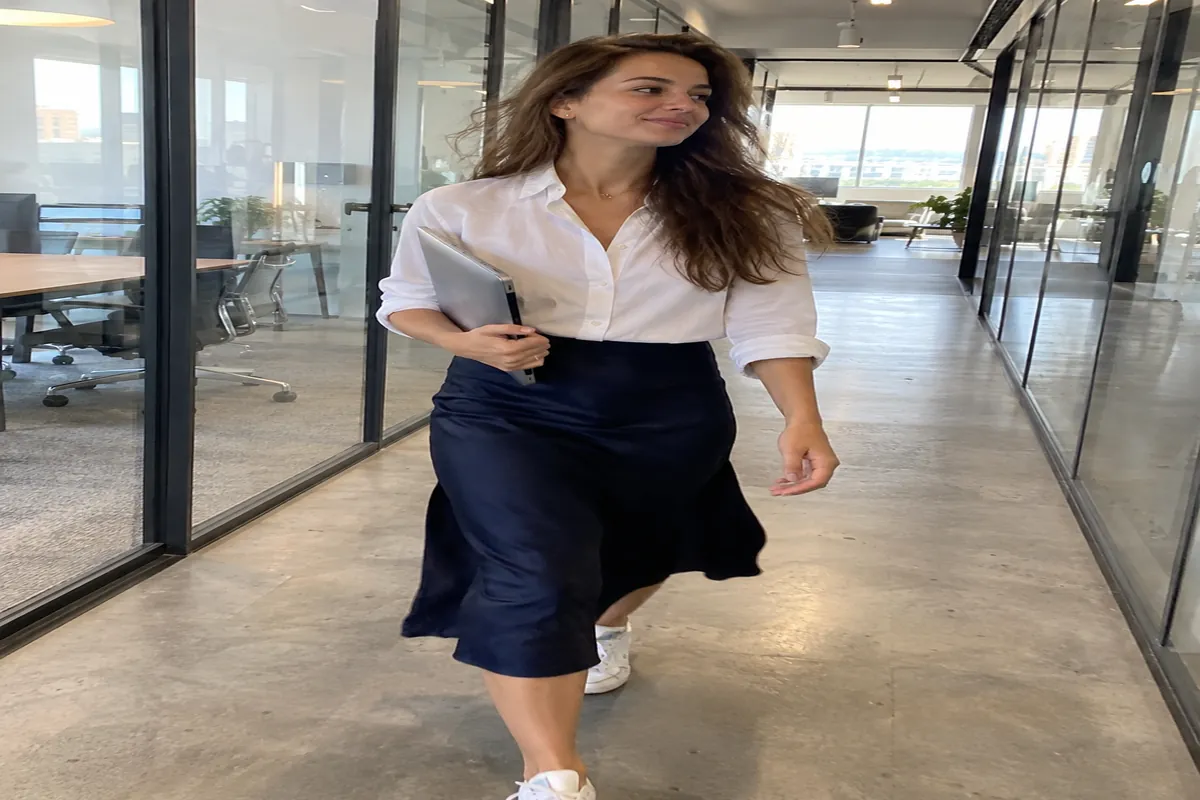
Check both outdoor weather and the indoor schedule. A removable layer helps when a warm walk leads into a cool room. Look at distances between sessions, transport and dinner; an outfit for a single hotel ballroom may not suit repeated outdoor crossings.
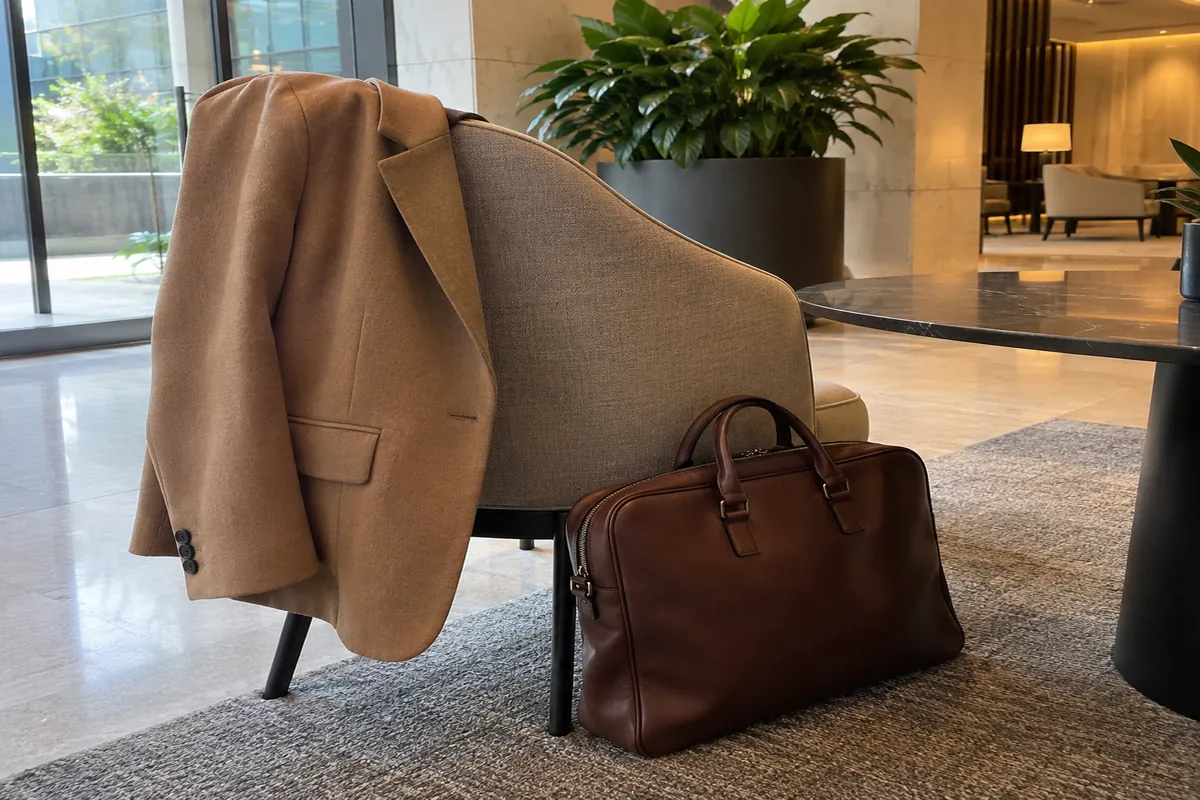
Keep the bag manageable with your actual laptop, charger and water bottle inside it. Test its closure and where it rests while you sit. Keep small essentials in a consistent pocket so you can find them without emptying the bag at a registration desk.
Before you leave, lay out the first day's outfit, check every fastening and look for anything that needs cleaning or repair. Then confirm the badge, shoes, layer and evening instructions together. A usable conference wardrobe supports what you came to do and leaves you free to concentrate on the event.
Packing check
Ready for the actual agenda?
0 of 6 done
Frequently asked questions
Do I need a suit?
Only when the event or your role calls for that formality. Read the organizer’s guidance and any employer requirements before choosing.
Can I wear flats?
Choose shoes that meet the event requirements and work for your feet and the route. Heels are not a universal condition of professional dress.
Can I repeat trousers or a jacket?
Yes, when they remain clean and suitable. Plan complete combinations and a spare top instead of buying a new look for every session.
What should I check if I am speaking?
Rehearse in the outfit and ask the production contact about the microphone, transmitter and movement on stage.
Does the dinner need another outfit?
Read its invitation. A casual networking evening may use your daytime clothes; a formal dinner can have a separate code.