Shoes
Stilettos for Work: Fit Checks, Limits and Alternatives
Comfort comes from the shoe's fit and your routine, not from suffering through it.
In shortChoose shoes that fit your feet and the actual walking and standing planned. No heel height guarantees all-day comfort. Test them before the event, keep a usable alternative and change shoes if discomfort develops rather than relying on padding to fix a poor fit.
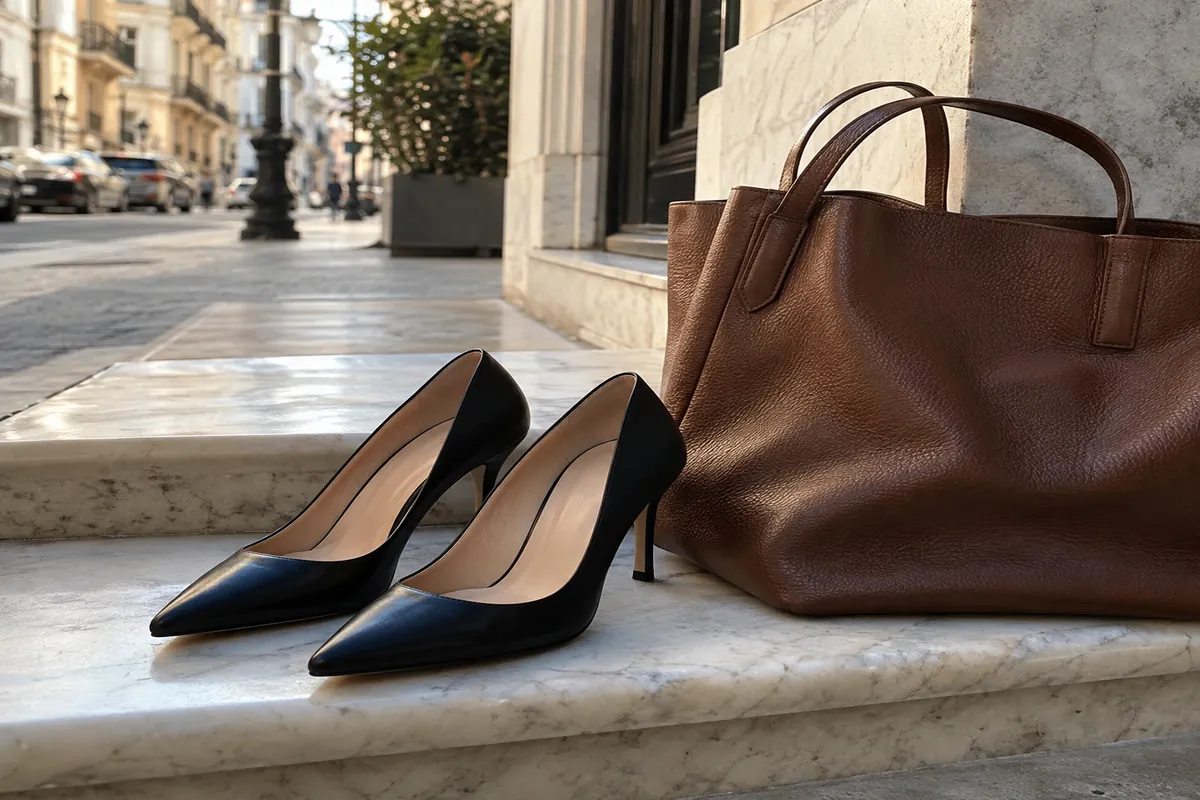
No routine can guarantee a pain-free day in stilettos. Choose footwear for your feet, the surfaces and the time you will spend standing. A lower heel or a flat may be the better option. Use fit checks before the event, and change shoes if discomfort develops.
Before choosing the shoes for this outfit, compare rear heel height, front platform and the geometric rise as separate measurements. The effective heel height calculator: platform and rise shows its method and lets you keep the calculation.
Choose the shoe by the day
There is no universal two-to-three-inch height that is comfortable for an eight-hour day. AAOS guidance favors a roomy toe box and a lower heel. High, pointed shoes can put more pressure on the forefoot; a cushion does not remove that trade-off.
Test the actual shoes with the socks or hosiery you will use. Walk and stand on an ordinary day before relying on them for a conference. Note rubbing, slipping or toe pressure and choose a different pair if they appear. A photograph or a few minutes on a shop carpet cannot establish all-day comfort.
Fit matters more than the brand
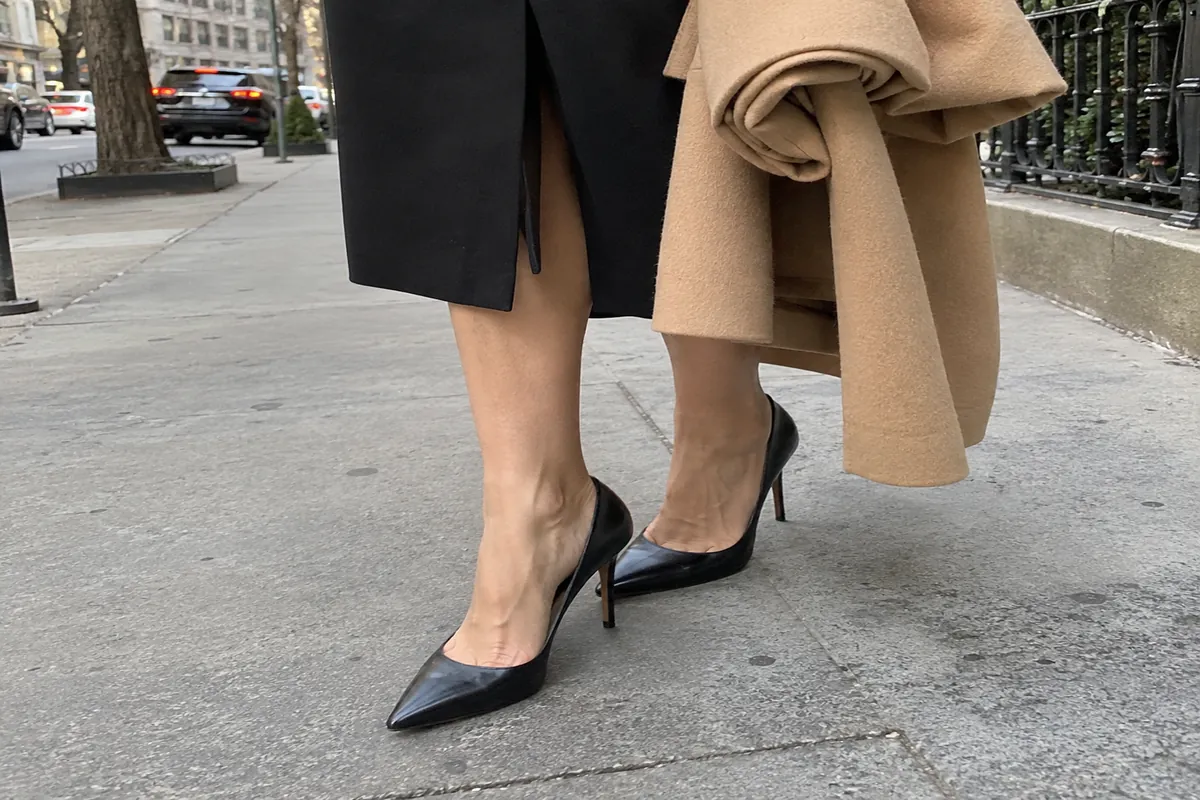
Try heels at the end of the day, when feet are slightly larger. Stand in them for at least five minutes, and walk on a hard floor, not only on carpet. Check three points. The heel should stay in place when you walk without gripping with your toes. The toe box should give the toes room to lie flat. The widest part of your foot should sit within the widest part of the shoe.
If you have one foot larger than the other, fit the larger foot. A small insole can make up the difference on the smaller side.
Padding and insoles
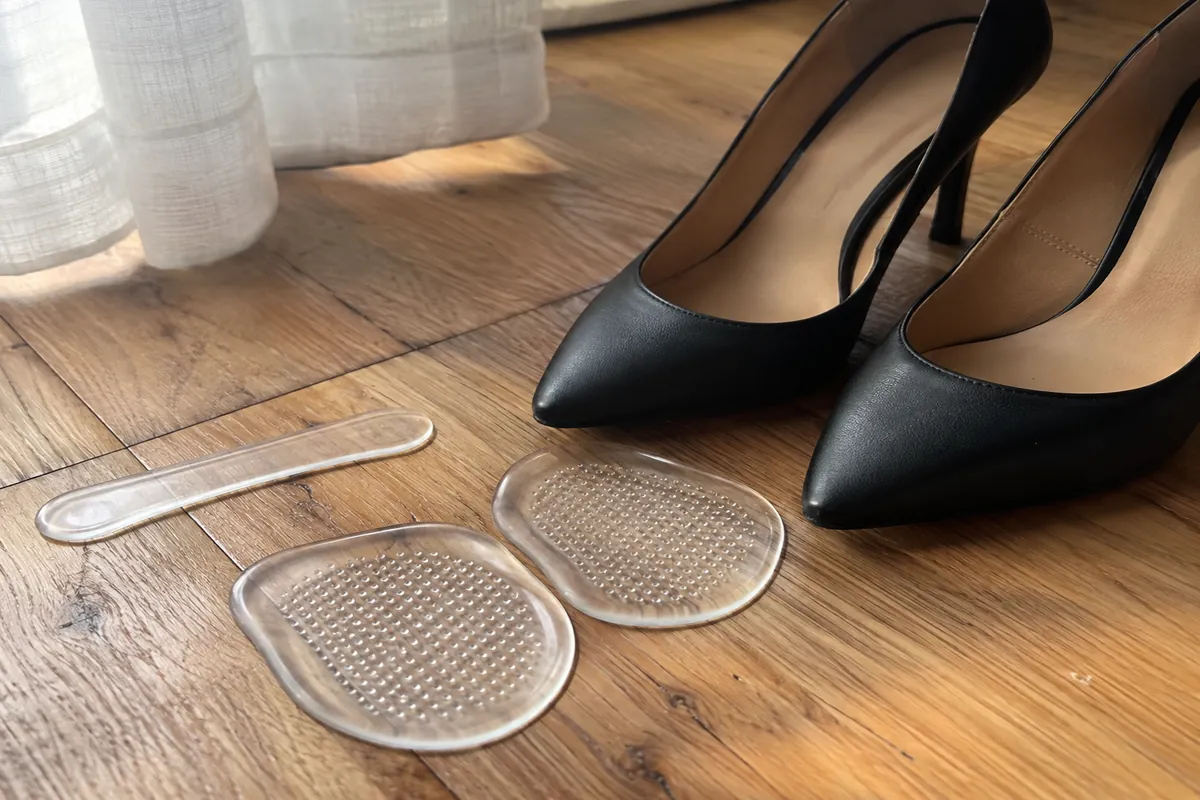
Ball-of-foot cushions work best when they sit exactly under the joint that takes the most pressure. Many women place them too far forward or too far back. Stick the cushion on the insole, stand in the shoe, and move the pad until it sits just behind the toes. A thin heel grip stops the heel from slipping and reduces the need to curl your toes.
Gel and foam inserts are not a fix for a shoe that is too small. They work best as a second layer on a shoe that already fits.
Interactive tool
Before you leave the house
0 of 6 done
Break in a new pair properly
Wear new heels at home first, for 30 to 60 minutes at a time over several days. Walk on different surfaces, and climb a few steps if your commute includes them. Stop if you develop a blister, a red mark that does not fade, or numbness in the toes. Do not begin a full workday in a new pair, even if it fits well in the shop.
Leather soles soften with wear, and synthetic soles can grip more on wet floors. Check the sole before a rainy commute, and add a rubber grip if you need one.
Rotate your pairs
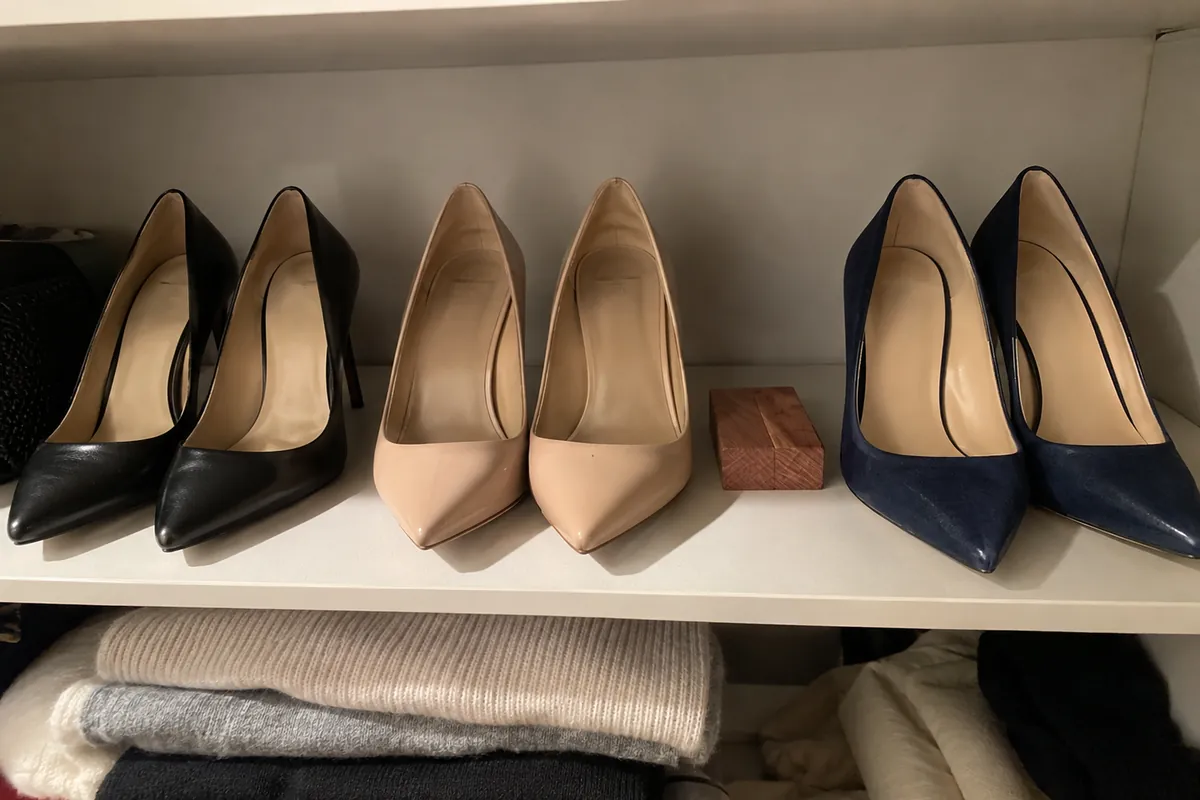
A shoe needs time to recover. Foam and leather take on the shape of the foot, and they recover more fully if you rest them for a day. Two pairs in regular rotation last longer than one pair worn every day, and your feet adapt less to a single shape. Keep the pair you wear most in a ventilated spot, away from heat.
Plan the day around the heel
Long meetings are the hardest part. Sit with both feet flat on the floor for a minute every hour, and roll your foot gently on a water bottle under the desk. Between meetings, walk a short loop, not only to the printer. If you have a long event, bring a flat pair for the way home and change before the last hour.
For the rest of your outfit, pick a shoe that matches the dress code. A low heel suits a bank or a law firm, while a pointed-toe pump with a block heel suits a creative workplace. For the workplace rules, see our dress code decoder.
When to see a professional
Pain that lasts more than a day or two, swelling, numbness or a change in the shape of your foot needs a professional opinion. A podiatrist can check your gait and your shoe fit, and an orthopedic doctor can examine a deeper problem. General guidance on foot and bone health is available from the sources listed below.
Heel shapes that wear better
A classic stiletto has a thin heel and a pointed toe, which makes the foot work hard to balance. Shapes that spread the weight can be just as elegant. A block heel of 2 inches holds the foot steady. A kitten heel, low and slightly curved, suits long days in offices with a lot of walking. A stiletto with a slim platform under the toe reduces the angle your foot has to hold, even if the heel looks high.
Look at the heel from the side. A heel placed directly under the ball of the heel-bearing foot balances better than one set far back. If the heel looks like it sits under your arch rather than your heel bone, expect more strain on the front of the foot.
Socks, tights and the rest of the day
Thin tights or a sheer sock can change how a shoe rubs. Some women find that a light sock reduces blisters on the back of the heel, while others prefer nothing and a heel grip instead. Test the combination on a walk before you commit. Carry a spare pair of tights for the afternoon, because a run or a snag can make a shoe feel tight.
The bag matters too. A heavy bag on one shoulder shifts your posture, and a tired back makes the feet feel worse. Choose a bag with a strap that sits across the body and carry only what you need in the heeled part of the day.
Recovery after work
When you take the shoes off, sit down and rest your feet on a flat surface for a few minutes. Gently roll the sole over a bottle of cold water, and stretch the calf. Avoid putting the feet straight into a hot bath if they are swollen, because heat can increase swelling. If the same spot hurts after several days in a row, change the shoe, the insole or the height before you change your routine.
Plan a usable alternative before a long event
Match a backup pair to the outfit and its hem rather than packing any small pair of flats. Try both pairs with the trousers or dress so that the hem does not trail when you change. Put the backup where you can reach it before discomfort becomes the focus of the day.
For a conference, check the walking distance between rooms, any outdoor surfaces and the time you will spend at a stand. A low heel, loafer or other suitable shoe may meet the event’s requirements. Professional clothing does not require enduring pain.
AAOS’s guide to shoe fit explains why toe-box space, a secure fit and lower heels matter. Ask a qualified clinician about persistent pain, numbness or swelling rather than trying to correct a foot problem with a generic insert recommendation.
Assess the event route as well as the room
For a workday followed by a reception, account for the walk to the venue, steps and the time you expect to stand. Test the actual shoes in advance and consider whether a second pair can be carried or stored. A lower heel is not a guarantee of comfort for every person. The after-work networking guide includes a practical route and belongings check.
Check shoe condition separately from comfort
A shoe can feel familiar while its bottom piece is worn. Inspect both heels off your feet and distinguish the small ground-contact tip from the heel body and its attachment. A cushion inside the shoe does not repair damage outside it.
| Check | Record |
|---|---|
| Bottom contact piece | Missing material, uneven wear or a visible inner part |
| Heel above it | Movement, cracks or damage that needs wider assessment |
| Inside fit | Rubbing, slipping or pressure, considered separately |
Use another suitable pair while an uncertain heel is assessed. A replacement tip addresses a specific part; it cannot establish all-day comfort or resolve every fit concern. Tell the repairer what you actually observed rather than diagnosing the cause from a sound. Keep their proposal with the shoes, including any work beyond the bottom piece. Use the heel-tip repair and workday guide for the separate condition and timing questions.
Which part of a heel accessory addresses your actual concern?
Keep an in-shoe fit problem separate from the ground-contact piece. A cushion, a surface stopper and a replacement tip do not do the same job. Choose from the concern you can describe rather than assuming that any item sold with the word comfort improves the complete shoe.
| Question | Record separately |
|---|---|
| Inside the shoe | Rubbing, pressure or slipping that calls for a fit decision |
| At the ground | The actual heel end, intended surface and accessory compatibility |
| In the heel structure | A loose, cracked or damaged part needing assessment |
An add-on does not establish that the pair is suitable for a long walking day. If it creates rocking, catches or feels wrong, stop using that combination and check the intended fit instead of trying to walk through it. Keep another suitable pair available for the route. The product name cannot replace a condition check, and professional styling does not require you to keep wearing an uncomfortable shoe. The surface stoppers and replacement heel tips explains these distinct categories.
Frequently asked questions
Is there a heel height that guarantees all-day comfort?
No. Use a roomy, secure fit and lower-heeled options as practical starting points, then test the actual shoes for your day. Change them if they cause discomfort.
Why do my toes hurt in stilettos?
The toe box is often too narrow or the heel pushes the foot forward. Look for a shoe that holds the heel without pinching the toes, and check the fit at the end of the day, when feet are largest.
Do gel inserts really help?
They help when they cushion the ball of the foot, where pressure builds in a heeled shoe. They do not fix a shoe that is too small. A podiatrist can recommend a fitting if pain continues.
How should I break in new heels?
Wear them at home for 30 to 60 minutes at a time over several days. Stop if you develop blisters or numbness, and do not start a full workday in a new pair.
When should I see a doctor about foot pain?
Seek advice if pain lasts beyond a day or two, if you notice swelling, numbness, or a change in your foot shape. Foot and bone guidance from the American Academy of Orthopaedic Surgeons is a useful starting point.