Work style
What to Wear to an After-Work Networking Event
A useful outfit moves from your workday to the room you are actually entering.
In shortStart with the invitation and the venue, then choose a comfortable outfit that suits the host’s dress code and your workday. A layer or shoe change may be enough; there is no universal networking uniform.

For an after-work networking event, start with the host's dress code and the venue, then choose an outfit you can wear comfortably through both work and the gathering. If no guidance is given, a polished version of what suits that organization can be a starting point. A jacket, a change of shoes or a smaller bag may be enough; buying a new outfit is optional.
Before choosing the shoes for this outfit, compare rear heel height, front platform and the geometric rise as separate measurements. The effective heel height calculator: platform and rise shows its method and lets you keep the calculation.
Read the invitation before choosing a formula
Look for the host's words, location and schedule. A client reception in an office, a creative-industry meetup in a café and a formal association dinner can have different expectations. If the invitation says business formal, follow that instruction rather than a general social-media outfit formula. If it says casual, you do not need to add a suit solely because the word “networking” appears.
Harvard's career center recommends considering the organization and industry, and suggests business casual for its career fairs and employer networking events. Virginia Tech's career guidance also advises researching the specific event. Those are useful reference points, not rules for every host.
When the wording is unclear, ask the organizer a specific question: “Is this a business-casual reception, or is there a more formal dress code?” That is more reliable than guessing from the name of the event.
Build around what you can wear all day
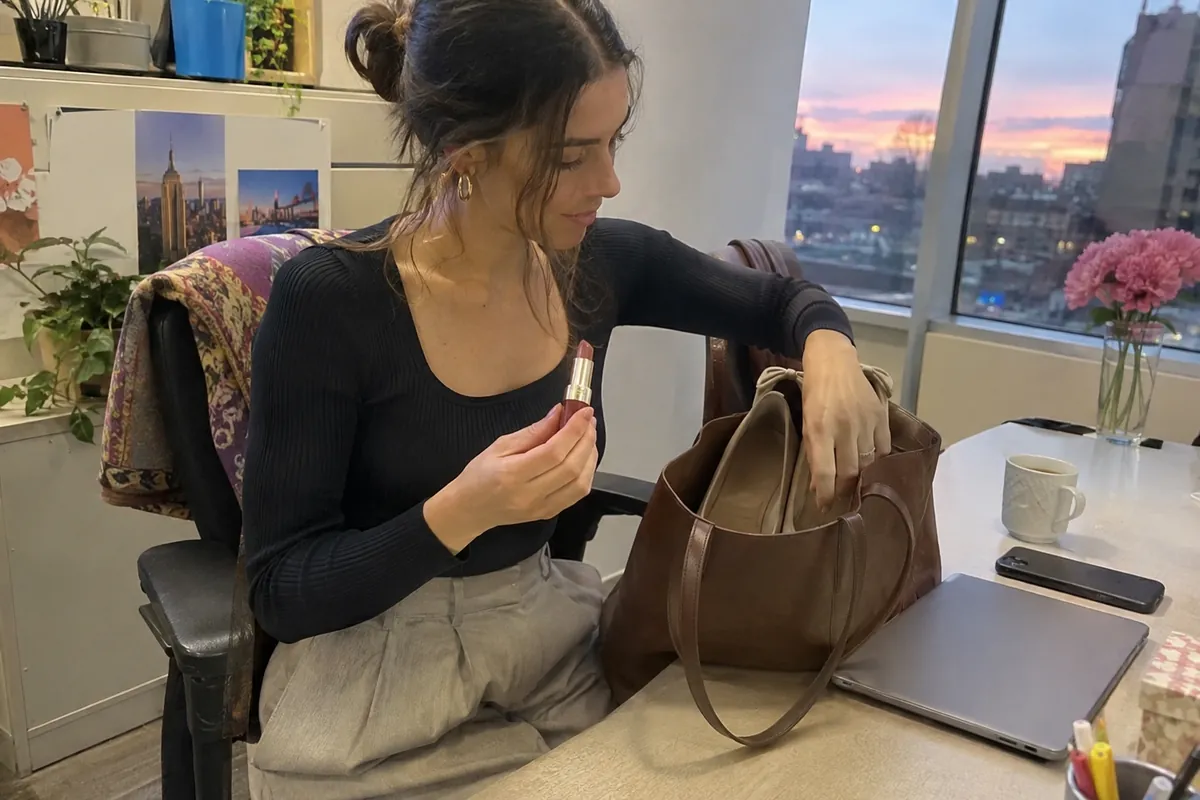
Choose a base you already like for work: trousers and a blouse, a skirt and knit, a dress, or another combination that fits the stated setting. Check it while sitting, standing and reaching for your bag. If the event is immediately after work, there may be no useful place to change an entire outfit.
A structured layer can make an outfit feel more formal when the venue calls for it. A soft cardigan or an unstructured jacket may be more comfortable for a less formal room. Neither is mandatory. If your office is more casual than the event, plan the one change that matters most rather than packing an entire second wardrobe.
For more detail on ambiguous invitations, use the business-casual dress-code guide. The aim is to understand the room, not to erase your personal style.
Plan for standing and carrying things

Networking often involves moving between conversations while holding a bag, a drink or a name badge. Pick a bag you can carry without occupying both hands. If you expect to stand for a while, choose shoes you have already tested on similar surfaces. The height of a heel alone cannot predict comfort.
Try the complete outfit at home: walk, sit and stand again. Consider the trip to the venue, the weather and any uneven ground. If you prefer a different pair at the event, check where you will put the first pair; a swap is useful only when you can carry it comfortably. The heel comfort guide offers more ways to assess the actual shoe.
Make a five-minute desk-to-event plan
Before the workday begins, check the time you need to leave, the address and the event's instructions. Pack only what solves a real problem: a layer for the venue, a small item for the weather, a comfortable shoe option or a way to carry a badge. If you already have a full day of meetings, avoid relying on a lengthy change at the last minute.
Open the after-work checklist
- I checked the host's dress code and location.
- I can sit, stand and walk in the complete outfit.
- My shoes suit the route and expected time on my feet.
- I have a practical place for my belongings and badge.
- I know which single change, if any, I need after work.
Event check
Ready for this venue?
0 of 5 done
Keep the checklist proportionate to the event. A casual gathering with familiar colleagues may need no change at all. A formal dinner may require a different plan, especially if the invitation specifies one.
What if you are attending a conference instead?
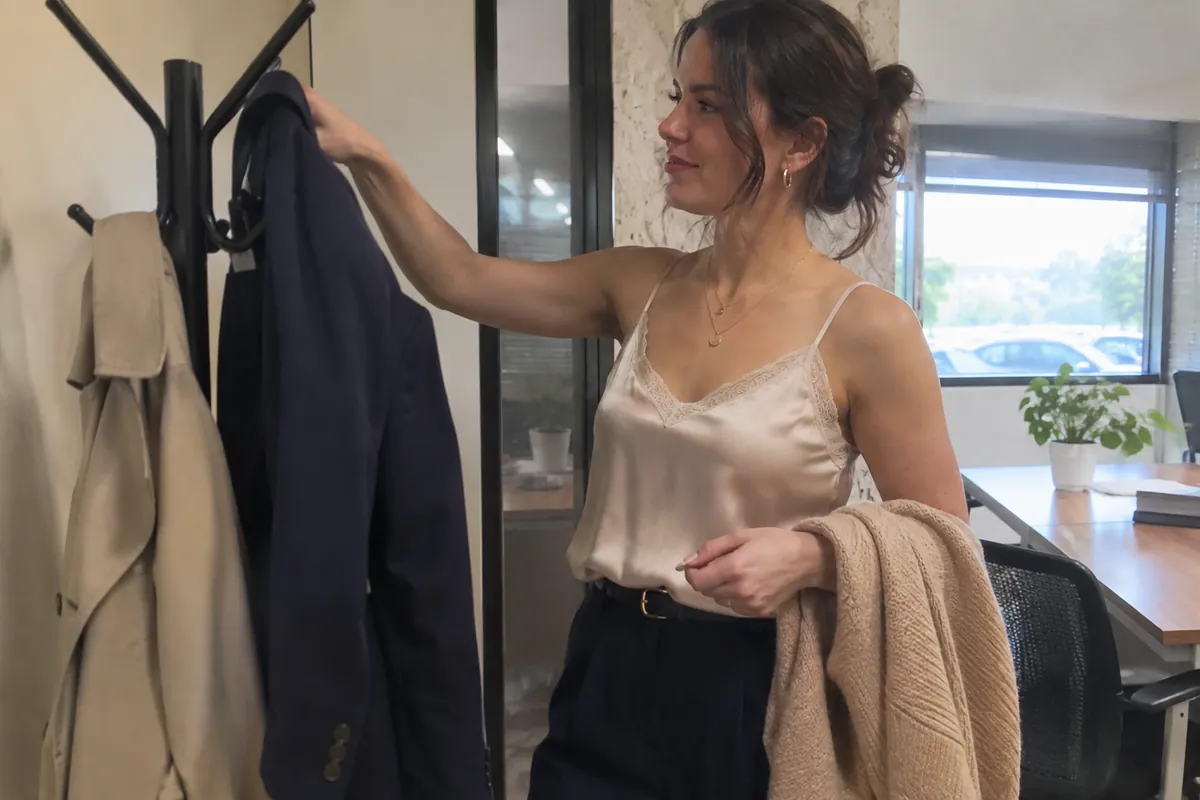
A conference can involve a full day of sessions, different rooms and a reception afterward. It may need more planning for layers, a laptop and the route between venues. The conference outfit guide addresses that longer schedule. For a short mixer, focus on the actual time and setting rather than packing for an entire day away.
Questions to settle before leaving
Must I wear a blazer? No. A blazer is one possible layer; the host's instructions and your comfort decide whether it helps.
Are jeans always too casual? Not necessarily. Their suitability depends on the event and organization. If the dress code excludes them, follow it.
Do I need heels? No universal rule requires them. Choose footwear that suits the invitation and lets you move comfortably.
What if I cannot change after work? Choose an adaptable base and make a small planned adjustment only if the event calls for one.
When your networking event follows a talk
After a panel or presentation, check where the microphone and transmitter are returned and whether you can collect a stored bag before the reception. An existing layer can make the change easier, but only if you have somewhere to carry it. The speaker outfit guide covers camera and microphone checks before the talk; plan the route and standing time for the reception separately.
Try the greeting and bag movements
An after-work event can expose a sleeve problem that stayed unnoticed at a desk. Put on the complete outfit and try taking your bag off, reaching for a coat check ticket and bending your arm as you would while holding a glass. Keep the movements ordinary. Notice whether your blouse cuff bunches inside the blazer or the inner sleeve stays caught afterward. Those details help distinguish a dressing problem from a restriction that remains through the evening.
If a sleeve needs constant pulling, choose another layer for the event and keep a note for the fitter. A jacket that looks right in one mirror position may still interfere with greetings or carrying your belongings. Show the work top and the event movement at the appointment. Ask for an assessment of both the lining and shell rather than requesting a shorter outside sleeve by default. The sleeve-lining fitting checklist helps you record the fault before alterations.
Frequently asked questions
Must I wear a blazer?
No. The host’s instructions and your comfort determine whether a structured layer is useful.
Do I need heels?
No universal rule requires heels. Choose shoes that suit the setting and let you move comfortably.
Are jeans always too casual?
No. Their suitability depends on the host and event; follow an explicit dress code.
What if I cannot change after work?
Choose an adaptable base and make a small planned adjustment only if the event calls for one.
How do I find out what the host expects?
Read the invitation and ask the organizer a specific dress-code question if it remains unclear.