Tailoring
Blazer sleeve lining pulling: what to check before alterations
Separate a caught layer from a construction or fit problem.
In shortIf your blazer sleeve lining pulls, first settle the layers and compare the jacket over your intended work top. Check it at rest and while bending your elbow. Show the restriction to a fitter before cutting threads or changing the sleeve length.
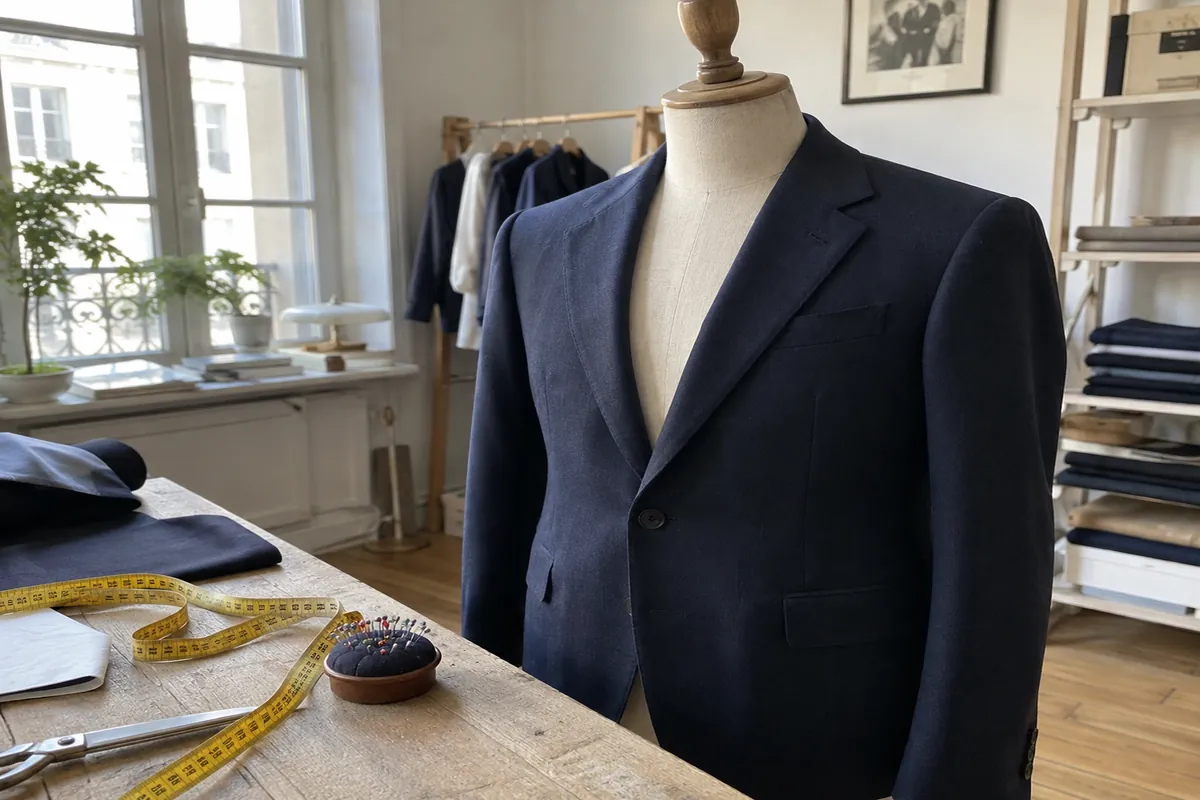
Start with the sleeve, not the scissors
A blazer sleeve contains more than its visible fabric. The lining has to move with your arm while remaining connected to the jacket. If it pulls, the sensation can come from a caught inner layer, the clothes underneath, the lining itself or the fit of the whole jacket. One crease cannot identify which part needs changing.
Take the blazer off and let the sleeve relax. Look inside with good light. If a blouse cuff has folded back or the lining has been pushed into a bunch while dressing, settle it gently and try again. Do not pull through resistance, and do not cut internal connections to make the sleeve feel looser.
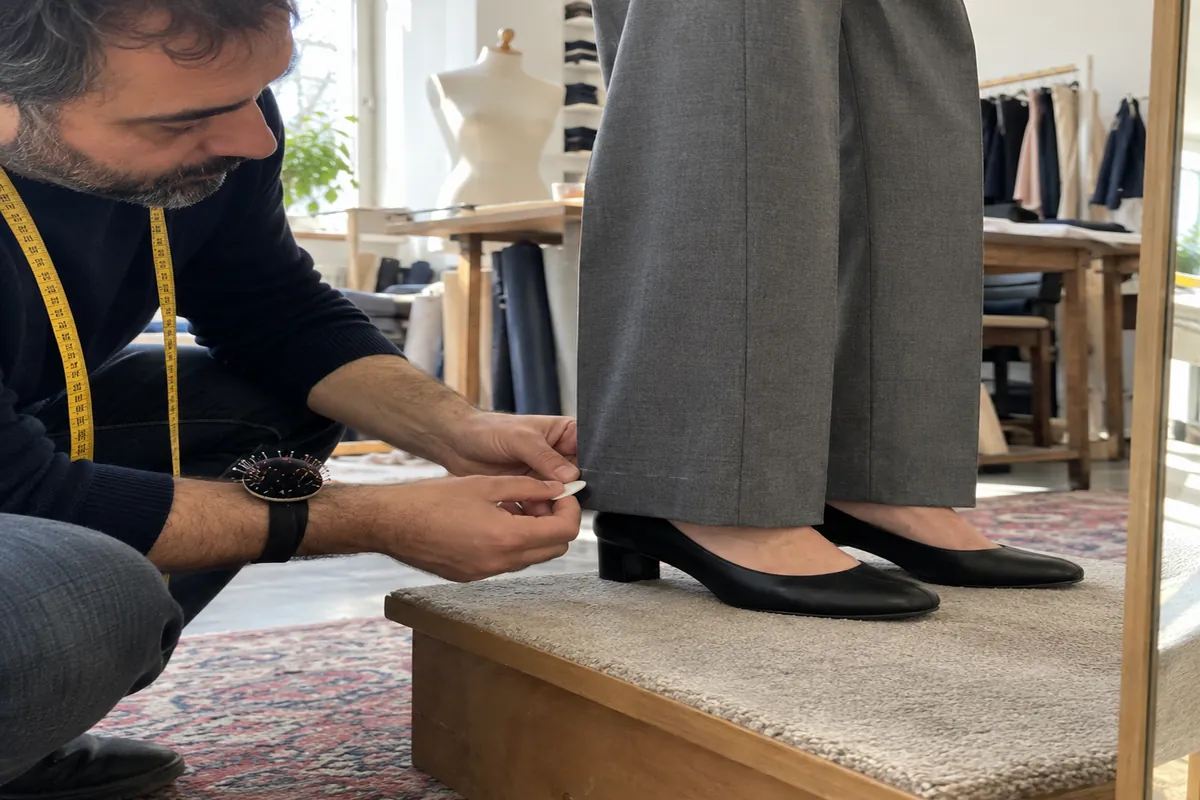
Compare with the clothes you actually wear
Put the blazer on over the intended work blouse or knit. Compare it with a smoother, thinner layer if that is available. Keep your posture ordinary and let your arms hang naturally. Then bend each elbow and reach forward as you would toward a keyboard. Note whether the restriction appears on one side or both.
If the jacket works over a thin top but binds over your winter knit, the combination needs evaluating before altering the jacket. If it restricts you with both tops, show both results at a fitting. Our women's suit-fit guide helps separate shoulder, body and sleeve observations without treating a size label as a diagnosis.
Which observation should you take to the fitter?
The sleeve feels caught as I put it on
Explain where it catches and whether settling the blouse cuff changes the result. Stop if you feel strong resistance.
It looks smooth at rest but pulls when I bend
Demonstrate the ordinary movement that produces the pull, with your intended base layer on.
The lining is visible below the cuff
Show the cuff at rest and after moving. Ask about the relationship between the shell and lining lengths.
Inspect the cuff without opening it
Compare the two sleeves from the outside and inside. Look for an exposed strip of lining, a loose seam or an area that stays twisted. Record whether the problem began after cleaning or alterations. That sequence helps the fitter investigate; it does not prove that the last treatment caused the problem.
Extra internal fabric is not automatically a defect. Movement allowances can be deliberate, while a lining that is constrained may need work even if the outside sleeve looks long enough. A cuff with functioning buttonholes also changes the alteration options. Ask about the construction before agreeing a finished length.
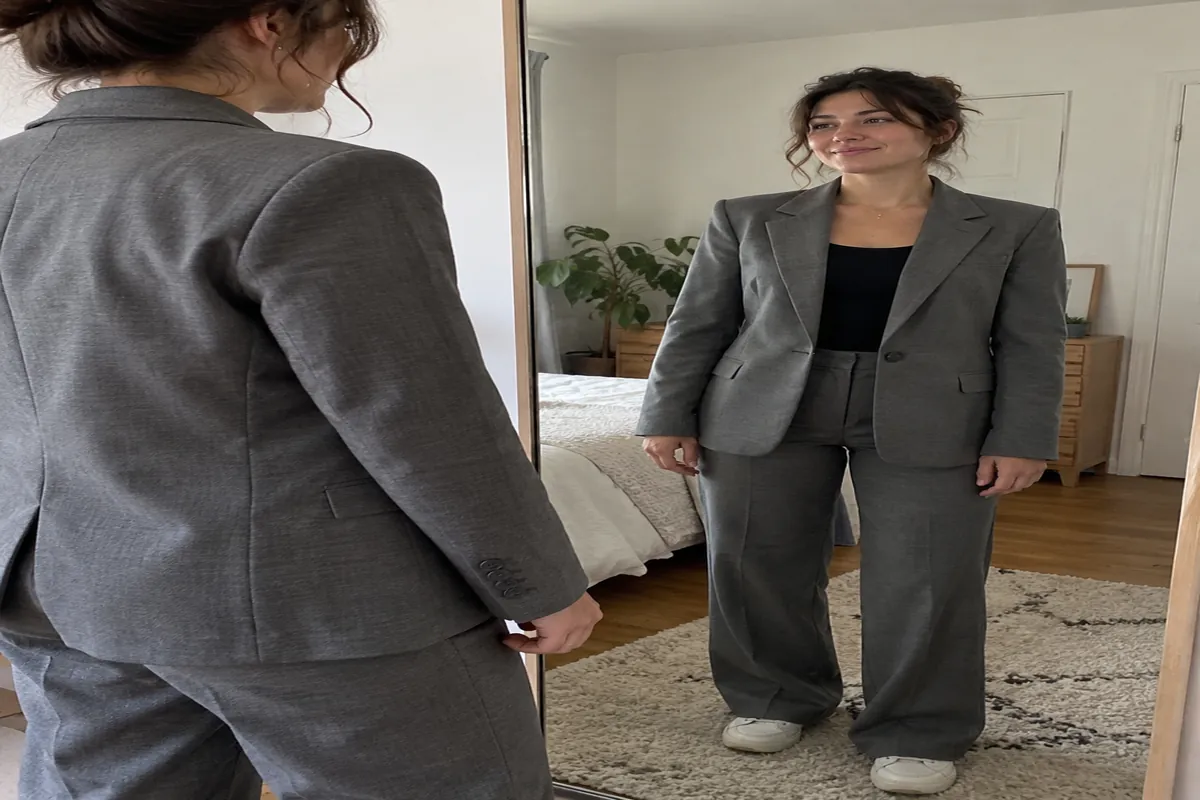
What can an alterations professional assess?
A fitter can compare the shell, lining and available allowances together. Ask whether the lining needs a repair, additional room or a different connection, and whether the jacket's external fit also contributes. There is no reliable universal amount to add or remove without seeing the actual construction.
When sleeve length has recently changed, ask explicitly whether the lining was adjusted to suit it. Pamela Howard's jacket alteration example in Threads treats both layers as part of the lengthening work. It illustrates why changing the outside alone does not settle the inside fit.
Take your work top to the appointment and demonstrate the desk movement, not an exaggerated overhead stretch the jacket was never designed for. Agree what comfortable ordinary movement should look like before approving the work. For wardrobe planning, the capsule guide can help you keep a usable alternative while a favorite blazer is away.
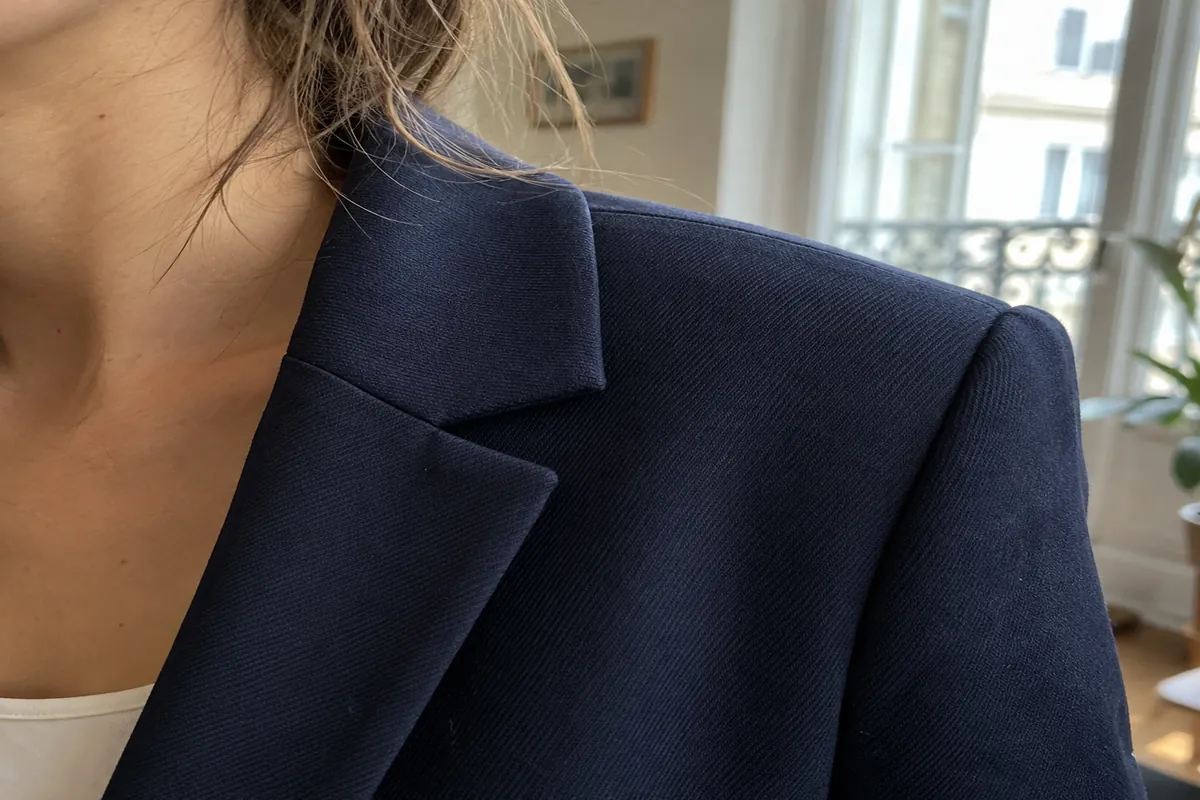
What should you avoid before a busy workday?
Avoid opening the cuff or trimming a loose-looking thread without identifying it. Pressing, stretching and adhesive are interventions, not diagnostic checks; follow the garment's care instructions rather than trying to force a smooth sleeve. If the lining is torn, stop pulling at the split and show its location to the repairer.
Choose another comfortable jacket when the restriction interrupts everyday tasks. The dress-code decoder helps identify an appropriate alternative. You do not need to solve a construction problem five minutes before a meeting. A useful repair request names the movement and location that fail, leaving the fitter room to assess the cause.
Frequently asked questions
Does pulling prove the blazer is too small?
No. Compare the base layer, sleeve position and lining before deciding which part needs changing.
Can I cut an internal thread?
Identify its purpose first. It may connect layers or preserve movement rather than being loose waste thread.
Can the lining need length when the sleeve looks long?
The two layers have different jobs. Ask a fitter to assess their relationship in the actual jacket.
Should I bring a blouse to the fitting?
Yes. Bring the layer you intend to wear and show the ordinary movement that feels restricted.
Does a change after cleaning prove shrinkage?
No. Record when it began and let the fitter assess both layers and the care history.