Tailoring
How to wear a blazer with a turtleneck comfortably
Check the contact points before choosing accessories.
In shortStart with a fine knit and compare the blazer at the back neck, upper arms and front closure. Then sit and reach forward without tugging. Choose the layers that remain comfortable before deciding whether to alter sleeves or buy another jacket.
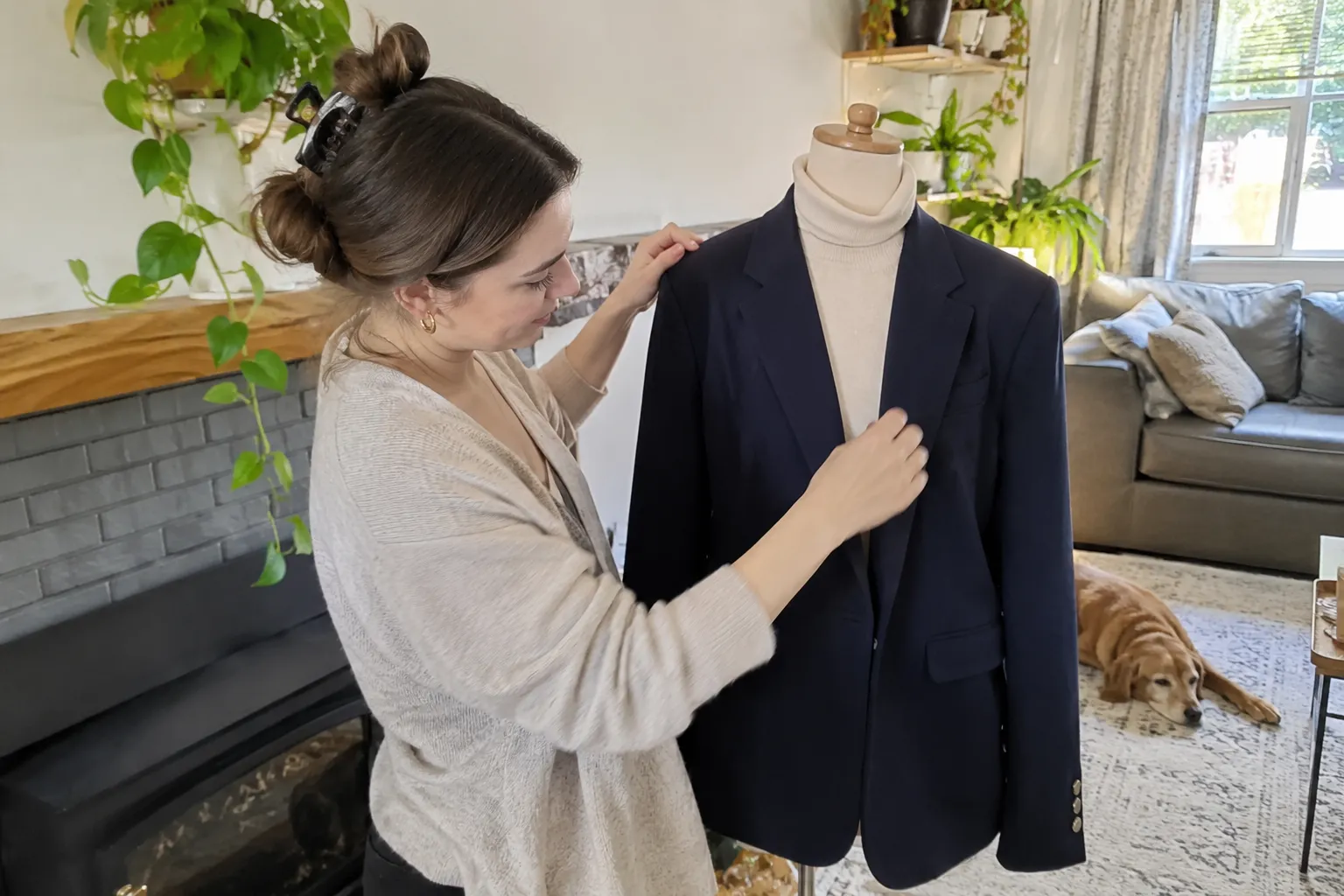
A blazer with a turtleneck works best when the knit leaves room at the neck, upper arms and waist. Start with a fine knit you already own, compare the jacket open and fastened, then sit and reach forward. Choose the combination that moves comfortably before deciding on color, jewelry or sleeve length.
Which turtleneck belongs under your blazer?
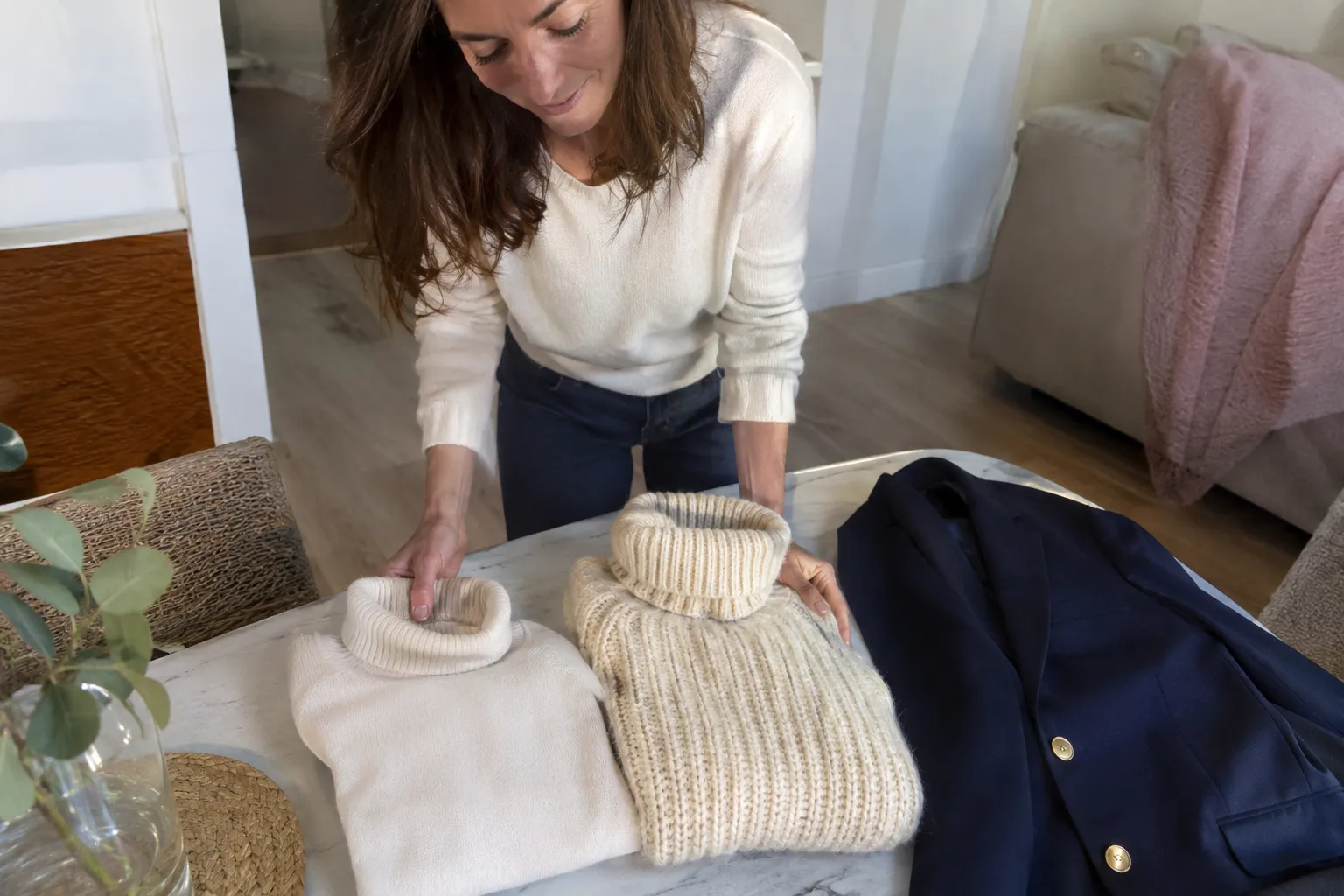
Try a lighter knit first if the jacket was fitted over a blouse. A thick rib or large folded collar adds cloth where the jacket already has structure. That does not make chunky sweaters unsuitable; it means they may need a different jacket. Compare actual garments rather than assuming that two items marked with the same size will layer equally well.
Use our women's suit fit guide to establish the jacket's fit over a familiar top. Then change only the top. This comparison gives you a useful baseline before buying a new blazer.
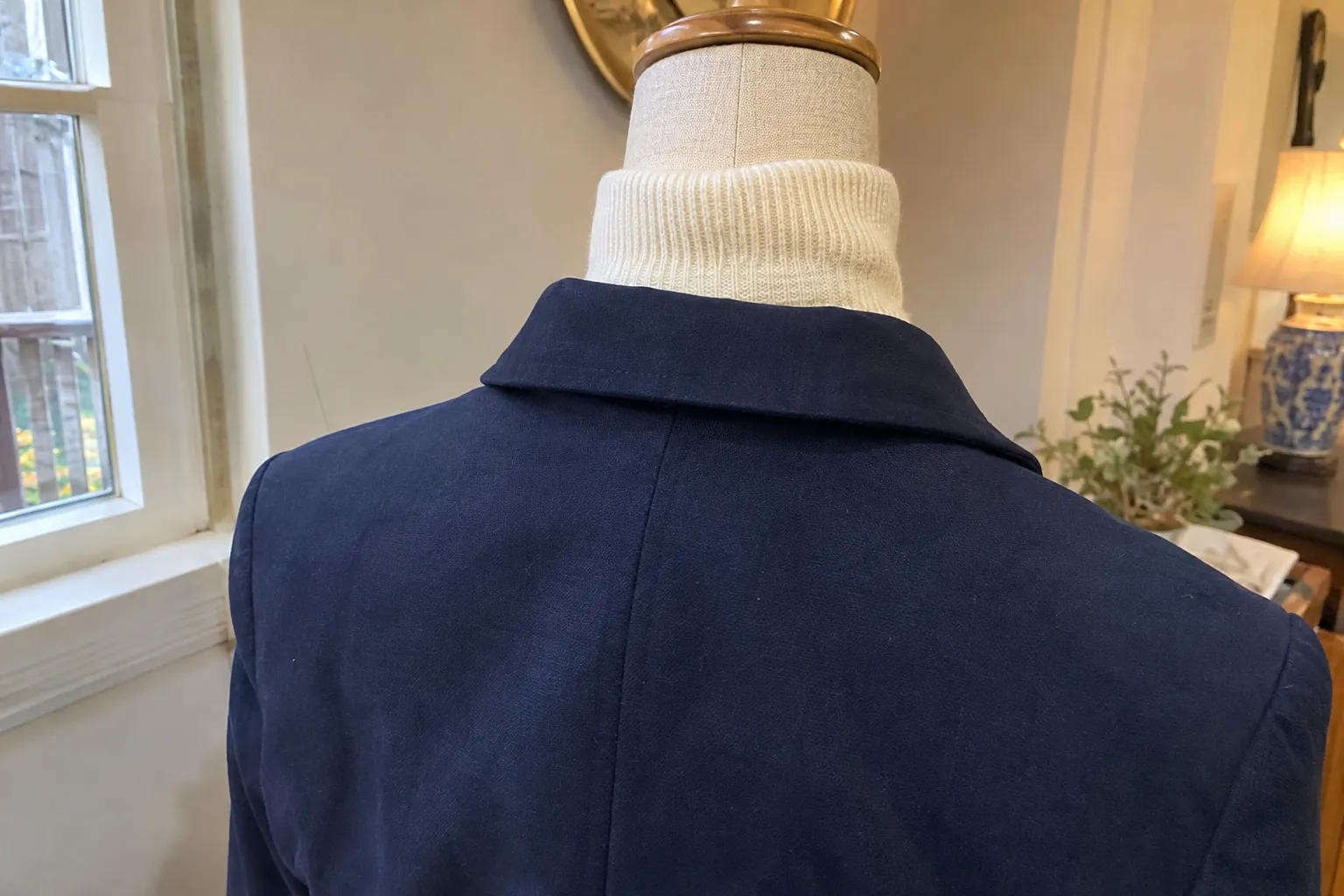
Check three contact points before choosing accessories
| Area | Useful observation |
|---|---|
| Back of neck | Collar rests without the knit bunching underneath |
| Upper arms | Sleeves move without dragging the sweater upward |
| Front closure | Fastening does not require pulling the panels together |
Stand with your normal posture and let your arms rest. Do not lift your shoulders to make the outfit look smoother. Proper Cloth's jacket posture guidance describes the importance of collar contact and posture in its own tailoring system. Use that as a reason to observe the back neck, not as a remote diagnosis of your jacket.
Next, sit at a table and reach forward as you would to type. If the sweater twists or the blazer rides upward, compare the same movement with your thinner baseline top. A problem that appears with both tops deserves a fit assessment rather than another sweater purchase.
Should the cuffs show?
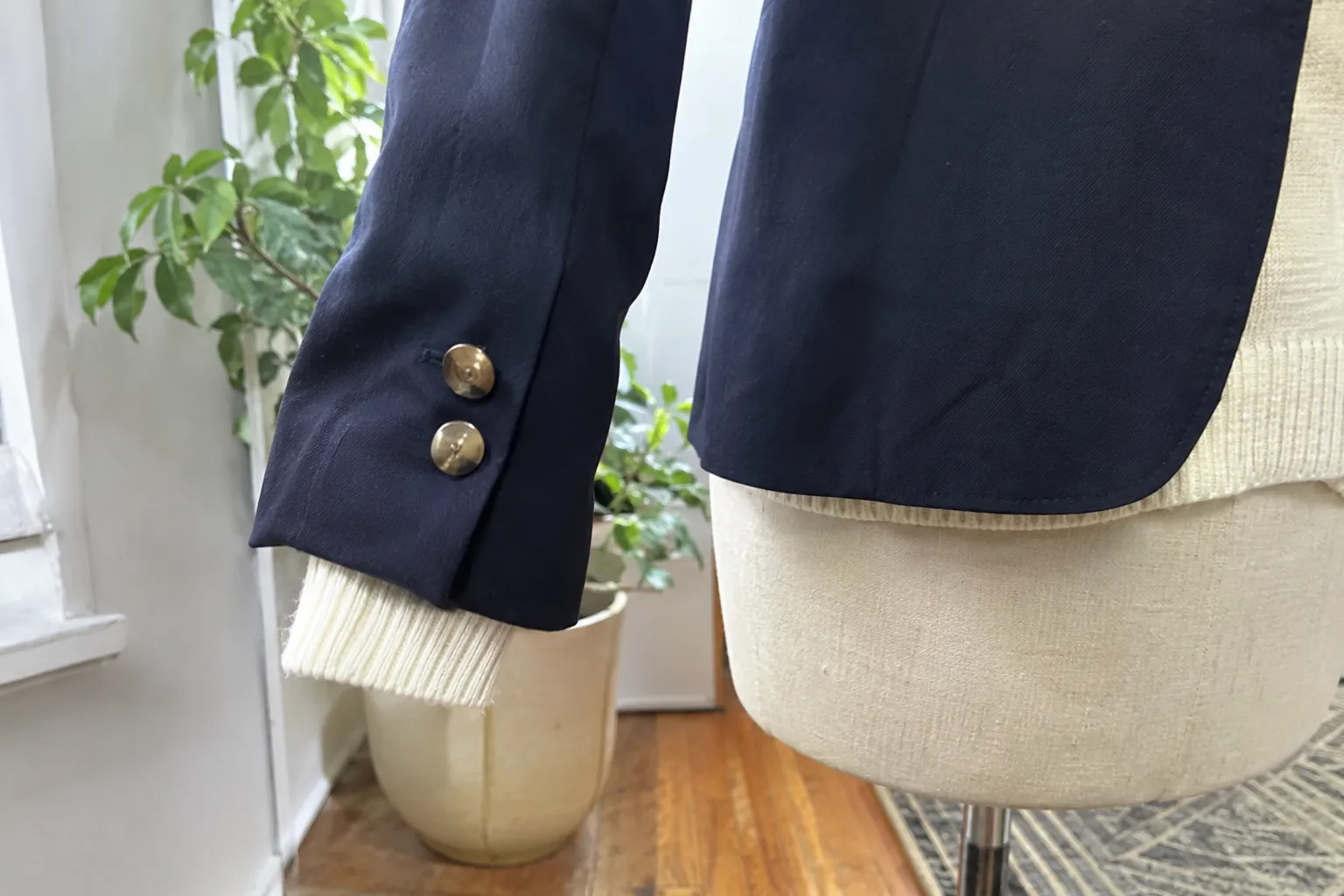
A little knit showing can be a styling choice, but there is no single required measurement for every women's blazer. Decide whether you want a visible cuff, then check it with your arms relaxed and while reaching. Do not shorten a jacket merely because the sweater sleeve is unusually long. Smooth both layers once; if they bunch again, investigate sleeve bulk or lining friction.
The guide to long blazer sleeves distinguishes a length decision from a sleeve that needs a different fit. Take the intended knit to an alteration appointment so the tailor sees the actual combination.
How do you make the outfit useful for work?
Begin with the workplace's stated expectations. A fine turtleneck, tailored trousers and a blazer may suit a business-casual day, while a specific uniform or formal interview may call for something else. Check the invitation or ask the organizer rather than treating a styling formula as a universal dress code.
For a repeatable capsule, record one comfortable combination and one prepared alternative. Our work capsule planner can help map combinations, but it cannot check the fit between garments. Keep that physical trial separate from the item count.
A simple comparison you can repeat
- Photograph the blazer over your familiar thin top, front and back.
- Change to the intended turtleneck, leaving trousers and posture unchanged.
- Compare neck contact, upper-arm movement and front tension.
- Sit, reach, then let the outfit settle without tugging.
- Write down which combination stayed comfortable and where the other changed.
For example, “cream fine knit works; chunky rib pushes the back collar upward” is a useful wardrobe note. It does not prove that the blazer needs alteration. If you want both combinations to work, ask a tailor what is feasible before requesting that the jacket be let out. Available cloth and construction determine the options.
Choose the next comparison
Only the chunky knit pulls
Try a thinner knit or a roomier jacket before arranging an alteration.
Both tops cause the same pulling
Record where it starts and request a fit assessment.
Frequently asked questions
Can I wear a chunky turtleneck under a blazer?
Yes, if the jacket has comfortable room at the neck, arms and closure.
Must the sweater cuffs show?
No. It is a styling choice; compare relaxed and reaching positions.
Should I alter the jacket for one sweater?
Compare a familiar thin layer first and ask a tailor about feasible options.
Is this suitable for every interview?
Check the stated expectations and context of the role.
Do matching size labels guarantee a good fit?
No. Compare the actual garments together.