Tailoring
When blazer sleeves feel too long: a fitting checklist
Separate cuff length from whole-jacket fit before altering.
In shortCheck both sleeves with arms relaxed and the intended blouse or knit underneath. Working cuff holes, lining and vents affect alteration options; ask a tailor to inspect the actual construction before marking each arm and agreeing on the final length.

If a woman's blazer sleeves cover more of the hand than intended, check the jacket with your arms relaxed and your planned blouse underneath. Compare both sides before choosing an alteration. Cuff buttons, vents and lining can limit shortening; a smaller jacket is not automatically a better fit through the shoulders or body.
Where should your particular sleeve finish?
Start with the design rather than an isolated measurement. A conventional full-length blazer, a bracelet sleeve and an intentionally oversized jacket have different proportions. Find a photograph or description of the intended design, then decide what feels useful for your own workday. A sleeve that interferes with writing or handling a bag deserves a practical movement check even when its length was intentional.
SuitShop's women's suit guidance places a conventional sleeve around the wrist. That is a reference for its suiting, not a rule that every women's blazer must reveal a fixed amount of shirt cuff. With a sleeveless blouse there may be no cuff to show at all.
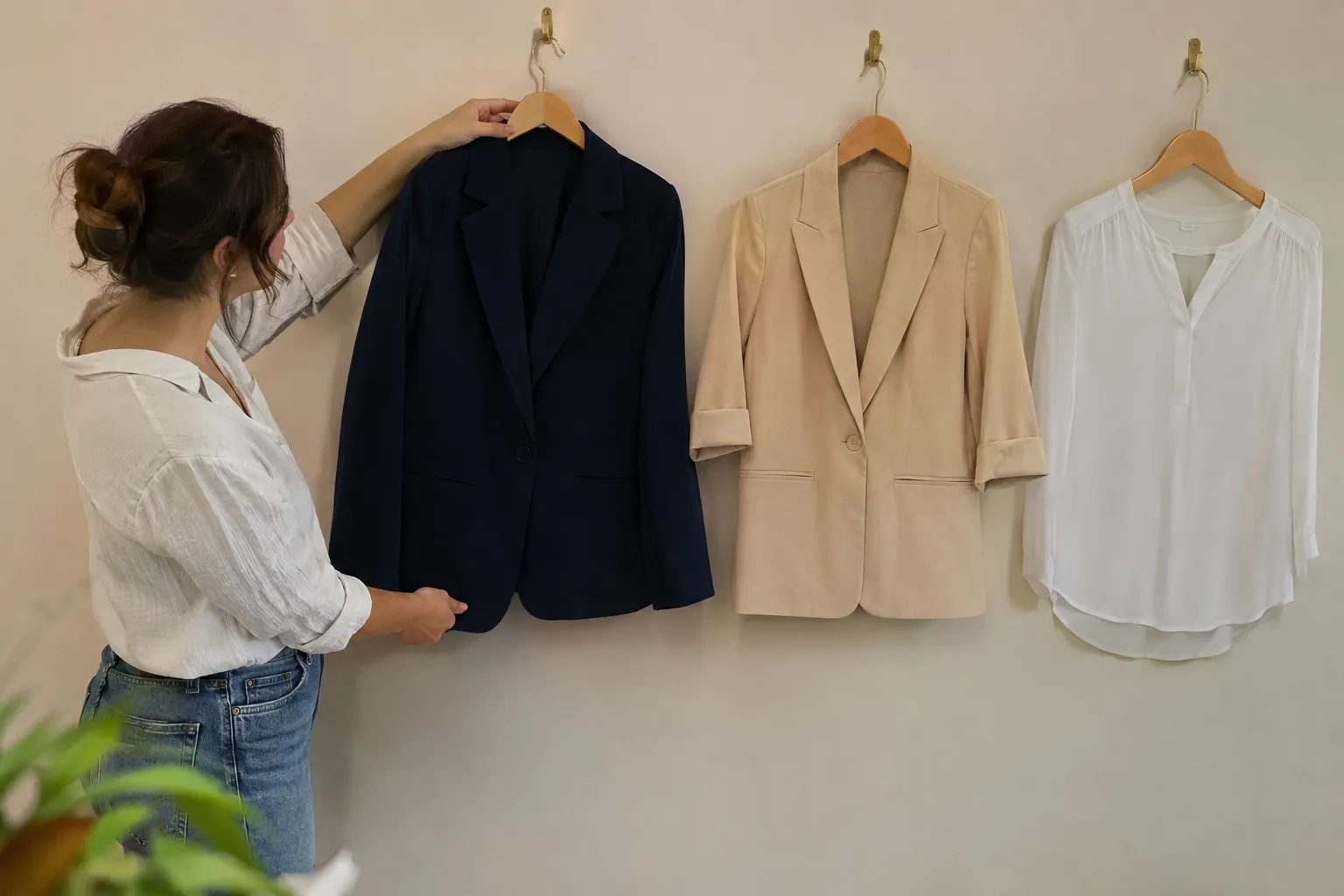
Check the whole jacket before asking for shorter sleeves
Wear the base layer you actually intend to use. Let the blazer settle with no shoulder bag, stand naturally and look at both wrists. Then fasten the jacket as designed, sit at a desk and reach comfortably. Note the sleeve at rest separately from where it moves during reaching. Do not hold your arms rigidly straight forward to decide its everyday length.
If the shoulders, armholes or chest also feel wrong, compare another cut before treating the cuff as the only problem. Our women's suit fit guide helps organize those observations. The sleeve-lining guide addresses restriction or twisting that shortening the outer cuff alone may not solve.
What do cuff buttons change?
| Cuff detail | Question to ask |
|---|---|
| Plain cuff without a vent | How will the outer fabric and lining be finished? |
| Decorative buttons | Can the spacing be preserved after shortening? |
| Working buttonholes | How much room remains below the lowest hole? |
| Patterned or embellished edge | Will the visible design or seam alignment change? |
Proper Cloth's alteration guidance explains that significant shortening can interfere with functional buttons and buttonholes. Its published limits describe its own construction. Your jacket needs inspection; copying another maker's allowance into an alteration request can create false confidence.
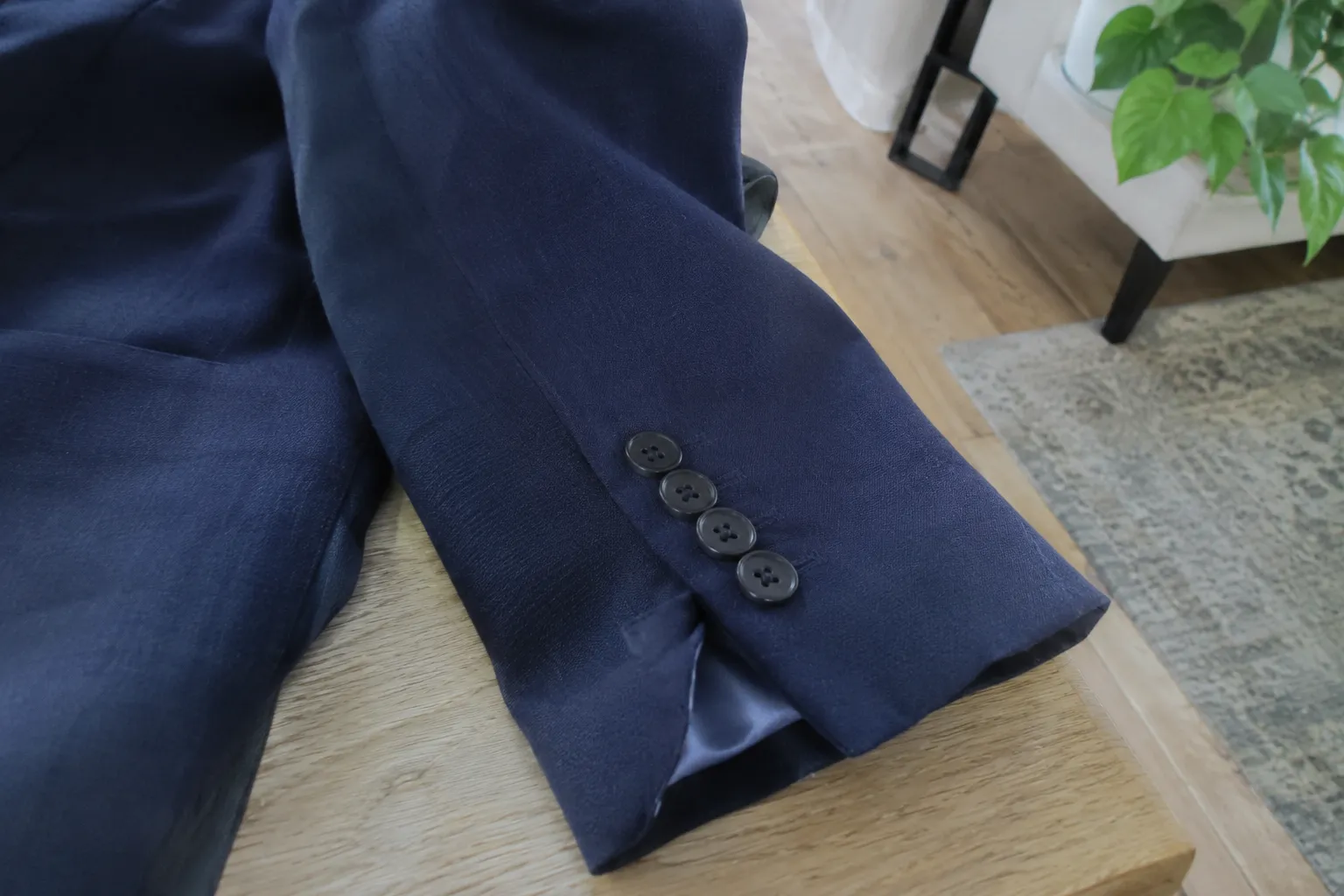
Should the sleeve be shortened at the cuff or shoulder?
Ask the professional to explain the proposed route before marking a final length. Working holes or a distinctive cuff may complicate work from the bottom. Altering from the shoulder is more involved and can affect how the sleeve fits in the armhole. Neither route is a universal solution, and some jackets may not justify the cost or structural change.
Have the tailor pin or mark the proposed result while you wear the intended layer. Inspect each side independently rather than assuming your arms and jacket hang identically. Ask whether a second fitting is included and whether existing buttonholes will remain. Keep an unaltered option available if the jacket is needed for an imminent event.
A practical appointment note
- Bring the actual blazer and the intended blouse or knit.
- Record how the sleeve behaves at rest, at a desk and when reaching.
- Show the buttons, vent, lining and any previous alterations.
- Agree on a visible endpoint for each arm, the method and the full quote.
- Repeat the movement check before accepting the finished garment.
For example, a jacket may look long at both wrists while only one sleeve catches on a watch. Explain both observations instead of requesting the same amount removed everywhere. Put the altered jacket through your capsule outfit checks before counting it as ready. A successful fitting is one you can use comfortably with the clothes you own.

Choose your next fitting check
The cuff covers my hand at rest
Record each wrist position and show the cuff construction to a fitter.
The sleeve catches only while reaching
Check the lining and whole jacket before asking for shorter cuffs.
It is an intentionally long design
Compare the intended look with your practical movement needs before altering.
Frequently asked questions
Do long sleeves mean my blazer is too big?
No. Compare shoulder, body and movement fit before changing size.
Can working buttonholes limit shortening?
Yes. Have their position and the actual cuff construction inspected.
Should both sleeves lose the same length?
Ask the fitter to assess each arm while you stand naturally.
Can I roll the sleeves instead?
Only if the fold stays comfortable and suits the design; it does not correct the underlying fit.
What should I bring to a fitting?
The actual blazer, intended base layer and notes about both resting and moving fit.