Tailoring
Remove blazer creases without confusing them with fit
Separate packing creases from folds caused by fit before applying heat.
In shortRead the care label, empty the pockets and hang the blazer freely first. Compare it hanging and worn before treating a fold. Use only permitted care methods; persistent pulling, shiny patches or bubbling deserve assessment rather than more heat.
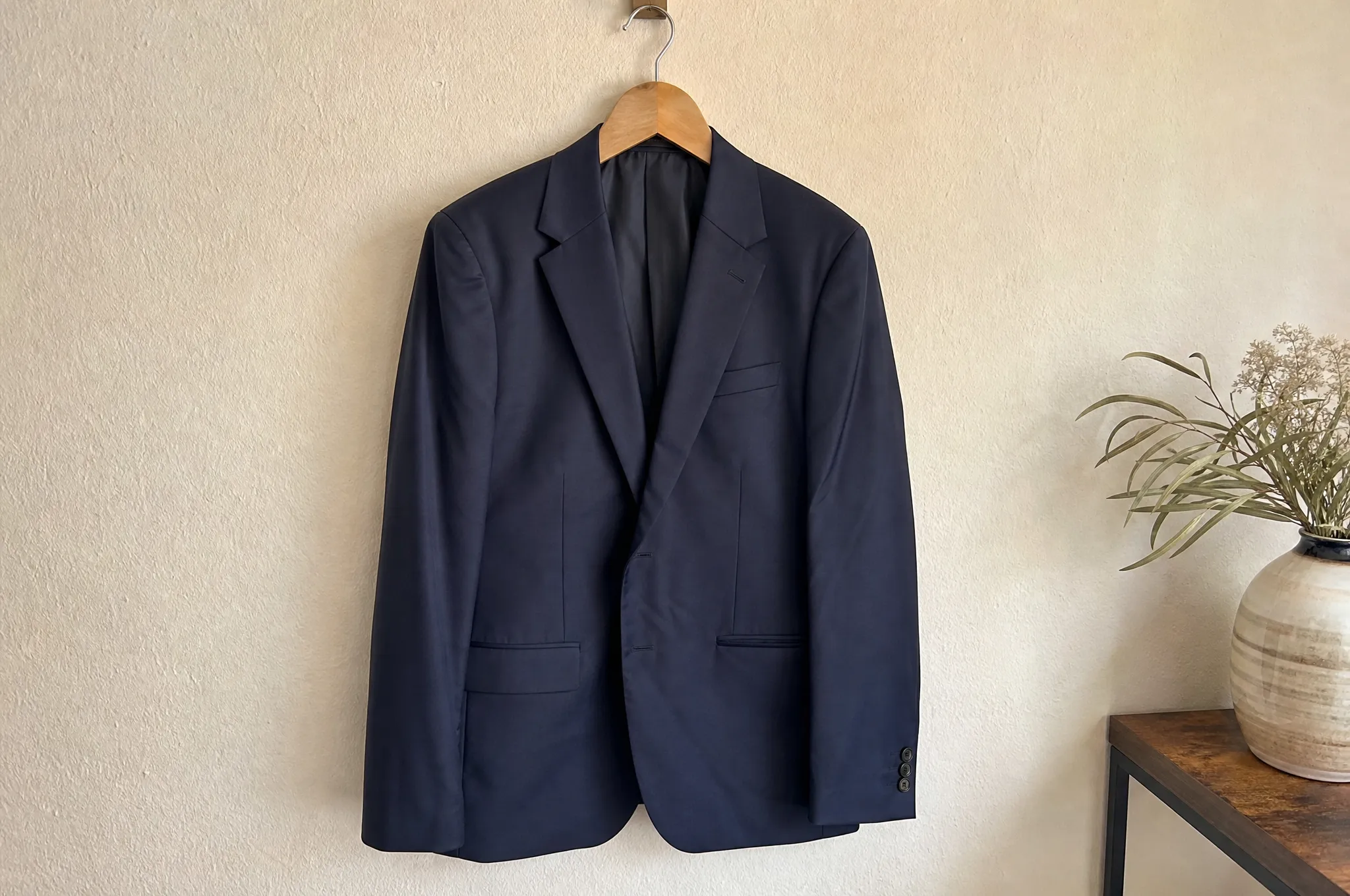
To get wrinkles out of a blazer, read its care label, empty the pockets and hang it on a supportive hanger first. Treat remaining creases only with a method permitted for that garment. Folds that return when you button or move may be fit tensions rather than wrinkles that more heat will solve.
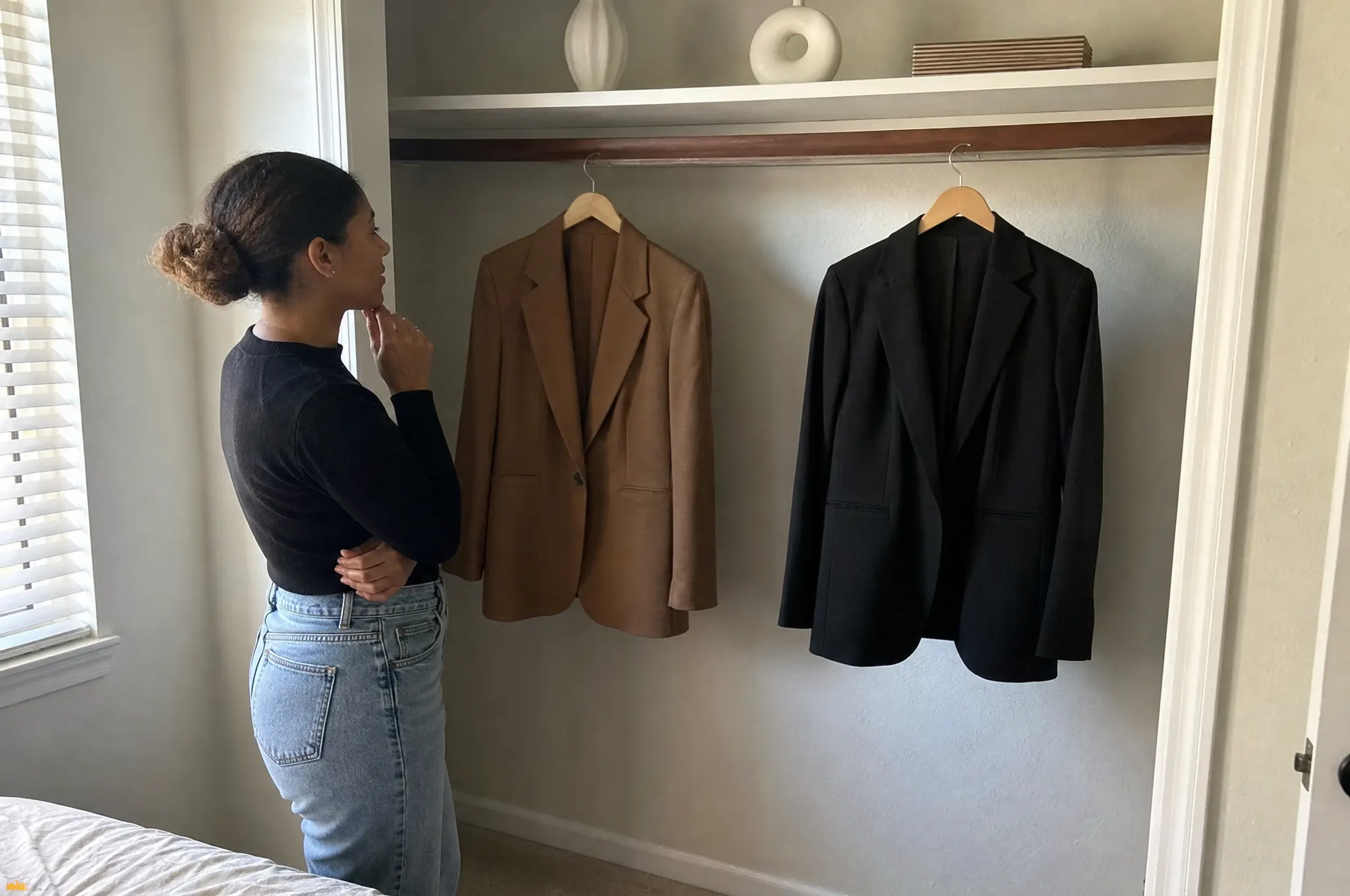
First, compare the hanging and worn jacket
Take the blazer out of a suitcase or crowded wardrobe and let it hang freely. Inspect the front, sleeves and back in consistent light. Then put it on over your intended blouse, leave it open and finally fasten the intended button. A line that appears only when you fasten it deserves a fit check before a pressing session.
This comparison is an observation, not a tailoring diagnosis. Several causes can produce similar folds. Our women's suit fit guide helps you describe where pulling occurs without assuming that every crease means the jacket is the wrong size. Photograph the same area hanging and worn if you plan to ask a fitter for advice.
| Observation | Next step |
|---|---|
| Soft creases after packing | Hang freely, then reassess against the label |
| Fold appears when buttoned | Check movement and closure tension |
| Shiny, scorched or bubbled area | Stop heat treatment and ask a professional |
| Unknown label or delicate trim | Confirm care with the maker or cleaner |
Does a fabric label make steaming safe?
Fiber content is only part of the answer. A blazer also contains lining, structure and sometimes bonded layers or trims. Instructions for a loose wool sweater cannot automatically be applied to a constructed wool jacket. Read the complete garment's directions and ask its maker when the permitted method is unclear.
For example, SuitShop's own cleaning guidance recommends dry cleaning its suits and suggests steaming for wrinkles. That is brand-specific guidance, not permission to steam every jacket. A dry-cleaning instruction also does not mean an at-home wash is an interchangeable way to remove creases.
If steaming is permitted, what should you protect?
Follow the appliance manual and garment directions together. Work on a securely hung, unworn garment; never aim steam at clothing on your body. Test a concealed area first and let it dry before judging the surface. Keep your hands out of the steam path and avoid saturating a section because one pass did not remove a stubborn line.
Rowenta's suit steaming guide identifies fused construction and delicate trim as reasons for caution. Watch for unexpected puckering or a change in surface appearance and stop if either develops. Do not flatten a lapel roll or pull a shoulder into a different shape to chase a crease; those areas have deliberate structure.
When is an iron the wrong next step?
A higher temperature is not a reliable answer to a persistent fold. If the label prohibits ironing, stop there. If it permits ironing, use its specified setting and the manufacturer's technique rather than borrowing a cotton-shirt routine. Woolmark's wool ironing guidance warns against excessive pressure and leaving the iron on the garment; its advice is conditional on the care claim.
A shiny patch may be surface damage rather than a remaining wrinkle. Repeated pressing can make the problem harder to assess. Photograph the area before trying anything else, keep a note of what was used and show it to a cleaner. Do not promise yourself that a pressing cloth will reverse damage already present.
What if you need the blazer tomorrow?
Set a decision point before bedtime: either the garment is ready under its permitted care method or you choose another comfortable outfit. Check our work capsule wardrobe planner for existing combinations and the interview outfit checklist for a complete movement check. Avoid making the first experiment on your only suitable jacket just before departure.
After care, let the jacket dry fully and settle before wearing or covering it. Store it with room around the shoulders and sleeves instead of compressing it between heavy coats. Keep a short note of the successful permitted method for this particular blazer. That record makes the next packing crease easier to handle without turning every line into another round of heat.
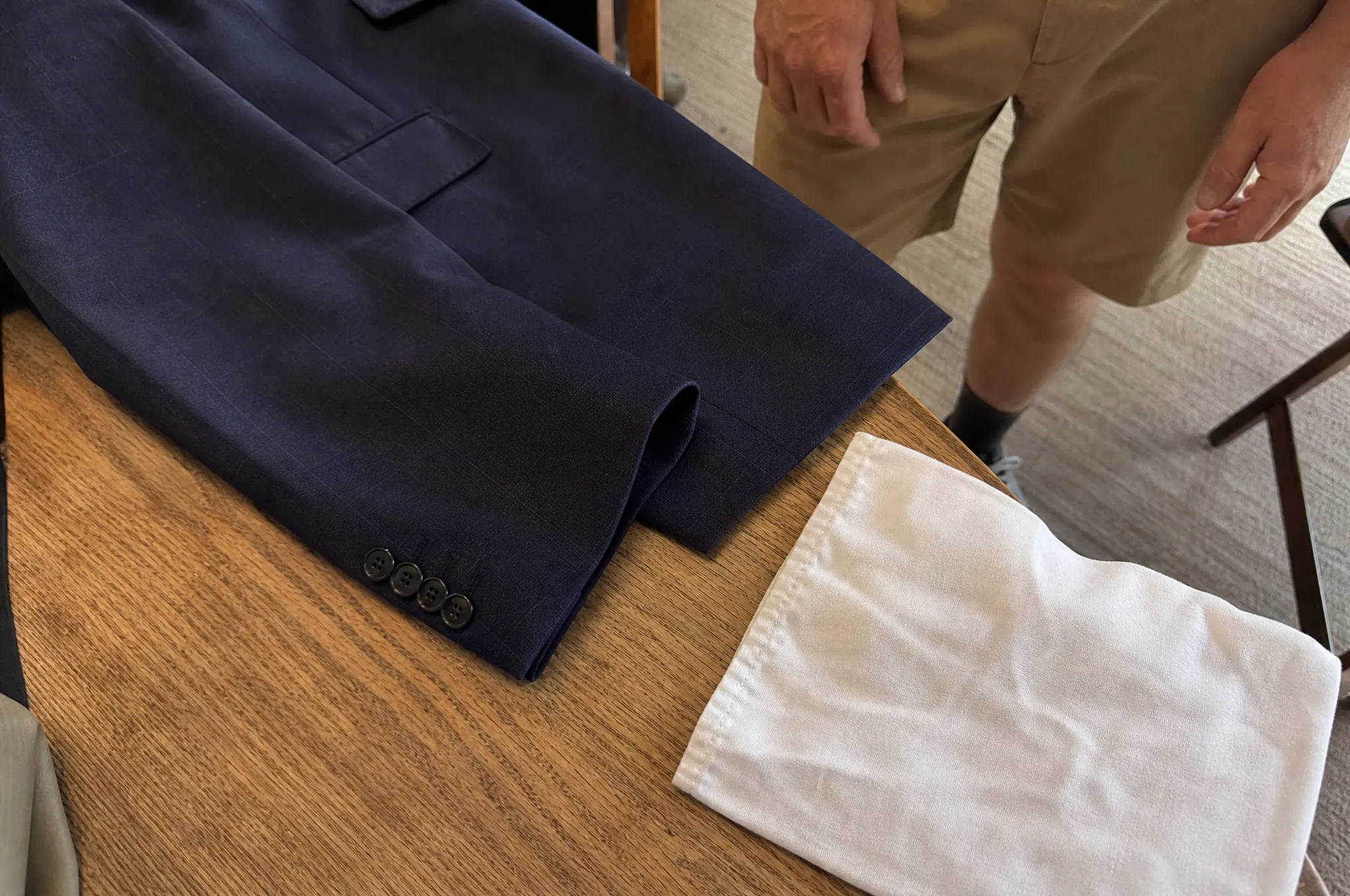
Your crease check before choosing a method
The fold is visible while the blazer hangs
Read the care label and note whether the crease followed packing. If care is unclear, ask the maker or cleaner before applying heat.
The fold appears only when I fasten the blazer
Compare the intended layers and movement. Record where pulling starts and use a fit assessment before treating it as a storage crease.
The surface changed after treatment
Stop. Record the appliance, setting and area affected, then seek a professional assessment.
Frequently asked questions
Can every blazer be steamed?
No. Follow the complete garment care directions.
Does a fold always mean poor fit?
No. Compare hanging and worn appearances before deciding.
Should I increase heat on stubborn wrinkles?
Do not exceed the label or appliance instructions.
Can I steam a blazer while wearing it?
No. Remove it and follow the appliance safety instructions.
Can hanging replace every other method?
No. It is a useful first check, not a guarantee that a crease will disappear.