Tailoring
What to check when your blazer pulls across the back
Find where the strain starts before you pay for an alteration.
In shortA blazer that is too tight across the back is short of room where your shoulders move forward. Check whether the strain starts at the shoulders, upper back or bust, over the layers you plan to wear. Pinching shoulders usually call for another size or cut.
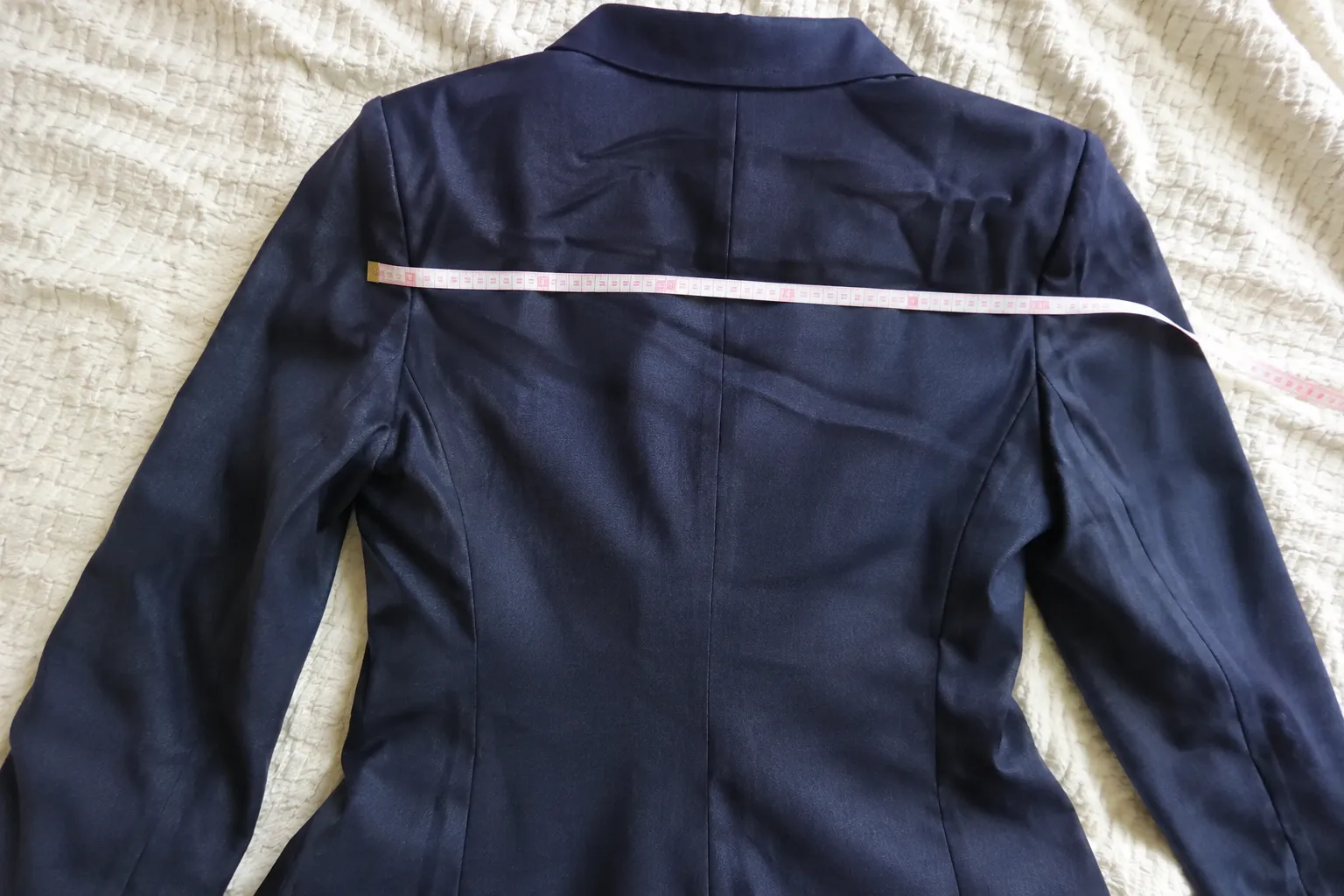
A blazer that is too tight across the back is short of room where your shoulders move forward. First check whether the strain starts at the shoulders, the upper back or the bust, using the layers you plan to wear. A pinching shoulder usually points to another size or cut before any alteration.
How can you tell where the back is pulling?
Wear the blazer over your usual top, take off your bag and stand with your arms relaxed. Ask someone to photograph your back. Then reach forward as if to give a hug and take a second picture. Lands' End describes this hug test for jacket fit: pulling across the back, shoulders or bust, or feeling restricted, can mean the jacket is too small or too stiff.
Keep the movement ordinary. A tailored jacket in a woven cloth may feel firmer than a knit cardigan during a very wide reach, so compare it with what you really do: type, drive, lift a bag to a shelf and sit with your arms on a table.
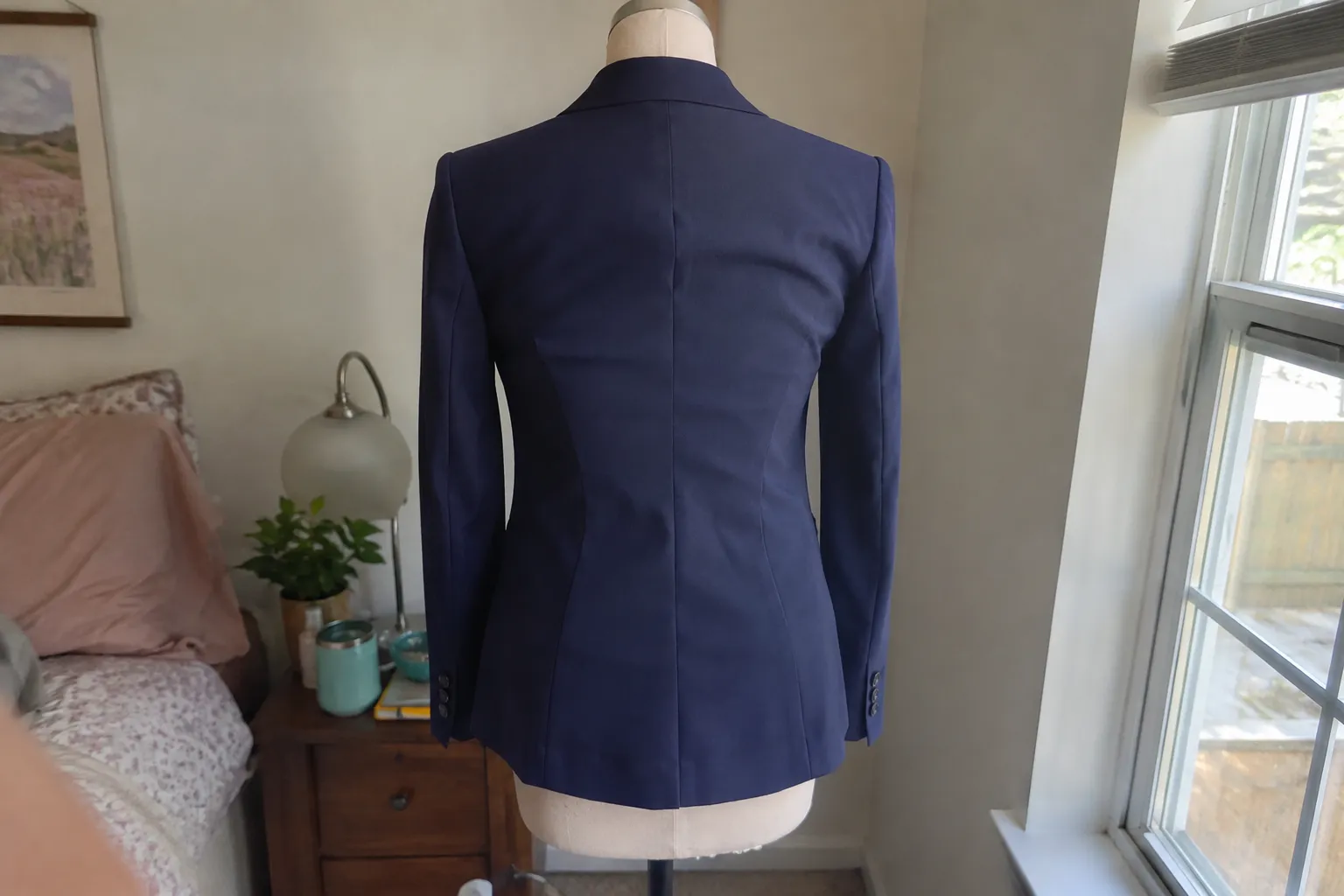
Is it the shoulders, the back or the bust?
| What happens | Where to look first | Next step |
|---|---|---|
| The sleeve head digs in even with arms down | Shoulder width and shoulder pad position | Compare another size or a cut with a different shoulder |
| Horizontal lines between the shoulder blades when you reach | Upper-back room and armhole shape | Repeat in a second size, then ask about spare seam allowance |
| Back strains only when buttoned | Room across the bust and front closure | Compare open and buttoned photos |
| Tight only over a sweater | The underlayer | Try the thinner top you will actually wear |
These are places to start looking. One crease cannot tell you which pattern piece is too small. Our women's suit fit guide covers the rest of the jacket, including sleeves and closure.
Where do you feel it first?
At the shoulder, even with my arms down
Compare another size or cut before asking about the back panel.
Across the shoulder blades when I reach
Repeat the same reach in a second size, then ask a tailor whether the shell and lining have spare cloth.
Only when the front is buttoned
Compare open and buttoned photos and check room across the bust and the closure.
What can a tailor check inside the blazer?
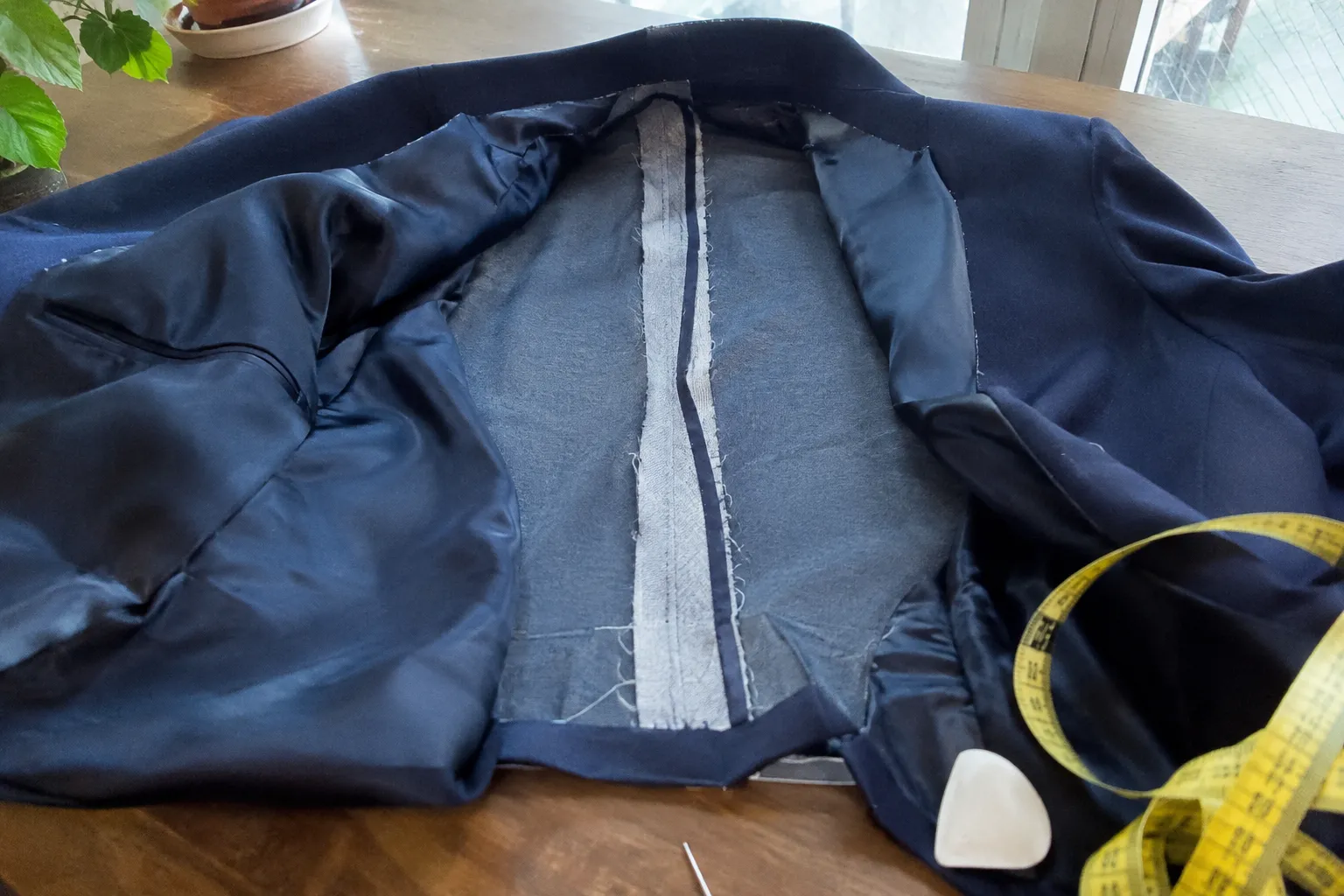
A tailor can feel or open the seams to find out whether extra cloth exists, usually along the center back or side-back seams if the jacket has them. A visible seam on the outside does not prove there is usable allowance inside. Old stitch lines or needle marks may also remain after a release, depending on the cloth, so ask to see how that could look before agreeing.
The lining matters too. A shell with spare room still pulls if the lining stays narrow. Ask whether both layers would be changed, what the price covers and whether the work affects the vent or armhole. If the shoulder itself is too narrow, ask plainly whether the jacket is worth altering at all.
How do you compare two sizes fairly?
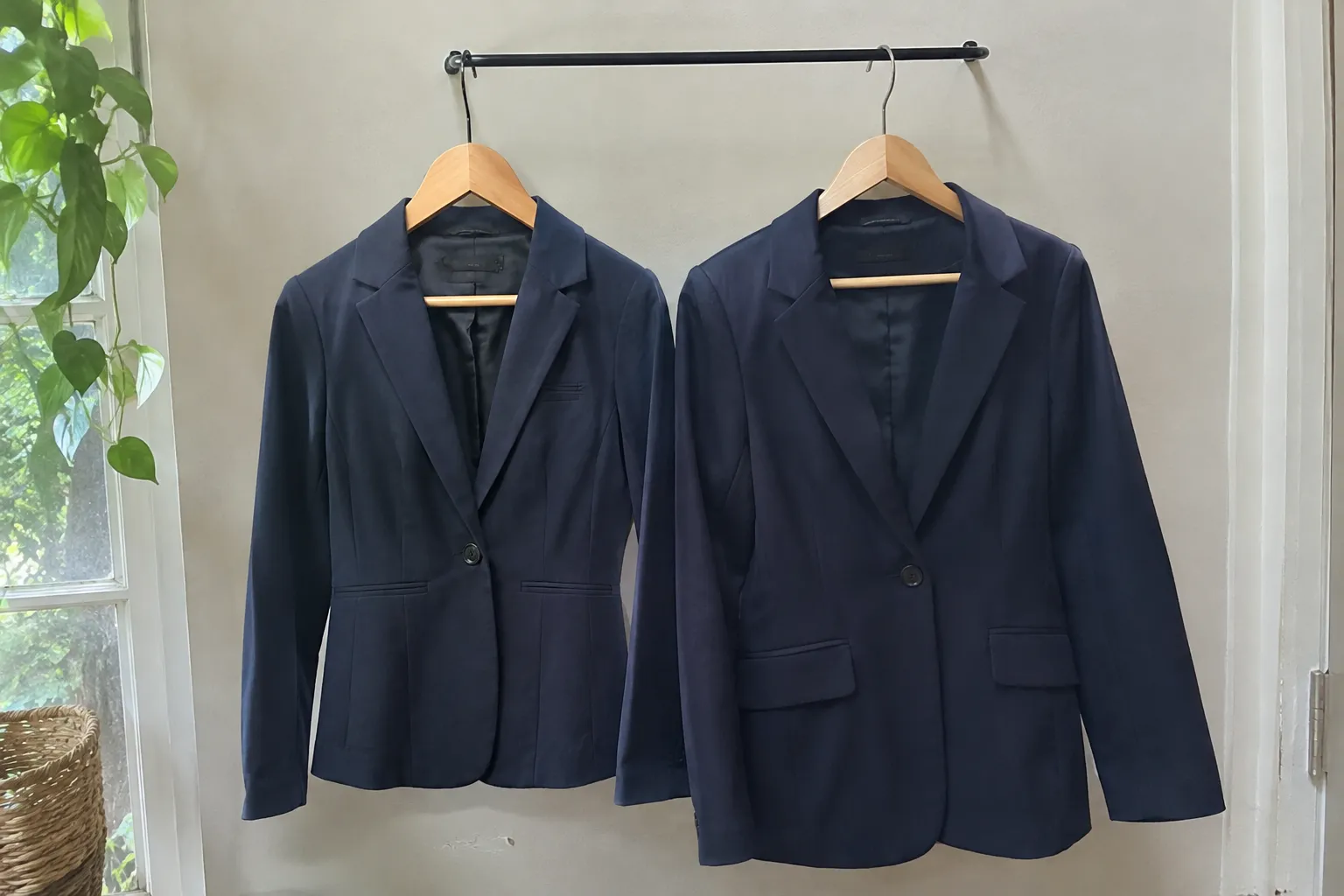
Try both sizes on the same day with the same top, trousers and bra. Take the same three photos of each: back at rest, back while reaching, and front buttoned. Then sit for a few minutes with your forearms on a table.
- Note where you feel pressure first.
- Check whether the larger size still lets the shoulder hang cleanly.
- Look at sleeve length again, because it can change with size or range.
- Decide which remaining issue is realistic to alter.
This is a recording method for your own fitting, not a test we carried out. If the larger size frees your back but the shoulders collapse, you may need a different pattern instead of another number. Sleeves that now run long are a separate question, covered in our guide to blazer sleeves that are too long.
Should you stretch or steam it at home?
Do not try to force room into a tailored jacket by wetting, pulling or pressing the back panel. Heat and tension can mark the cloth, disturb the lining or change the shape without adding the room you need. Follow the care label, and keep the return window in mind while you decide. A new blazer with tags is easier to exchange than one that has been altered or damaged.
What if you need it this week?
Wear the jacket open over a finished outfit if it feels comfortable that way, or choose another layer that lets you move. For an interview or presentation, rehearse the real actions in advance. Our conference speaker outfit checks include gestures that show strain quickly. A blazer you cannot reach in will keep distracting you, however sharp it looks standing still. If you removed or are thinking about removing padding to gain room, read the shoulder pad checks first; the pad is rarely the part that limits the back.
Frequently asked questions
Can a blazer be let out across the back?
Sometimes. It depends on whether the seams and lining have spare cloth, which a tailor needs to inspect.
Is it normal to feel a pull when reaching forward?
A woven jacket can feel firm in a very wide reach. Pulling or restriction during everyday movements is worth comparing with another size or cut.
Should I size up to free the back?
Try both sizes with the same layers and compare shoulders and sleeves as well as the back before deciding.
Can steaming loosen a tight blazer?
Do not rely on it. Heat and pulling can mark or distort the cloth without adding room.
Does a center back seam mean the jacket can be let out?
No. A seam can have very little allowance, and the lining and cloth also decide what is possible.