Tailoring
What to check when your blazer sleeves look too short
Separate a design choice from a length or movement problem.
In shortCompare the sleeve with your arms relaxed and at desk height, using the intended top. Confirm the design before asking a tailor about cuff and lining allowance. The result depends on the actual garment construction, rather than a universal lengthening limit.
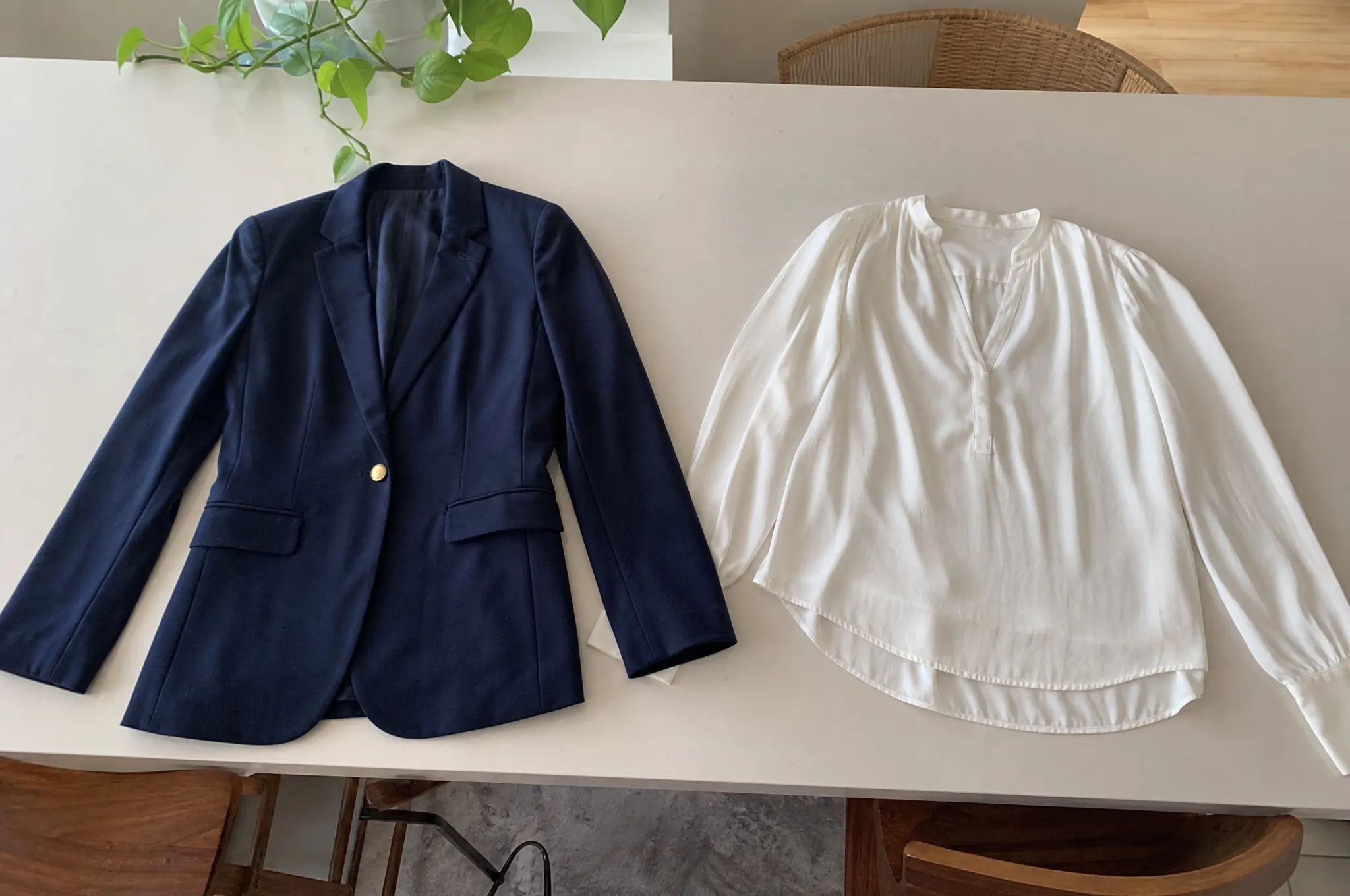
Blazer sleeves that look too short need a check with your arms relaxed before any alteration. Compare the intended design, the shirt beneath and ordinary desk movement. Then ask a tailor whether the actual cuff, lining and available fabric permit lengthening. A sleeve that rises during a reach is not automatically too short.
Which observation needs checking?
Short with arms relaxed
Confirm the intended sleeve design, then ask about available cuff and lining allowance.
Only rises while reaching
Observe shoulder movement and compare the underlayer before requesting extra length.
Different amounts of shirt cuff show
Compare the shirt and jacket sleeves independently on each side.
Start with the sleeve the designer intended
A bracelet-length jacket deliberately ends above the wrist. A conventional full-length work blazer has a different target. Find the product description or an original photograph if available, but compare the garment on you rather than measuring against the model's pose. Neither a size label nor your height alone settles the result.
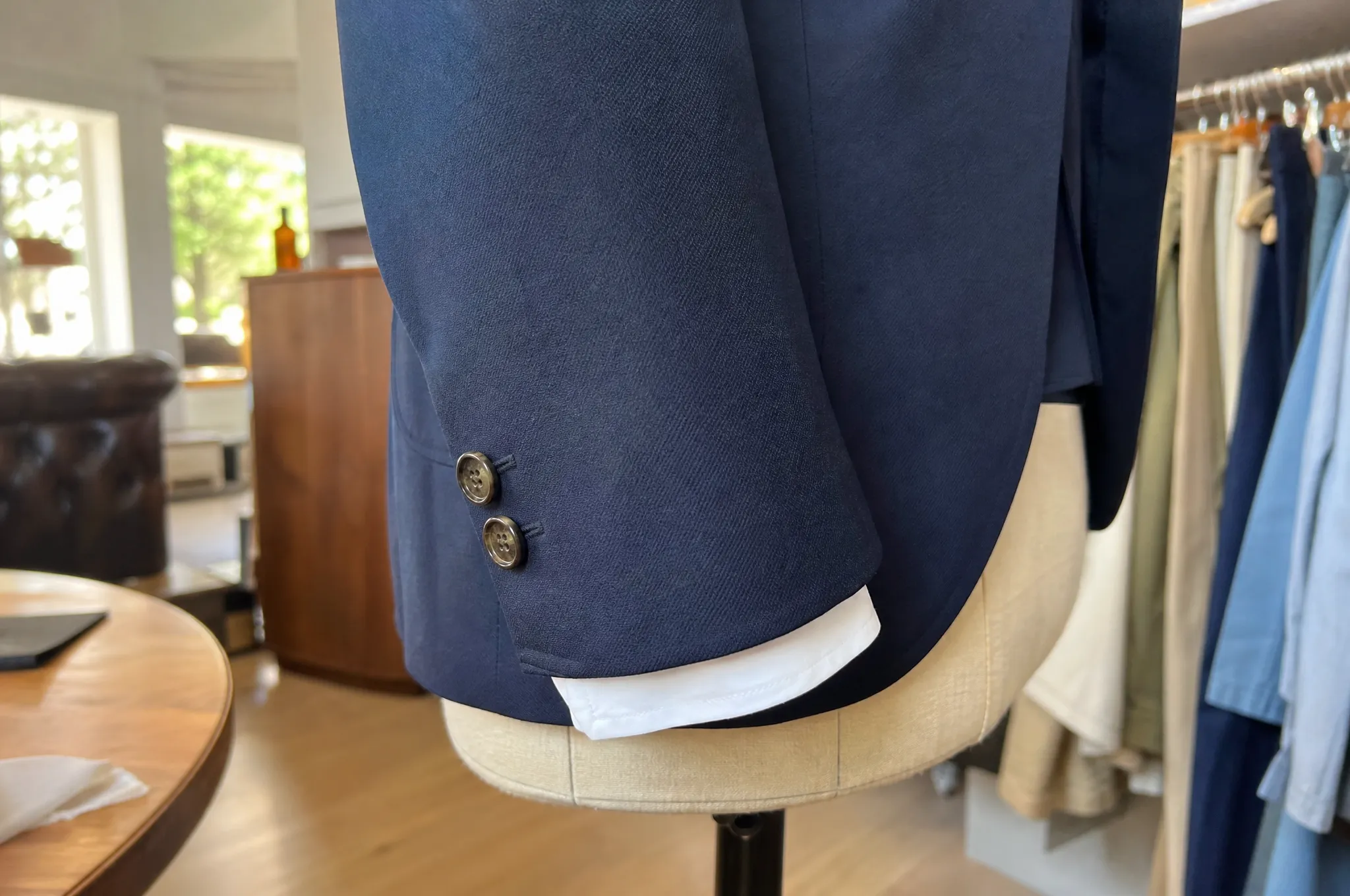
For conventional suiting, the wrist is a useful reference. SuitShop's fit instructions use the wrist bone with some shirt cuff visible. Treat that as a reference for that style, not a requirement for every women's blazer. A cropped sleeve can look intentional with a sleeveless top and quite different with a long shirt cuff underneath.
Make a two-position observation
Put on the actual work top and let the jacket settle at the shoulders. Stand naturally with both arms down. Look at the sleeve end without pulling it toward your hand. Then sit and move your hands to the position you use at a desk. Record whether only the cuff moves or whether the shoulder and whole jacket rise too.
Repeat with one familiar thin top if a bulky layer seems to catch inside the sleeve. Keep the jacket and posture constant. The comparison helps separate a layering issue from a persistent length concern. Our sleeve-lining guide covers restriction inside the arm; adding length at the cuff does not necessarily solve it.
| What you see | Useful next check |
|---|---|
| Above the wrist at rest | Confirm full-length versus cropped design |
| Comfortable at rest, rises at keyboard height | Observe the shoulder and arm movement before choosing length |
| Much more shirt cuff on one side | Compare shirt sleeves and jacket sides separately |
| Only one knit causes catching | Try a smoother, thinner layer before requesting a repair |
Can a tailor let the sleeve down?
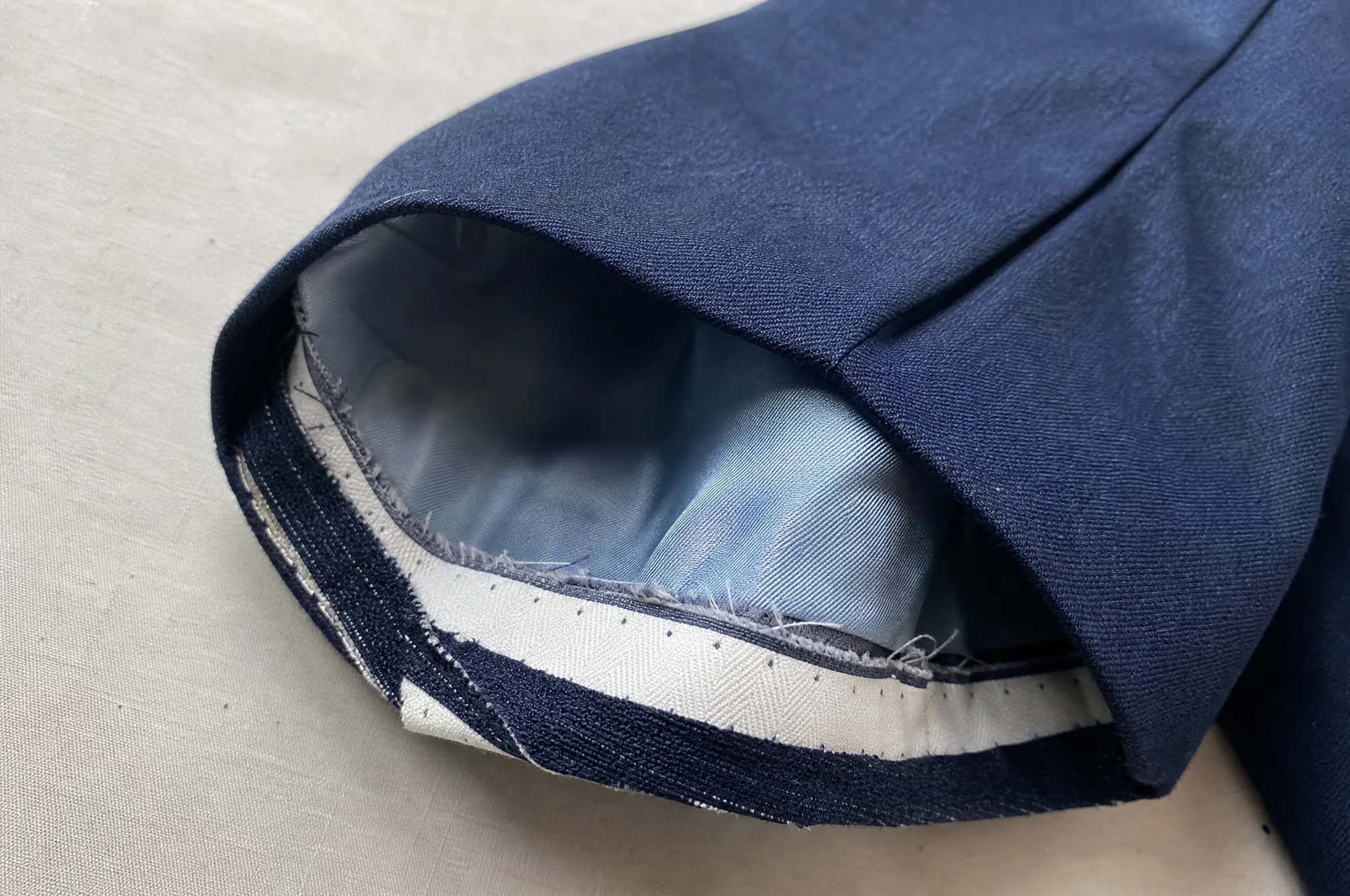
Possibly, but there is no universal allowance. The folded outer fabric, lining length, cuff opening and buttonholes all matter. Proper Cloth lists a half-inch sleeve adjustment for its own jackets. That product-specific limit is an example of why you should ask about your jacket rather than promise yourself a fixed amount.
Have the repairer show the proposed finished position before work begins. Ask whether an old fold could remain visible and whether button placement would still look balanced. Working buttonholes can limit a simple cuff change. Do not unpick the lining at home just to check how much cloth is hidden; an inspection can be part of the quote.
What if there is not enough matching material?
Extending a sleeve with added fabric is a different alteration from letting down a hem. In her Threads sleeve-lengthening lesson, Pamela Howard describes adding material to both sleeve and lining. Whether a visible extension suits your work jacket is a design decision, not an invisible fix guaranteed for every garment.
Compare that proposal with keeping an intentional shorter sleeve or choosing another jacket. A contrasting cuff can change the character of a suit. Agree on the appearance, price and completion date before committing. Check the rest of the suit fit first so a sleeve repair does not distract from a more extensive problem.
Use a fitting note instead of a guess
Write down the top worn, where each cuff ends with arms relaxed, what changes at the desk and the desired finished position. These are observations you can reproduce at an appointment. They do not diagnose the underlying cause or establish that the alteration is possible.
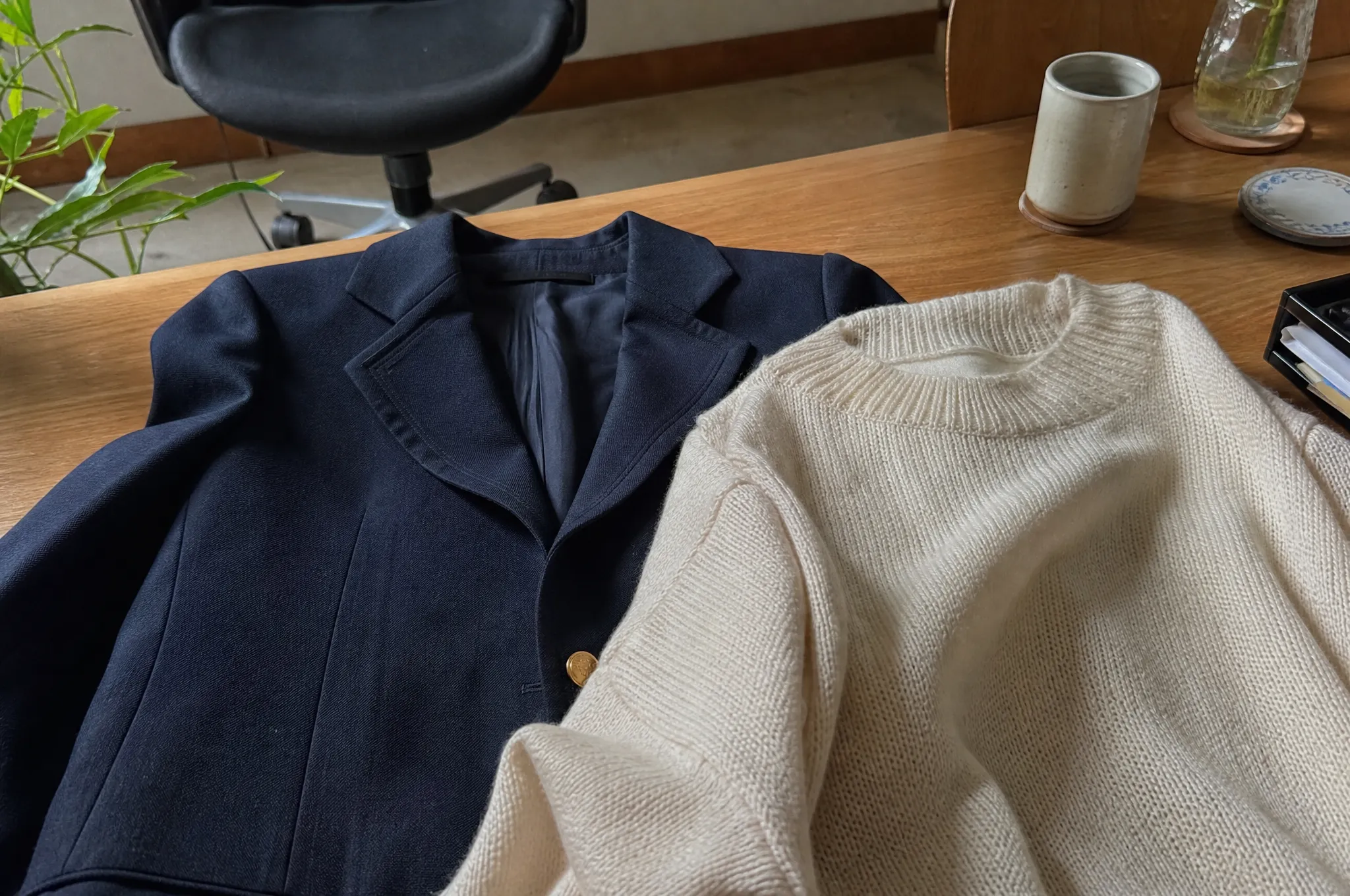
For a work capsule, test the jacket over the tops you actually repeat. One unusually long shirt sleeve should not dictate a permanent change to an otherwise useful blazer. Ask the fitter to confirm both appearance and comfortable movement in the proposed result.
Frequently asked questions
Can every sleeve be lengthened?
No. The cuff construction, fabric allowance, lining and buttonholes determine what is feasible.
Should I judge length while reaching?
Start with arms relaxed, then observe ordinary movement.
Must every women’s blazer cover the wrist?
No. Bracelet and cropped designs deliberately use different lengths.
Can a long shirt cuff make the blazer seem short?
Yes. Compare each garment separately with a familiar top.
Should I cut open the lining to check?
Ask a repairer to inspect the garment as part of an alteration assessment.