Tailoring
Before you take shoulder pads out of a blazer
Find out what the pad supports before you unpick anything.
In shortCheck the lining, the stitching and the drape before removing a blazer shoulder pad. The pad may support the sleeve head and the collar roll, so record what you see in a mirror first, then ask a tailor whether it can come out safely.
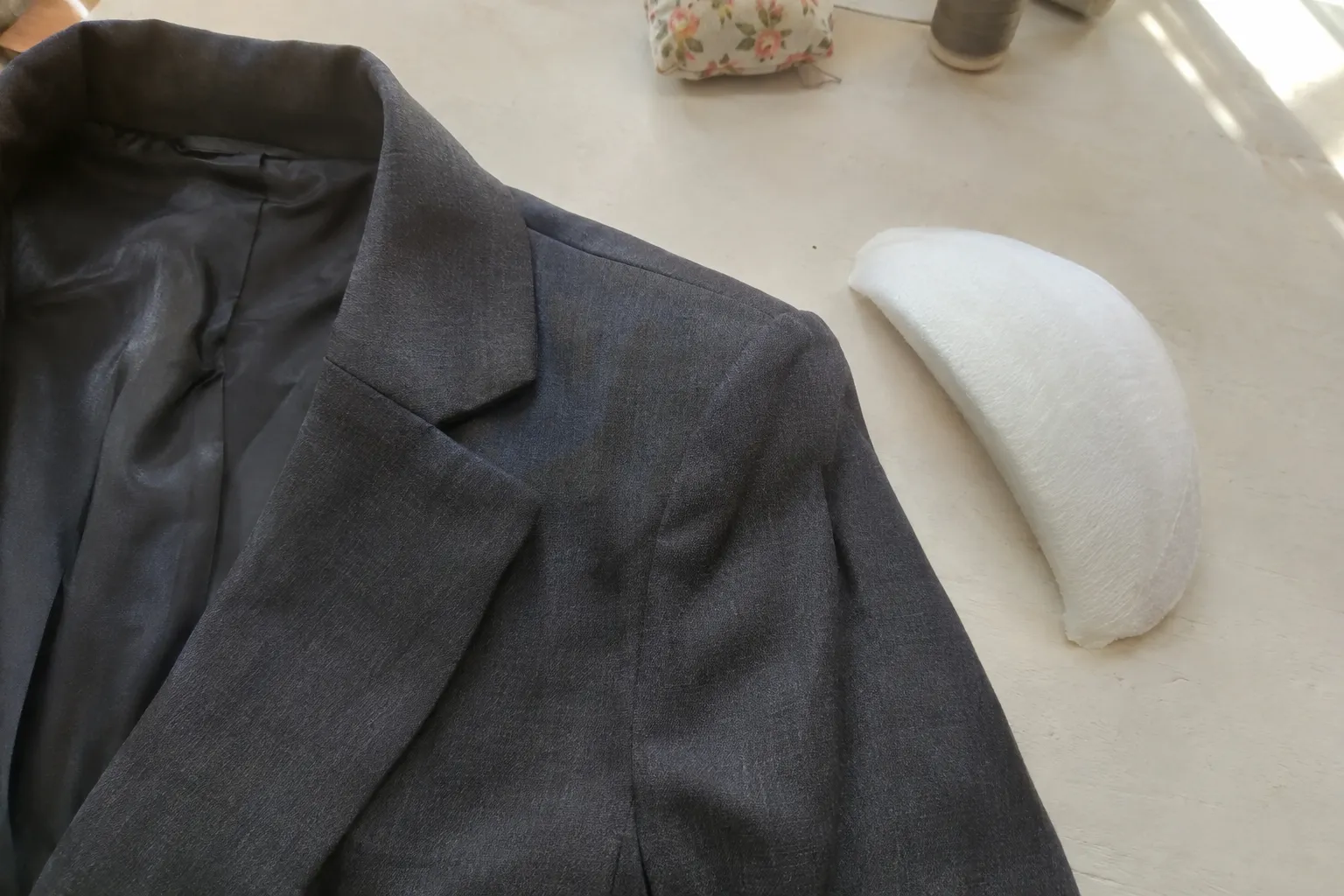
Do not unpick a blazer's shoulder pads on impulse. Before anything is removed, check what sits under the lining, how the sleeve head is attached and how the shoulder looks with the pad held lightly aside. The pad often supports more than width, so the safest first step is an observation, not a cut.
What is the pad doing in this jacket?
A shoulder pad fills the space between your shoulder and the sleeve head so the sleeve falls cleanly. In a structured blazer it may also support the collar roll and the line from neck to arm. Put the jacket on over the top you plan to wear and stand relaxed. Look from the front and the side. If the shoulder edge extends beyond your own and the sleeve hangs straight, the pad may be giving shape rather than extra width.
Three checks before touching a stitch
Run through these in order and write the answer to each.
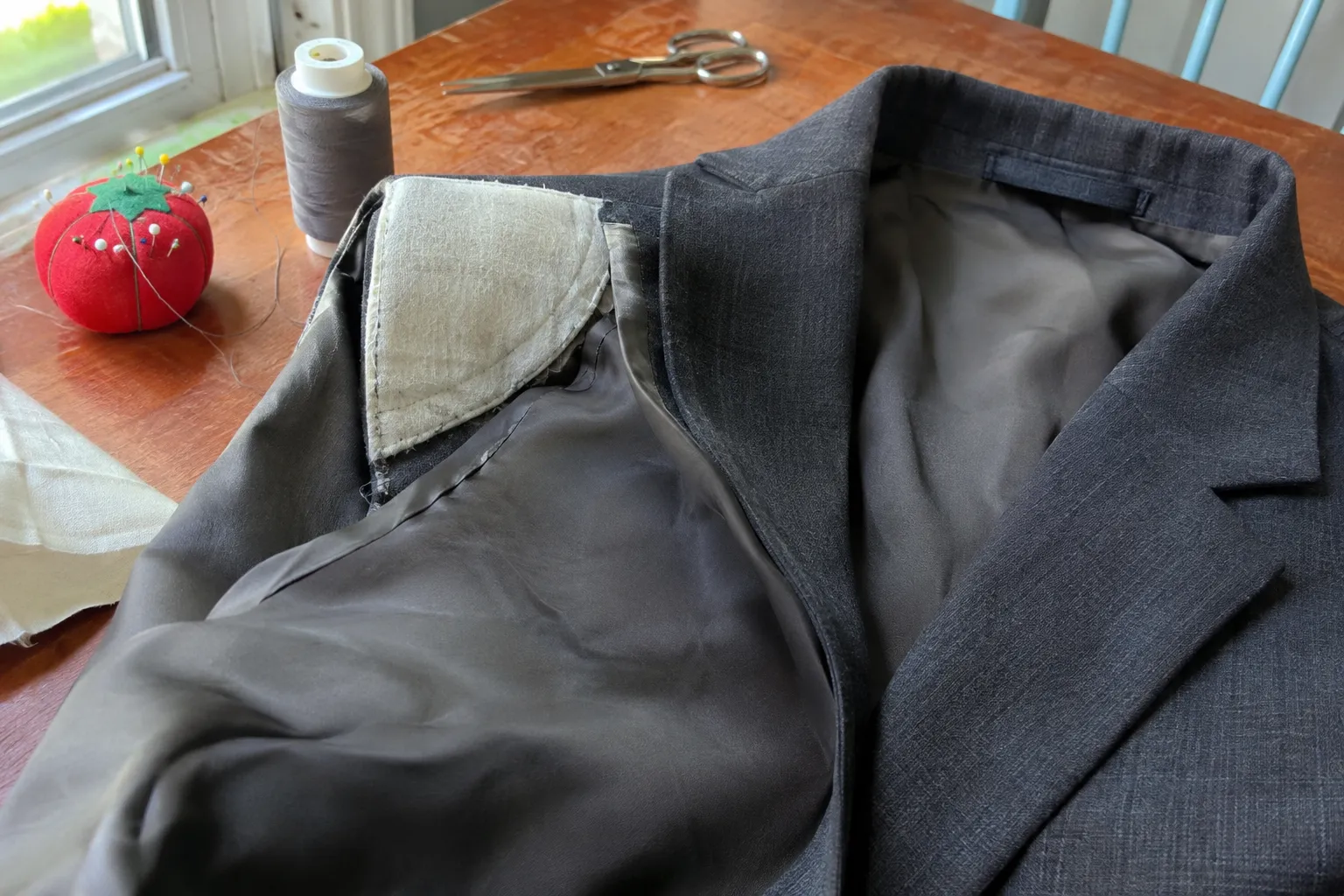
- Lining. Feel the upper sleeve and shoulder from outside. Is there a firm shape under a fully lined shoulder, or is the pad loose and only tacked? A bonded or sewn-in pad is a construction detail, not an accessory.
- Stitching. Look inside at the sleeve head and shoulder seam. Visible hand stitching, a stay or canvas around the pad suggests it is part of the build. A tailor decides what can be released.
- Drape. Hold the pad's edge gently from outside and compare the shoulder in a mirror. If the sleeve collapses inward, the pad is holding the line.
This three-check record is a proposed method, not a test we ran on your jacket, and it does not replace a fitter's view of the actual seams.
What can change if the pad comes out?
Taking out a pad may lower the visible shoulder point, make the sleeve fall slightly differently and alter how the collar sits. A jacket that fit across the shoulders because of the pad can look slumped without it, and a jacket that looked too wide may look balanced. If your concern is a hollow at the top of the sleeve, compare it with the blazer shoulder divot checklist first; a hollow can come from several causes, and removing a pad may enlarge it.
| Observation | Possible meaning | Next step |
|---|---|---|
| Shoulder edge sits beyond your own | Pad adds width or the jacket runs large | Ask whether size or pad is the cause |
| Hollow below the seam without the pad pressed | Sleeve head lacks support | Do not remove; ask about a thinner pad |
| Pad loose and tacked only | Easier to adjust | Ask a tailor to assess |
| Collar lifts when pad pressed flat | Pad supports the collar roll | Keep it |
Remove, replace or reduce?
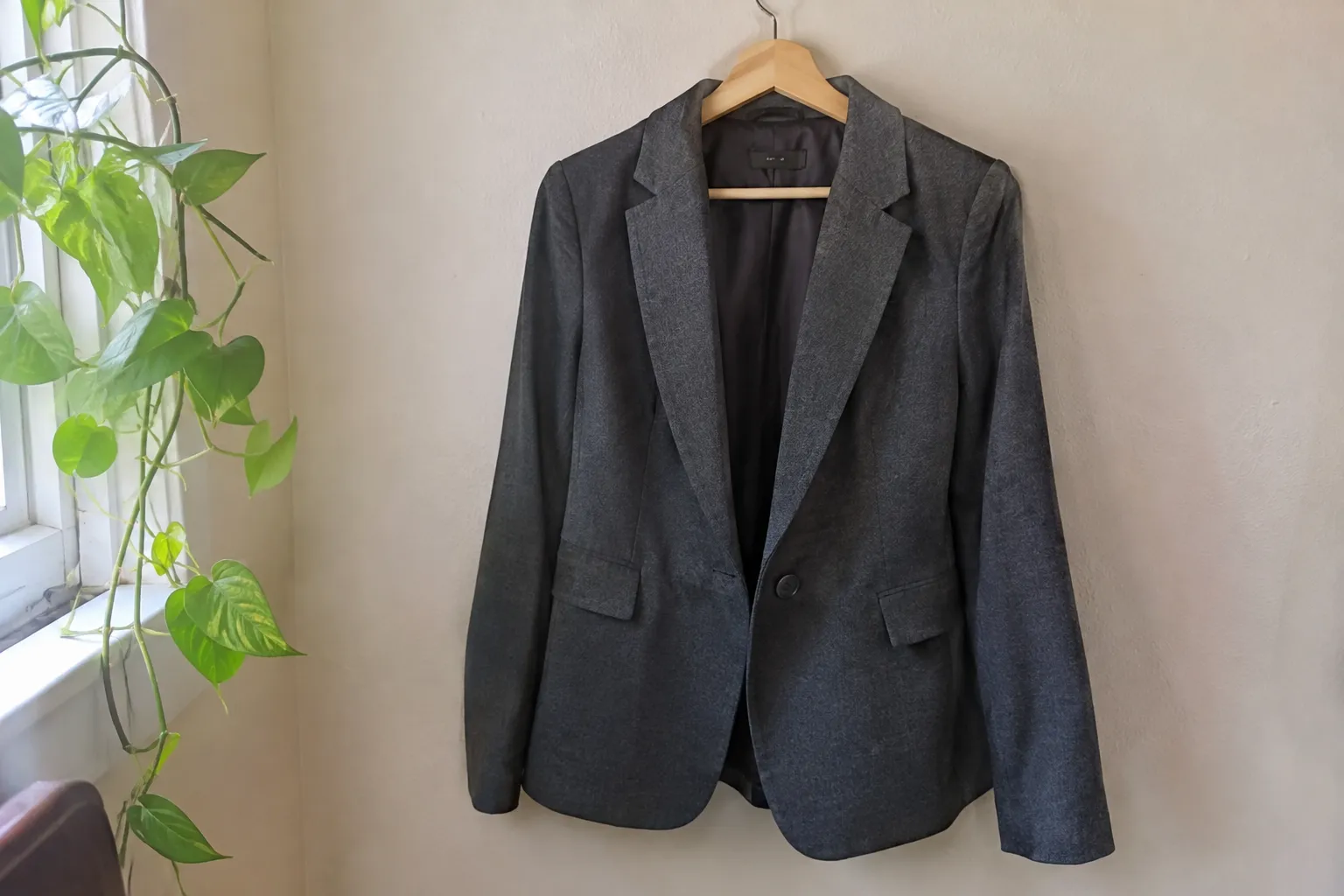
Some jackets work with a thinner pad rather than none. Ask whether the pad can be swapped for a slimmer one while keeping the sleeve head shape. Compare this with your own suit fit checklist: shoulders are the least forgiving part of a blazer to change, so a small adjustment in softness is often safer than full removal.
When should you leave it to a tailor?
Open the lining only if you are comfortable with hand sewing, and expect to close it again neatly. A seam through the sleeve lining is not hard to reach, but cutting basting threads through a finished lining can leave marks. If the jacket is expensive, lined in a delicate fabric or fits well otherwise, take your three-check record to a tailor. The note lets them judge quickly and quote only for the work that is needed.
Keep a before and after record
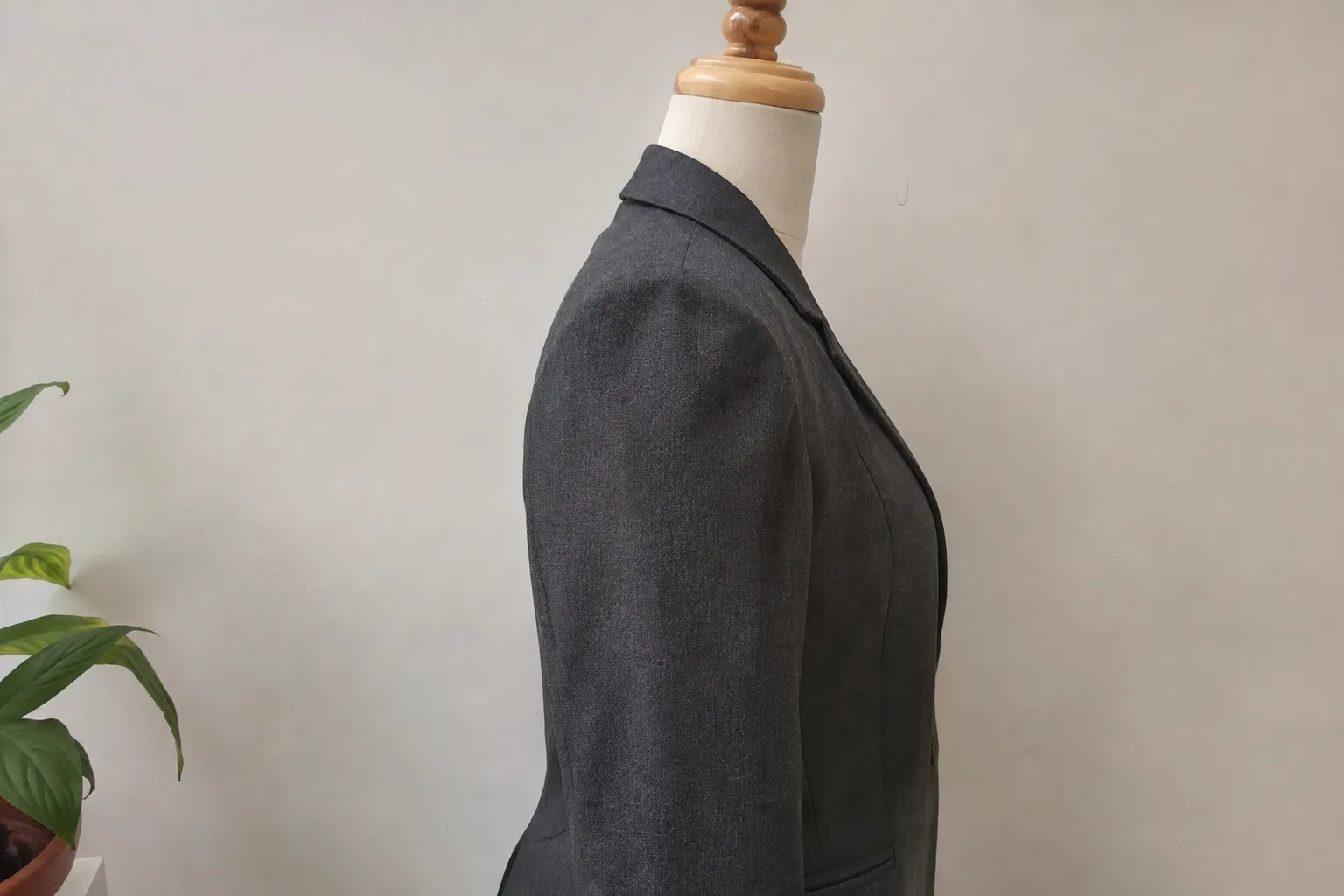
Photograph the shoulder from the front and side before any change, in the same light. After the alteration, repeat it with the same top. Without the comparison you cannot tell whether the change improved the silhouette or only changed it, and you cannot return a pad that has been discarded.
What does your shoulder check show?
The sleeve collapses when the pad is held aside
The pad is holding the sleeve head. Keep it and ask a tailor about a thinner one.
The shoulder edge sits beyond my own
Ask whether the jacket size or the pad adds the width before removing anything.
The pad is loose and only tacked
It is easier to adjust, but still show the record to a tailor before opening the lining.
Frequently asked questions
Can every blazer pad be removed?
No. Some are sewn into the structure of the shoulder and sleeve head, so ask a tailor before cutting.
Will removing the pad make the shoulders look smaller?
It can lower the visible shoulder point, but the result depends on the cut and the fabric.
Is a thinner pad a better first step?
Often it is a gentler change than full removal, if the sleeve head can keep its shape.
Should I photograph the jacket first?
Yes. Take the same front and side photos before and after any change.
Can I test the jacket without cutting anything?
Yes. Press the pad lightly from outside and compare the shoulder in a mirror.