Tailoring
Blazer shoulder divot: record the hollow before choosing a repair
A sleeve-head hollow deserves a whole-jacket comparison.
In shortA shoulder divot describes a hollow at the upper sleeve. It does not prove one size problem. Compare the intended cut, base layer, relaxed posture and movement, then show the actual jacket to a tailor.
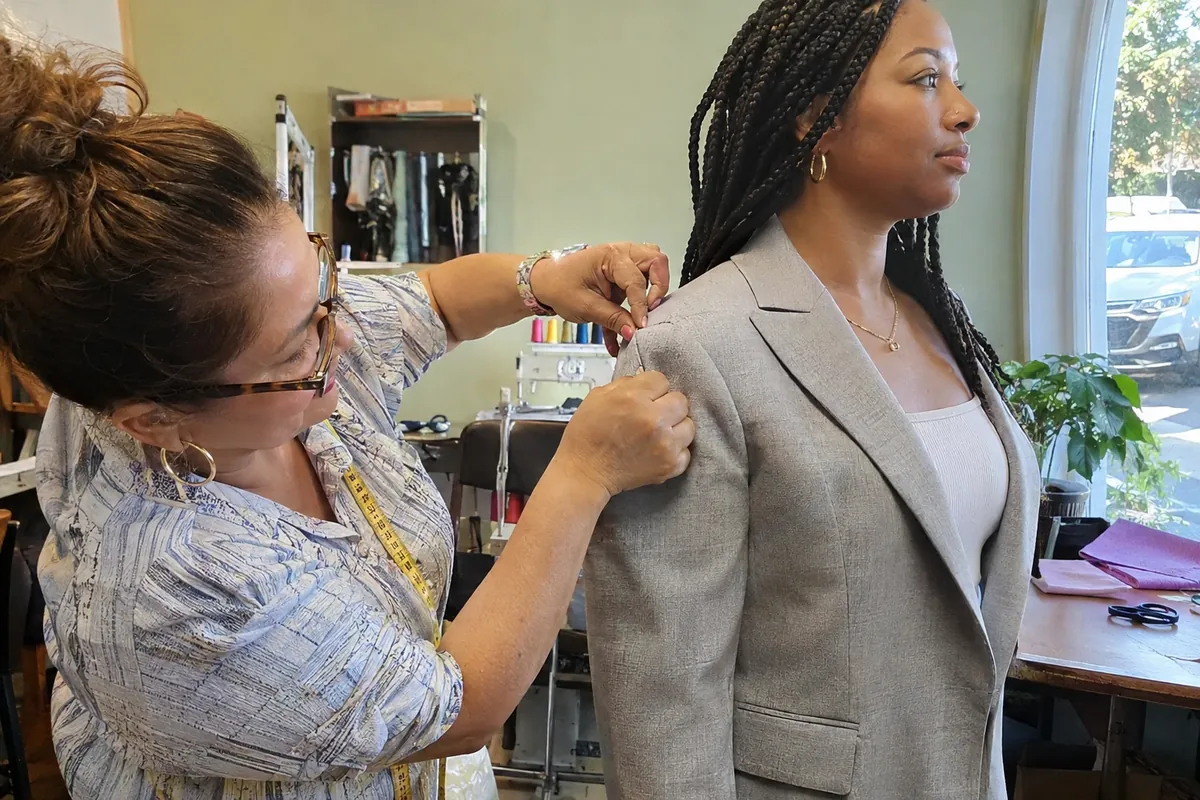
A blazer shoulder divot is a hollow near the top of the sleeve. It is an observation, not a reliable diagnosis that the jacket is too big or too small. Compare the actual jacket at rest and during ordinary movement, then ask a tailor to assess its cut and construction before choosing an alteration.
Find the hollow before naming the cause
Put on the blouse or top you intend to wear underneath. Let the jacket settle, keeping your arms relaxed rather than pulling your shoulders back for the mirror. Look at the join between shoulder and sleeve from the front, side and back. Record whether the indentation appears on one side or both, and whether it remains visible without you holding the fabric in place.
A photograph can help document the location, but a dark patch in a picture is not proof of a divot. Lighting, folds and textured cloth can obscure the outline. Use an ordinary view of the whole upper jacket as well as a closer image; an isolated crop removes the context a fitter needs.
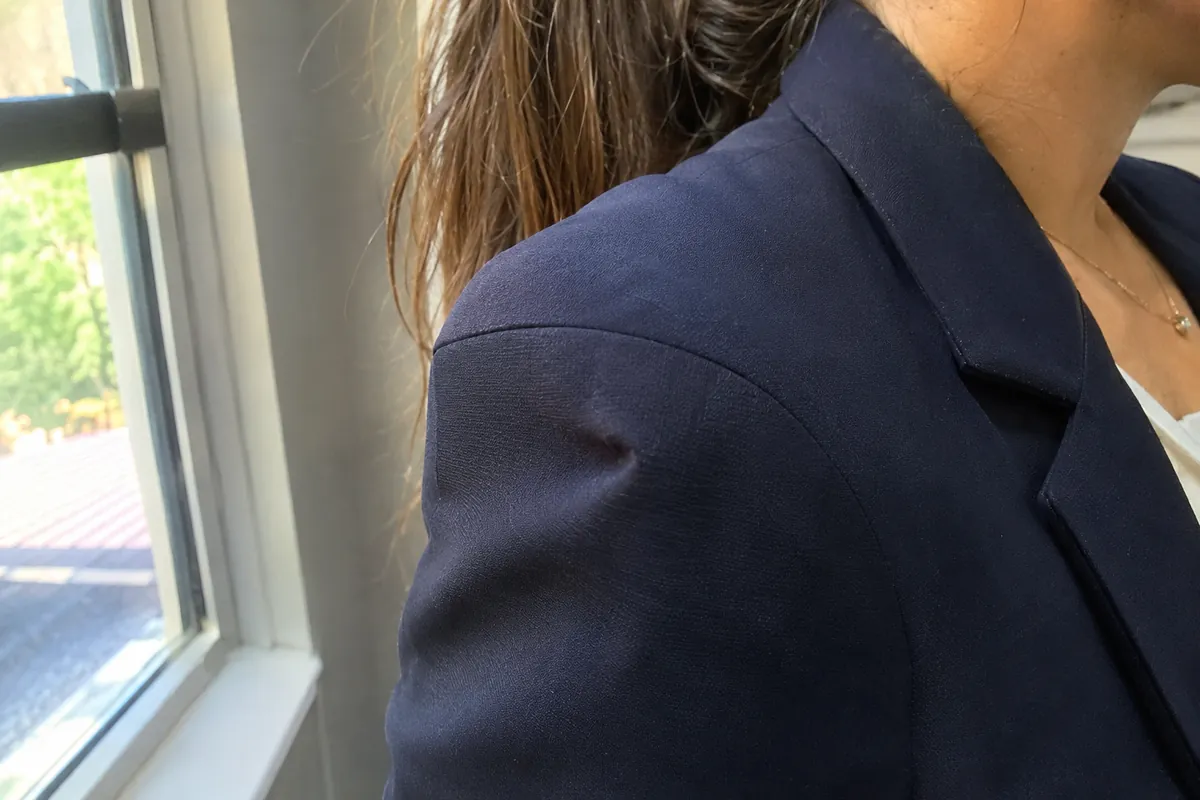
Why a hollow does not give you one automatic size answer
Tailor Jeffery Diduch's discussion of divots challenges the common assumption that shoulder extension alone explains the problem. It describes how tension across the upper back can change the armhole shape. That is a reason to inspect the complete garment rather than shortening a shoulder on the strength of one crease.
Proper Cloth's shoulder-width reference also considers tension, sleeve drape and the difficulty of shoulder alterations. These sources concern tailored menswear, so their numerical fit targets are not universal measurements for a women's blazer. Their useful shared lesson is to evaluate neighboring areas and the intended design before ordering work.
Compare rest, fastening and ordinary movement
First observe the jacket open if that is a normal way you wear it. Then fasten it as intended, without forcing a closure that is uncomfortable. Notice whether the hollow changes along with pulling across the back, a displaced collar or movement in the front. These are separate observations to show the fitter; they do not establish which component caused the others.
Reach toward a desk and sit, then return to your resting position. Fabric is expected to move. A crease that appears only during a reach should not be evaluated as though it were a permanent dent with your arms relaxed. Describe restriction as well as appearance: “I feel pulling when reaching forward” is more useful than asking for a size change based on a still image.
What should you do next?
The hollow remains when my arms are relaxed
Record its position and show the whole jacket to a fitter. Ask about design, back width and sleeve construction rather than requesting one specific repair.
It appears only when I reach
Demonstrate the actual movement and explain any restriction. Compare how the jacket settles afterward.
I am still choosing between jackets
Try another size or cut with the same base layer. Compare the complete fit and comfort before buying.

Separate construction from styling
A deliberately extended, padded or soft shoulder may not follow the outline of an unstructured jacket. Compare the maker's intended silhouette instead of treating every shoulder seam beyond your shoulder as a defect. The signature-style guide can help you describe the shape you prefer without turning that preference into a tailoring diagnosis.
Inspect other details independently. A temporary vent tack is a different question from a hollow at the sleeve head. Likewise, a deliberate lapel roll need not be pressed flat to match a smooth upper sleeve. Avoid treating a whole jacket as a collection of creases to remove.

Ask about feasibility before authorizing alterations
Bring the intended top and demonstrate the movement that bothers you. Ask which area the proposed work changes, whether the cloth and seam allowances permit it, and what other parts may be affected. Shoulder and sleeve work can involve more than a simple seam adjustment. Compare the proposed result and cost with trying another cut if you have not committed to the jacket.
Do not remove padding, unpick a sleeve or apply heat to force the hollow outward as an experiment. Follow the garment care label, and keep construction work for someone who can inspect the actual jacket. After any agreed alteration, repeat both the relaxed and seated checks rather than judging success from a single posed photograph.
Empty pockets before recording the jacket outline
Before taking comparison photographs, remove items from the jacket pockets and let the garment settle. A phone, keys or other objects can change how a nearby panel hangs. Record that preparation so the next comparison uses the same conditions. This does not establish that pocket loading caused the shoulder hollow; it simply removes a variable from the observation.
If you cannot access a pocket because it is sewn shut, do not cut it open as part of a shoulder-fit test. First identify whether it is a real pocket with a temporary closure or only a decorative detail. Keep any pocket work as a separate request for the retailer or tailor. When showing the shoulder concern, describe where the indentation remains with the arms relaxed and demonstrate the ordinary movement that feels restrictive. The specialist should assess the complete jacket rather than attributing every change in drape to one accessory or pocket. The closed-pocket identification guide explains the separate construction question.
Frequently asked questions
Does a divot always mean the shoulder is too wide?
No. Inspect the complete jacket rather than inferring a repair from one hollow.
Should I compare another size?
If you are still shopping, compare another size or cut with the same base layer and movements.
Is a crease during reaching the same problem?
Record when it appears and how the garment settles. Movement changes the cloth.
Can pressing fix any hollow?
No universal pressing treatment follows from the appearance. Construction and care need assessment.
What should I bring to a fitting?
The jacket, intended top, observations and a demonstration of the movement that causes restriction.