Tailoring
Blazer lapel roll: when a curve is part of the design
A designed curve and a new deformation need different questions.
In shortA blazer lapel can have a deliberate soft roll rather than a flat crease. Compare the intended design before trying to correct it. Record any changed area with the jacket on, then ask a tailor or cleaner about shape, fit and care before applying heat.
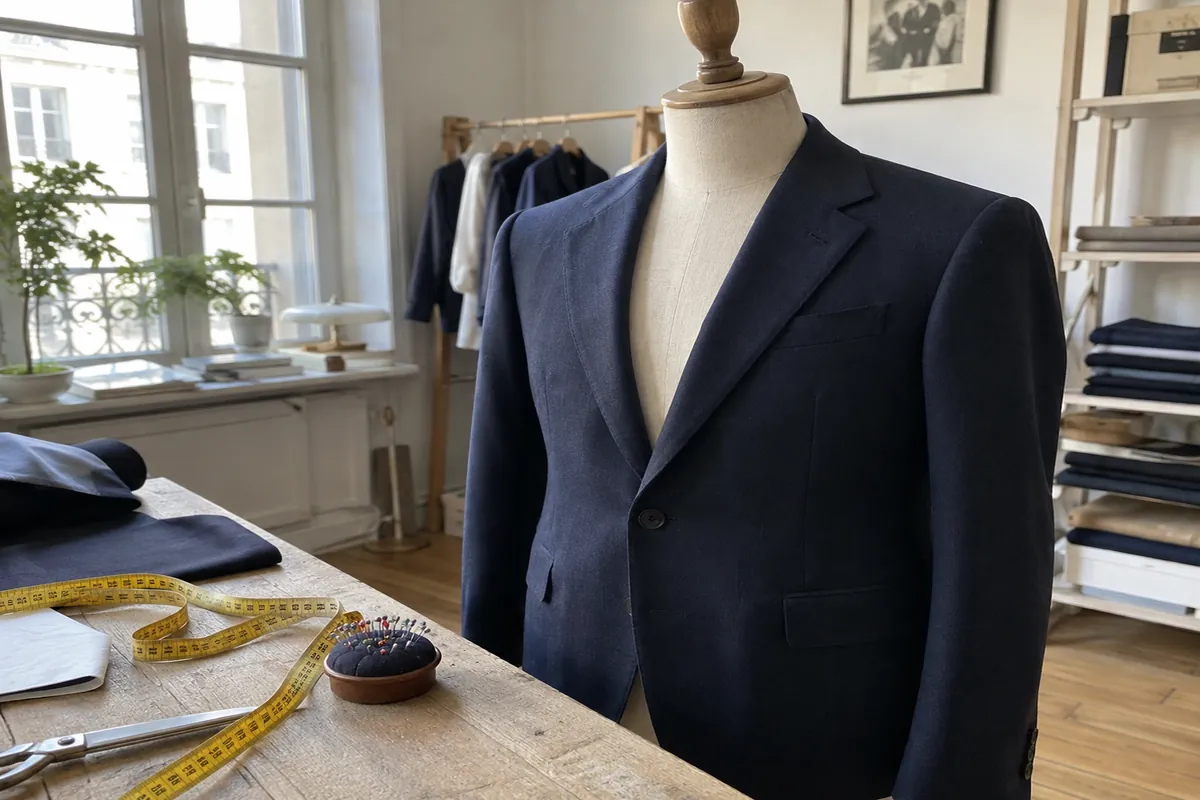
A lapel is not meant to behave like a shirt front
The lapel is the folded-back part of a jacket front below the collar. Its outline may be notched, peaked or smoothly curved, but the outline and the way it rolls are separate details. Two jackets with similar notched lapels can still have different degrees of softness through the fold.
Before calling a curve a fault, compare the jacket with its maker's photographs and any earlier view of the same garment. A softly rounded edge may be intentional. A new local ripple, a changed fold after cleaning or a front that pulls only when fastened needs a more specific description.
What does an intended lapel roll look like?
There is no single correct degree of flatness for every blazer. In Anderson & Sheppard's account of pressing a suit, the lower lapel near the buttons is deliberately left with a soft roll. That workshop example explains why flattening the entire lapel is not a universal goal.
It does not establish how your particular jacket was made or should be treated. Ask its maker about the intended shape when the product photographs are unclear. The outer cloth, internal layers and construction work together; appearance alone cannot reliably classify every blazer as fused, half-canvassed or fully canvassed.
Which observation should you keep?
The curve matches the maker’s original photographs
Record the intended shape before deciding it needs correction. A soft roll is not automatically a wrinkle.
One area changed after storage or cleaning
Photograph the location and note the sequence. Ask for an assessment without deciding the cause from timing alone.
The front changes when I move or fasten it
Show that normal movement with the intended blouse underneath. Keep fit and treatment questions separate.
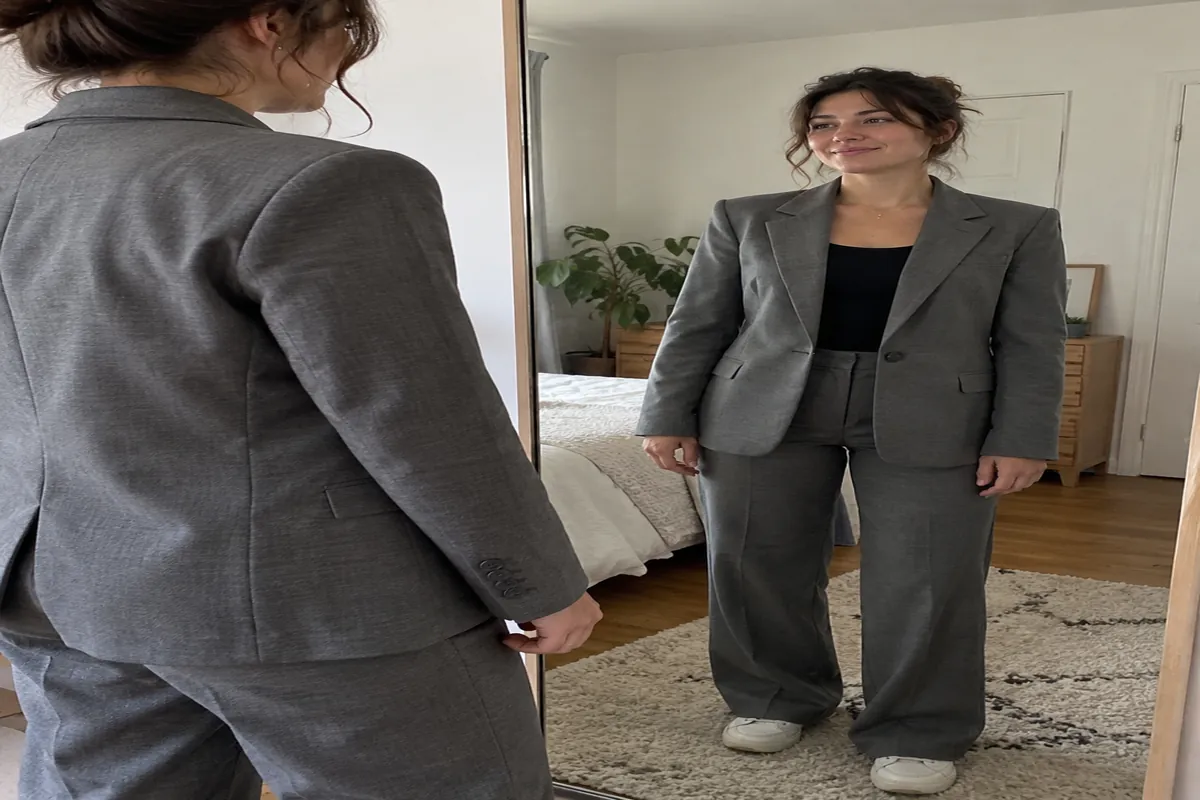
Compare it with the actual work outfit on
Wear the top you plan to use, let the jacket settle and stand normally with your arms relaxed. Check both fronts without pulling them into position. Then fasten it as intended for that design and compare. A jacket with a different front arrangement should not inherit button rules from another garment.
Notice whether a blouse placket or collar is caught beneath the lapel. Compare with a simpler base layer if you have one. If the difference disappears, the combination deserves attention before altering the blazer. Our blouse-gap guide separates the inner garment's behavior from the outer jacket.
Separate a visual observation from its cause
A crease, ripple or lifted edge is useful information, but it is not a complete diagnosis. Record where it begins, whether it is on both sides and whether it changes when you sit or move an arm. Avoid deciding that the jacket needs a different size from one photograph.
Likewise, a change noticed after a cleaning visit does not by itself establish delamination or incorrect pressing. Ask the person assessing the garment to inspect it and explain the proposed treatment. Bring the actual jacket and its care label rather than relying only on a description of the fiber.
Why not press the whole lapel flat?
Pressing changes shape as well as removing wrinkles. An unknown heat, moisture or pressure treatment can affect the cloth and internal layers differently. Follow the jacket's own care directions and ask for a shaped pressing assessment if you are uncertain about the intended roll.
Do not use a tutorial for constructing a new jacket as a universal repair recipe for a finished one. Do not glue a lifting edge, stitch it down to the blouse or try to iron a suspected bubble away. These are interventions with different consequences from an ordinary try-on comparison.
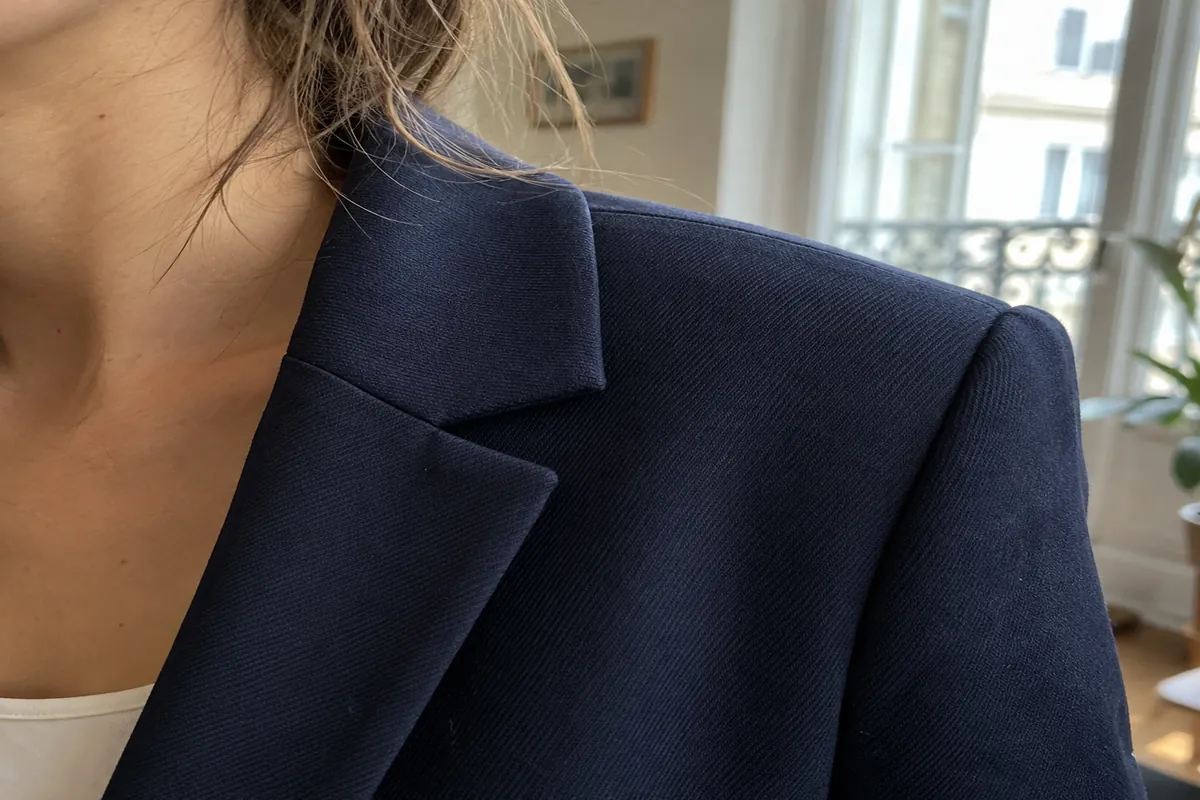
What should you show a tailor or cleaner?
Take a clear front view with your arms relaxed and a closer view of the area that concerns you. Note whether the jacket is fastened, which top is underneath and any relevant storage, cleaning or alteration history. Ask what is intended in the design and what, if anything, has changed.
The suit-fit guide helps you record the whole garment rather than only the lapel. If an arm restriction accompanies the change, use the sleeve-lining checklist too. Keeping those observations distinct gives the specialist a clearer problem to assess.
Frequently asked questions
Should every lapel lie completely flat?
No. The intended roll varies with the design and construction.
Does a ripple prove a construction fault?
A visual observation alone does not identify its cause. Have the actual jacket assessed.
Can a blouse affect the front?
A caught collar or placket can change the combination. Compare the intended base layer before altering the jacket.
Does steaming suit every blazer?
Use the actual garment’s care directions rather than a universal treatment.
What should I record for the specialist?
The location, wearing configuration, movement and relevant garment history.